A Practical Christian Anxiety Relief Ebook Guide for Lasting Peace
If you’ve ever felt that flutter of worry right before bedtime, wondering whether God hears your silent cries, you’re not alone. Anxiety can sneak into the most faithful hearts, turning prayer time into a restless scramble for peace.
What’s frustrating is that many Christian readers reach for generic self‑help books, only to find the advice feels detached from Scripture. That gap leaves you hanging, asking, “How do I calm my mind while staying rooted in my faith?”
We’ve seen this pattern time and again in our community. One reader described waking up with a racing heart, scrolling through verses that seemed beautiful but didn’t stop the panic. After trying a few breath‑focused techniques, she finally turned to a resource that we designed especially for moments like this—a christian anxiety relief ebook that weaves biblical truth with practical steps.
That ebook, THE HOUSE WITHIN YOUR HEART AND MIND E-BOOK pdf, starts by acknowledging the messiness of anxiety. It doesn’t promise an instant fix; instead it invites you to “meet” the anxiety, name it, and gently lay it before God. The first chapter guides you through a three‑minute scripture‑breathing exercise, using verses like Psalm 42:11 (“Why, my soul, are you downcast?”) as a rhythmic anchor.
Here’s a quick way to try it: 1) Choose a short verse you love; 2) Inhale for four counts while visualizing the words, exhale for six counts, letting the tension melt; 3) Repeat three times while thanking God for His presence. Do this whenever worry spikes, and you’ll notice the nervous system start to settle.
Another real‑world example comes from a small‑group leader in Texas who used the ebook’s journaling prompts during a weekly prayer night. By writing down each anxiety, then pairing it with a promise from Romans 8:28, the group reported a palpable shift—less frantic chatter, more calm confidence.
So, what can you do right now? Grab a notebook, open the ebook to the “Scripture & Breath” section, and practice the breathing exercise during your next coffee break. Even five minutes can reset your mental thermostat and remind you that God’s peace is not a distant ideal but a present reality.
Remember, anxiety isn’t a sign of weak faith; it’s a signal that your spirit needs gentle refueling. With the right tools—grounded in Scripture and simple practice—you can walk through storms with a steadier heart.
TL;DR
When anxiety feels like a storm, the Christian anxiety relief ebook offers Scripture‑based breathing, simple journaling prompts, and gentle guidance that calm your mind while keeping you rooted in faith.
Spend five minutes daily with these tools, and you’ll feel tension melt, thoughts settle, and a steady peace emerge within.
Step 1: Identify Your Anxiety Triggers Through Scripture
Ever notice how a particular verse suddenly feels like a mirror to what’s rattling inside you? That moment is a clue – it’s the Scripture that’s tugging at the edge of your anxiety.
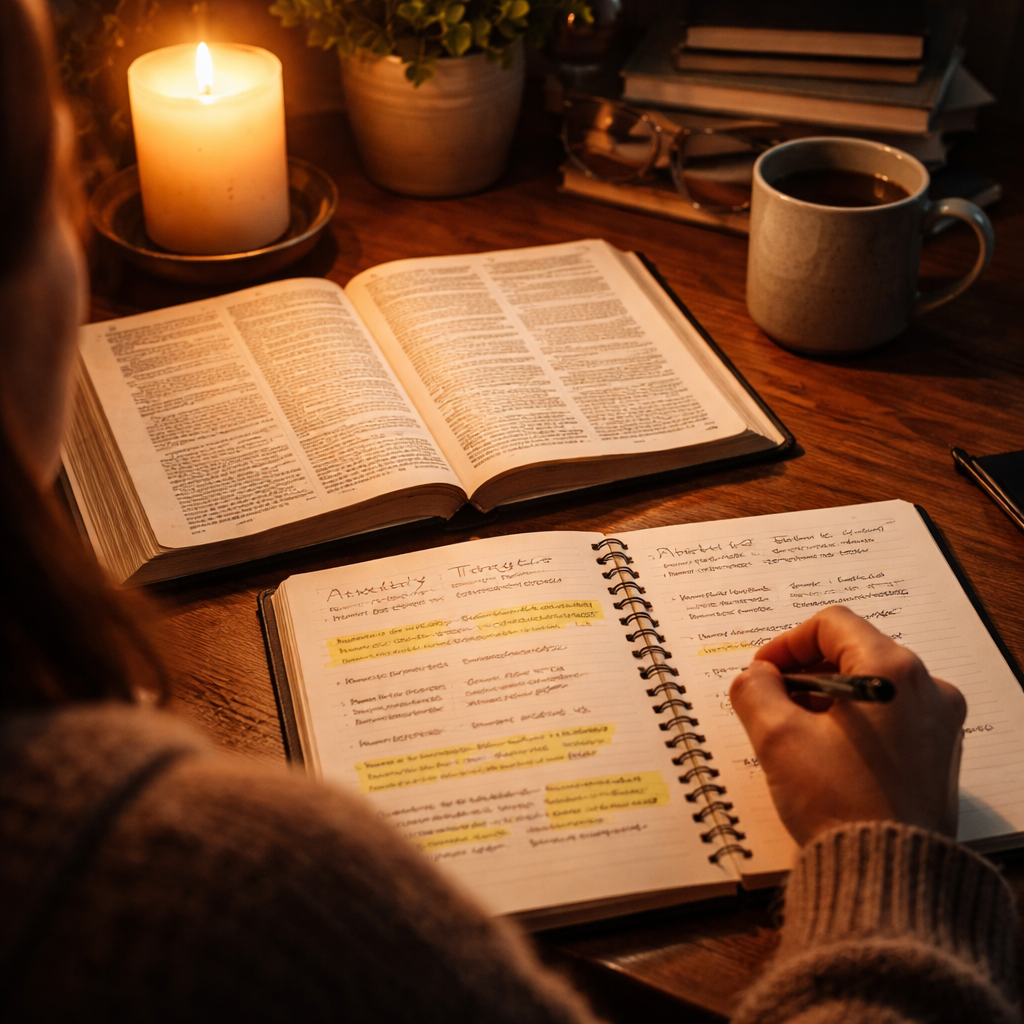
First, grab a small notebook. It doesn’t need fancy paper; a simple spiral works just fine. As you read through your favorite passages – maybe Psalm 42:11, Philippians 4:6‑7, or even a comforting proverb – let the words settle for a few breaths. When a phrase makes your heart quicken or your thoughts race, jot it down right away.
Step‑by‑step trigger map
1. Pick a quiet spot. Whether it’s a kitchen table after coffee or a park bench at sunset, choose a place where you won’t be interrupted.
2. Read a short verse. Keep it under 20 words so you can focus on each term.
3. Notice the feeling. Does the verse bring hope, guilt, urgency, or a strange tension? Write the emotion next to the verse.
4. Ask why. Prompt yourself: “What situation in my life is this verse pointing to?” Jot a quick note – maybe it’s a work deadline, a family argument, or a health worry.
5. Tag it. Use simple tags like #work, #family, #health so you can see patterns later.
Doing this for just five minutes each morning creates a map of what Scripture is spotlighting in your mind. Over a week, you’ll start seeing clusters: perhaps verses about “peace” keep popping up when you’re juggling too many tasks, or “strength” appears when you’re facing a tough conversation.
Why does this help? The Bible isn’t just a book of abstract truth; it’s a living conversation. When you match a verse to a specific trigger, you’re inviting God into the exact spot of your worry, turning a vague anxiety into a concrete prayer point.
Now, let’s bring a little productivity flair into the mix. Set a gentle timer – think of the Pomodoro method, but with a softer rhythm. Work on identifying triggers for 10 minutes, then rest, breathe, and thank God for the insight. This tiny structure keeps the practice from feeling like another chore.
After the video, take a moment to glance at your notes. Do you see a recurring theme? Maybe the word “fear” shows up with a certain verse about “the Lord is my shepherd.” That’s your cue to lean into the promise behind the fear.
When you spot a pattern, pull out the christian anxiety relief ebook. It offers a ready‑made worksheet that aligns each trigger with a Scripture promise, plus a short breathing exercise that syncs with the rhythm of the verse. The ebook’s layout makes it easy to transfer your handwritten tags into a digital table if you prefer.
Quick sanity check
Ask yourself: “Am I just writing down every thought, or am I actually seeing a link between the verse and the anxiety?” If it feels like a laundry list, trim it down. Focus on the top three triggers that keep resurfacing.
Finally, celebrate the small victories. When you catch a trigger and replace it with a verse‑based affirmation, you’ve already moved a step closer to peace. It’s not about erasing anxiety entirely – it’s about naming it, grounding it in Scripture, and letting God’s truth rewrite the story.
Step 2: Practice Biblical Meditation and Prayer
Now that you’ve spotted the verses that speak to your worries, it’s time to sit with them. Biblical meditation isn’t about emptying your mind, it’s about inviting God’s truth to settle into the quiet places of your heart.
Do you ever feel like prayer is a to‑do list? “Lord, help me, give me peace, protect my family…” It’s a beautiful start, but the mind can still race. That’s where meditation adds depth, slowly soaking in a single promise until it feels like a gentle tide.
Pick a verse and make it your anchor
Choose a short Scripture that hits the nail on your current anxiety. Psalm 42:11 (“Why, my soul, are you downcast? … put your hope in God”) works for many, but any verse that feels personal will do. Write it on a sticky note or type it into your phone notes.
Read it aloud three times. Notice the rhythm of the words. On the first read, let the words pass like clouds. On the second, pause after each phrase, breathing in sync with the first half and out for the second. On the third, let the words settle in your chest.
Feel the breath matching the cadence of the verse. If the verse has five words, inhale for five counts, exhale for five. The breath becomes a physical reminder that God’s truth is alive in you.
Set a simple meditation routine
Start with five minutes. Find a quiet spot, maybe the kitchen table after coffee or a comfy chair by the window. Close your eyes, place your hands on the page or on your heart, and focus on the verse.
Step‑by‑step:
- Take a slow breath in, counting “one, two, three, four.”
- As you inhale, picture the words forming a soft light.
- Exhale for six counts, releasing tension and letting the light expand.
- Repeat the verse silently, letting each word echo with the breath.
Do this three cycles, then sit in the silence that follows. Notice any thoughts that pop up—acknowledge them, then gently bring your attention back to the Scripture.
Does your mind wander? That’s normal. The goal isn’t perfection; it’s practice. Each time you return to the verse, you’re training your spirit to find its center in God’s promise.
Combine prayer with meditation
After the breathing loop, transition into a short prayer. Instead of a list, let the verse shape your prayer. If you meditated on Jeremiah 29:11, you might say, “Lord, I trust Your plans for my future; help me rest in that hope right now.”
Keep the prayer brief—one or two sentences. The meditation has already softened the anxiety; the prayer seals the peace you’ve begun to feel.
Try this in the middle of a hectic day: a quick three‑minute pause at your desk, or a moment before bedtime. In our experience, the “verse‑breath‑pray” cycle becomes a mental reset button that you can press whenever worry spikes.
Track what you notice
Grab a small journal—maybe the same one you used for step 1. Write the verse, the date, and a quick note: “Heart felt lighter,” or “Thoughts still racing, but slower.” Over a week, patterns will appear. You might see that Philippians 4:6 calms you before meetings, while Psalm 23 steadies you at night.
These observations become your personal guidebook, a living companion to the christian anxiety relief ebook you’re already exploring. The ebook’s reflection prompts line up nicely with this practice, giving you a structured way to see progress.
Remember, meditation isn’t a one‑time miracle; it’s a habit. The more you return to Scripture in this slow, intentional way, the easier it becomes to let God’s peace eclipse the panic.
So, what’s the next step? Pick a verse right now, set a timer for five minutes, and give the breath‑and‑word loop a try. You might be surprised at how quickly the room feels quieter, even if only for a few moments.
Step 3: Choose the Right Christian Anxiety Relief Ebook (Comparison Table)
By now you’ve tried the verse‑breath‑pray loop a few times, and you’re starting to notice tiny shifts. The next question is: which Christian anxiety relief ebook will actually keep that momentum going?
It feels a bit like standing in a bookstore aisle, right? You see a shelf of titles, each promising peace, and you’re not sure which one to grab. Let’s make that decision a little less overwhelming.
How to match an ebook to your personal rhythm
First, ask yourself what you need most right now. Do you crave a step‑by‑step breathing guide, a journal‑heavy devotional, or a quick‑read that fits into a coffee break? Your answer will point you to the right corner of the shelf.
Second, think about the format that feels least like “work.” Some people love printable worksheets they can stick on the fridge. Others prefer a sleek PDF they can swipe on a phone during a commute. The right format removes friction, not adds it.
Third, consider how much spiritual depth you want. A brief ebook might give you an instant calm button, while a longer, more theological work can reshape how you view anxiety altogether.
Does that help you see what matters? Great. Below is a quick‑scan table that lines up the most popular options we’ve curated.
| Ebook | Focus Area | Key Feature | Ideal For |
|---|---|---|---|
| The House Within Your Heart and Mind | Scripture‑based breathing & journaling | 30‑day progressive plan with daily prompts and audio‑ready breathing timers | Anyone who wants a structured habit that blends prayer, breath, and reflection |
| Divine Direction Christian Ebook | Discovering God’s guidance in daily decisions | Decision‑making framework anchored in Romans 8:28 and practical checklists | People feeling stuck in life choices and needing a God‑centered compass |
| Christian Mindfulness Meditation for Anxiety (blog guide) | Mindful Scripture meditation | Step‑by‑step audio‑free meditation scripts you can print or view on‑the‑go | Busy believers who prefer short, repeatable practices without a long‑term commitment |
Take a minute to scan the table. Which description feels like the one you’ve been looking for? If you’re still on the fence, here’s a quick decision‑making cheat sheet.
Cheat Sheet: Pick Your Ebook in 3 Minutes
- Identify your top need: habit‑building, decision‑clarity, or quick meditation?
- Match that need to the "Focus Area" column.
- Read the "Ideal For" row – does it sound like you?
- Grab the ebook that checks the most boxes and give it a 7‑day trial.
Why a trial? Because anxiety isn’t a one‑size‑fits‑all problem. If the first week feels like a stretch, you can switch to another option without guilt. The goal is to find the tool that feels like a friend, not a chore.
Still need a broader view? Check out this curated list of faith‑grounded books for anxiety. It includes a handful of titles that complement the ebooks above, giving you extra reading material when you’re ready for deeper study.
Remember, the best ebook is the one you actually open day after day. Pick the one that makes you say, “I’m excited to read this,” rather than “I have to read this.” That tiny spark of enthusiasm is what turns a PDF into a daily habit.
So, which ebook will you bring into your routine today? Grab it, set a reminder, and let the Scripture‑breath‑pray rhythm keep guiding you toward calm.
Step 4: Integrate Spiritual Counseling and Additional Resources
Alright, you’ve already paired verses with breath and picked an ebook that feels like a friend. The next move is to bring in the people and tools that keep you grounded when the quiet moments get too quiet.
Ever notice how a single conversation can shift a knot of worry into something you can actually hold? That’s the power of spiritual counseling – it’s the human‑to‑human bridge between Scripture and the everyday mess of anxiety.
Why Spiritual Counseling Matters
Think about the last time you tried to work through a panic attack alone. You might have prayed, breathed, and reread a verse, but the storm still felt…well, stormy. A trained counselor can listen, ask the right questions, and point you back to the promises you’ve already discovered.
In our experience, people who combine the christian anxiety relief ebook with a short, weekly counseling session report a steadier peace faster than they do solo practice. The counselor helps you unpack the “why” behind the anxiety, then anchors the insight with Scripture – a kind of live, interactive meditation.
So, how do you start?
- Identify a trusted pastor, licensed Christian counselor, or a member of your church who has counseling training.
- Schedule a 30‑minute “check‑in” call. Bring your notebook, the ebook, and the specific verse you’re working on.
- Ask the counselor to walk through the verse with you, then discuss practical steps you can take this week.
Notice the difference between a therapist who just listens and a spiritual counselor who weaves God’s truth into the conversation. That extra layer of Scripture can turn a good session into a transformative one.
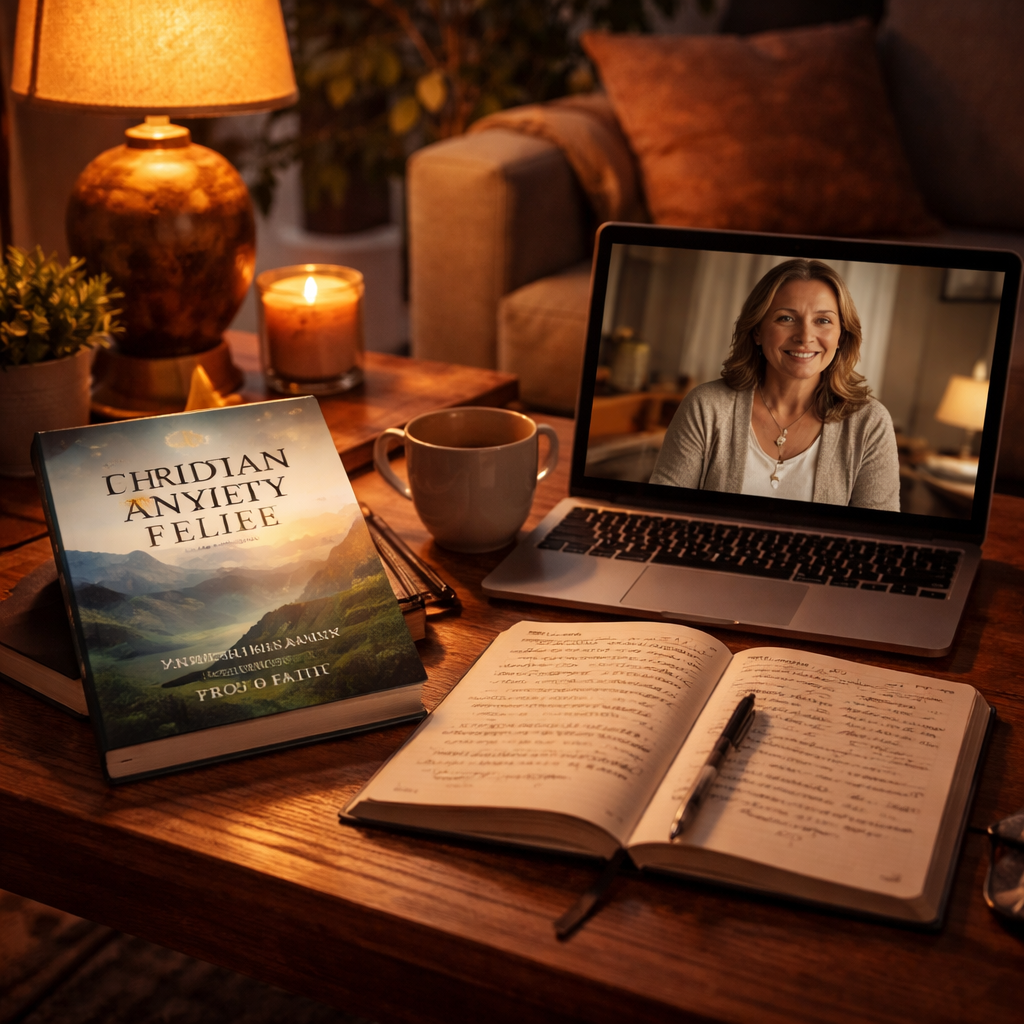
And what if you don’t have a local counselor? No worries – many Christian counselors offer virtual appointments, so you can connect from your kitchen table.
Adding Extra Resources to Your Toolbox
Beyond one‑on‑one counseling, think of your anxiety‑relief journey as a small library of support. Here are a few resources you can slot in alongside the ebook:
- Group Bible Study focused on peace. Gather a handful of friends once a week, read a calming passage, and share how anxiety shows up for each of you.
- Audio guided meditations. While the ebook gives you a script, an audio track can free your hands for prayer or chores.
- Journaling prompts. The ebook already includes prompts, but you might also try a dedicated gratitude journal to track God’s faithfulness.
- Spiritual counseling package. Charlene Murray offers a personalized counseling service that aligns with the principles in the ebook, giving you a custom plan that feels like a spiritual coach.
Picture this: you finish your daily verse‑breath‑pray loop, then spend five minutes reviewing a journaling prompt, and later in the week you have a 20‑minute video call with a counselor. The pieces start fitting together, and the anxiety that used to feel like a wall becomes a series of small, manageable steps.
Does it feel overwhelming to add more? Not at all. Start with one extra habit – maybe the group study – and let the rest fall into place as you see progress.
And remember, the goal isn’t to stack more tasks on your plate; it’s to create a supportive ecosystem that reminds you you’re not walking this alone.
Now, take a breath and ask yourself: which of these resources feels like the missing piece in your routine? Maybe it’s the group study, maybe it’s that virtual counseling session, or perhaps a simple gratitude journal. Whatever you choose, make a tiny commitment today – set a reminder, send an email, or write a note to yourself.
When you combine Scripture, breath, counseling, and extra tools, you’re essentially building a safety net made of God’s promises and human connection. That net catches you when the anxiety spikes, then lifts you back up with a gentle, faith‑filled push.
Ready to try? Open the christian anxiety relief ebook right now, jot down one resource you’ll add this week, and schedule a 30‑minute call with a counselor. You’ll be surprised how quickly that extra layer of support turns anxiety from a storm into a passing cloud.
Conclusion
We've walked through how Scripture, breath, and counseling can turn anxiety into a calmer space.
So, where does that leave you right now? You have a toolbox – the christian anxiety relief ebook, a few verses, a simple breathing rhythm, and the option to lean on a trusted counselor.
Imagine opening the ebook tonight, picking the verse that speaks to your worry, and letting the breath guide you for three minutes. That tiny habit is the anchor that keeps the storm from pulling you under.
What’s the next step? Choose one concrete action: set a reminder to practice the verse‑breath‑pray loop tomorrow morning, or write down a quick note to schedule a 30‑minute counseling call.
When you pair that action with the ebook’s daily prompts, you’re building a safety net woven from God’s promises and human support.
Remember, progress isn’t a sprint; it’s a series of small wins. Each time you follow through, the anxiety cloud shrinks a little more.
Take a moment now, open the christian anxiety relief ebook, and jot down the very first resource you’ll add this week.
That simple commitment is all it takes to move from feeling stuck to feeling steadier, one breath at a time.
FAQ
What is the christian anxiety relief ebook and how does it actually work?
Think of the ebook as a toolbox built around Scripture, simple breathing patterns, and guided reflections. Each chapter pairs a Bible verse with a three‑minute breath‑and‑prayer loop, then prompts you to journal what you notice. The idea is that the rhythm of your breath anchors the truth of the verse, calming the nervous system while God’s promise rewires the worry loop. It’s a step‑by‑step practice you can drop into any hectic moment.
Do I need any special equipment to use the christian anxiety relief ebook?
Not at all. All you really need is a quiet spot, a Bible or the ebook on your phone or tablet, and a few minutes of breath. A notebook or a note‑taking app helps you capture the journaling prompts, but even a scrap of paper works. The exercises are designed to fit into coffee breaks, commute pauses, or bedtime routines—no fancy gear required.
Can I use the ebook if I’m not a regular church‑goer?
Absolutely. The content focuses on universal biblical truths rather than denominational language, so anyone who wants to lean on God’s word can benefit. The breathing techniques are secular‑friendly, and the verses are chosen for their calming power—not church ritual. If you’re new to Scripture, the ebook even includes short explanations that make each passage feel relatable.
How often should I practice the verse‑breath‑pray loop?
Consistency beats intensity. Aim for three minutes a day—maybe right after you wake up, during a lunch break, or before you sleep. If you’re feeling a spike of anxiety, you can repeat the loop as many times as you need, but the habit of a daily reset builds a lasting sense of peace. Over a week you’ll likely notice your heart rate settle faster and your thoughts feel less tangled.
Is the christian anxiety relief ebook suitable for teens or kids?
Yes, the language is simple enough for younger readers, and the breathing component is age‑friendly. Parents can sit with their teen, pick a verse together, and practice the rhythm hand‑in‑hand. For younger kids, you might shorten the breath count or use a visual cue like a calm‑down jar while you read a verse like Psalm 23. The core idea—pairing God’s promise with a soothing breath—translates across ages.
What if I don’t feel any relief after a week?
First, give yourself grace—changing nervous‑system patterns takes time. Check that you’re matching the breath to the verse (inhale on the first half, exhale on the second) and that you’re truly focusing on the words, not just the mechanics. If anxiety still feels stubborn, consider pairing the ebook with a short session of spiritual counseling (you can find a licensed Christian counselor online). The added conversation often helps you uncover hidden triggers the verse alone can’t reach.
How can I keep the habit from falling apart once the novelty wears off?
Turn the practice into a cue‑action‑reward loop. Tie it to an existing habit—like brushing your teeth or making your morning coffee. Set a phone reminder titled “Verse‑breath‑pray” so the cue pops up automatically. Celebrate tiny wins; maybe journal a single sentence each day about how you felt. Over time the routine becomes a natural part of your day, like a quiet coffee chat with a trusted friend.