

Bible Study for Beginners PDF: A Practical Guide to Getting Started
Ever opened a Bible and felt like you were staring at a mystery novel written in another language?
Maybe you’ve tried a study guide, watched a YouTube tutorial, or even downloaded a “bible study for beginners pdf” hoping it would magically make sense, but the pages still look like a maze.
Here’s what I mean: the excitement of a fresh start quickly turns into the frustration of not knowing where to begin, which verse to highlight, or how to apply it to your everyday hustle.
Honestly, I’ve been there too—sitting at my kitchen table, coffee cooling, scrolling through endless PDFs that promised “simple steps” but delivered more confusion.
So, what if we flipped the script? Imagine a printable guide that actually walks you through one verse at a time, gives a quick background, and suggests a tiny, doable action you can try that same day.
That’s the sweet spot of a well‑crafted bible study for beginners pdf: it’s bite‑size, visually clean, and paired with a bit of spiritual coaching that feels like a friend whispering encouragement.
Think about it this way: instead of a 500‑page tome, you get a handful of pages you can print, highlight, and stash in a notebook you already love.
And because we’re all busy, the guide includes a simple schedule—just ten minutes after dinner or during a morning commute—so the habit sticks without feeling like a chore.
When you actually see progress—like understanding the story behind Psalm 23 or applying its peace to a stressful workday—you’ll notice that the PDF isn’t just paper, it’s a roadmap to a quieter heart.
One tip that often gets overlooked is pairing the study with a short prayer journal. Jot down a single sentence after each session; over weeks you’ll see patterns of growth that numbers alone can’t capture.
And if you ever feel stuck, remember you’re not alone; there are communities and even one‑on‑one spiritual counseling that can help you untangle tricky passages.
Ready to turn that PDF from a dusty download into a living, breathing part of your day? Let’s dive in and explore how a thoughtful beginner’s guide can spark real transformation.
TL;DR
A bite‑size bible study for beginners pdf gives you a printable, ten‑minute daily plan that turns confusing verses into clear, personal insights.
Follow the simple schedule, jot a quick journal note, and watch your faith grow steadily without overwhelm. You’ll truly feel more connected each day, even on busy mornings.
Choosing the Right Beginner Bible Study PDF
So you’ve found a handful of bible study for beginners pdf files, but which one actually feels like a friend rather than a textbook?
Here’s the thing: the right guide should match the way you learn, the time you have, and the spiritual vibe you’re chasing. If you’re the type who loves a quick, ten‑minute read after dinner, look for a PDF that’s broken into bite‑size sections with clear headings and a simple daily schedule.
Check the layout before you download
A clean, spacious layout does more than look pretty—it reduces eye strain and lets you highlight without feeling like you’re filling a cramped notebook. Look for generous margins, bullet points, and a consistent font size. When the pages feel airy, you’re more likely to keep coming back.
And don’t forget visual cues. Some PDFs sprinkle icons or colour‑coded themes to signal “background,” “reflection,” and “action.” Those little signals keep you from scrolling endlessly trying to figure out what to do next.
Match the study style to your life rhythm
If you’re a morning commuter, a PDF that suggests a short devotional you can read on a train works better than a “weekend deep‑dive” format. If you prefer evenings with a cup of tea, find a guide that pairs each verse with a journaling prompt you can finish in five minutes.
Ask yourself: do I need a study that walks me through the whole book of Psalms, or do I just want a daily “verse‑plus‑application” combo? The right answer will steer you toward a PDF that feels custom‑made for your schedule.
Look for credible authors and community support
When the creator of the PDF also offers a blog, a podcast, or a friendly forum, you get an extra safety net. It’s like having a study buddy who can answer questions when a passage feels murky.
For example, Healthier Lifestyle Solutions often reviews spiritual resources and highlights guides that blend wellness with Scripture, giving you a broader perspective on why a certain study might click with your health goals.
Another niche spot to explore is Midnight Scriber, where writers share personal reflections on the PDFs they’ve tried. Those anecdotes can help you spot hidden gems or avoid a guide that’s all hype and no heart.
After you watch the quick walkthrough, pause and ask: does the PDF’s structure match the rhythm I just described? If you can picture yourself opening the file, reading a verse, jotting a quick note, and feeling a spark of insight, you’re on the right track.
Here’s a quick checklist you can print beside your coffee mug:
- Clear, spacious layout with headings and bullet points
- Daily or weekly schedule that fits your routine
- Built‑in reflection prompts, not just plain verses
- Author credibility and optional community support
When you tick most of these boxes, you’ve likely found a PDF that won’t collect dust on your hard drive. Instead, it’ll become a living part of your day—like a gentle nudge that says, “Hey, let’s dig a little deeper together.”
Finally, give the PDF a test run for a week. Keep a tiny log of how many days you actually used it and what tiny change you felt—maybe a calmer mind during a stressful meeting or a new gratitude habit. If the numbers are low, try another guide; the perfect match is out there, you just have to keep looking.

Choosing the right beginner guide isn’t about finding the biggest file; it’s about finding the one that fits you like a well‑worn pair of shoes—comfortable, supportive, and ready for the next step of your faith journey.
Essential Tools and Resources for Your First Study
Alright, you’ve got that PDF you printed, you’ve skimmed the layout, and you’re ready to actually sit down and study. But what else should be right there on your desk to keep the momentum going?
Think of a study session like a short hike. You need a good map, sturdy shoes, and maybe a water bottle. In the world of a bible study for beginners pdf, those three things translate into a clean PDF, a printable habit tracker, and a complementary e‑book that deepens the bite‑size insights.
1. The PDF Itself – Your Study Map
The PDF is the core. It should break each verse into three parts: background, reflection question, and a tiny action step. Look for a layout that uses plenty of white space, bold headings, and a simple font. When you open the file, you want to feel like you’re flipping through a friendly notebook, not a textbook.
Do you prefer a sunrise‑themed design for morning devotion? Or maybe a night‑owl version with soft blues? The right visual vibe can make the difference between “I’m ready” and “I’m too busy.”
2. Printable Habit Tracker – Your Walking Shoes
A habit tracker is the low‑key hero that turns a one‑off read into a daily habit. It’s usually a one‑page calendar where you tick off each day you’ve completed the three‑step study. Seeing a chain of green checkmarks builds a subtle but powerful sense of accomplishment.
Print it on cardstock so it’s sturdy enough to stick on the fridge or your office wall. Every time you glance at it, you get a tiny reminder: “Hey, you’ve got ten minutes tonight.”
3. Companion E‑Book – Your Water Bottle
While the PDF gives you the quick bite, a short e‑book like Charlene Murray’s Spiritual Food or Divine Direction offers the deeper nourishment. These books expand on the themes you’re already exploring, giving you a richer context without overwhelming you.
Because they’re short and focused, you can read a chapter between meals or during a commute. It’s the perfect way to turn a “just a verse” moment into a full‑bodied spiritual snack.
4. Optional Extras – The Trail Snacks
If you like a little community, consider joining a private Facebook group that often comes with premium PDF bundles. The group can supply accountability, answer tough questions, and share extra worksheets.
Or, if you’re a family person, grab a printable discussion prompt sheet. That way the whole household can chat about the day’s verse around the kitchen table.
Quick Comparison Table
| Feature | Tool / Resource | What It Gives You |
|---|---|---|
| Core Study Content | Beginner-friendly PDF | Three‑part verse breakdown, clean layout, quick‑start guide |
| Consistency Booster | Printable habit tracker | Visual daily check‑off, habit‑forming momentum |
| Deeper Insight | Companion e‑book (e.g., Spiritual Food) | Expanded context, extra reflections, longer reading |
So, which combo feels right for you? If you’re just dipping your toe, start with the PDF and habit tracker. If you’re hungry for more depth, add a short e‑book and maybe a community group.
Here’s a simple action step: Grab your PDF, print the habit tracker, and choose one e‑book that speaks to you. Set a timer for ten minutes tonight, mark the day on the tracker, and jot a single sentence about what you learned. Tomorrow, repeat. Before you know it, you’ll have a streak that looks like a tiny victory parade.
Remember, the tools are only as good as the habit you build with them. Keep it simple, stay consistent, and let the resources do the heavy lifting while you enjoy the quiet walk with God.
Step-by-Step Guide to Downloading and Using a PDF Bible Study
Alright, you’ve finally found a bible study for beginners pdf that feels right. The next question is: how do you get it from “download button” to “daily habit” without a hiccup?
1. Find a trustworthy source
Start by visiting a site you know trusts your spiritual journey. Look for clear preview pages, sample pages, and a short description of the study’s structure. If the description mentions a three‑part verse breakdown, a printable habit tracker, and a quick‑start guide, you’re probably in the right place.
Once you’ve confirmed the fit, click the “Buy” or “Free Download” button. Most creators will ask for an email address—just enter yours, hit submit, and watch your inbox fill with a .zip file or a direct PDF link.
2. Save the file where you’ll see it
When the PDF lands in your inbox, don’t let it get lost in a sea of newsletters. Save it to a dedicated folder like BibleStudyPDFs on your computer or cloud storage. If you’re on a phone, use a “Files” app and rename the file something simple, e.g., BeginnerStudy_Jan.pdf.
Pro tip: duplicate the file – one copy stays on your device for reading, the other you can print later.
3. Open and explore the layout
Open the PDF and skim the first two pages. You should see a clean header, a brief background note, a reflection question, and a tiny action step. If the pages feel cramped or the font is tiny, consider adjusting the view settings or printing a larger version.
Take a moment to locate the habit tracker. Most PDFs include a one‑page calendar at the back. Highlight the day you plan to start – this visual cue is the secret sauce that turns “maybe tomorrow” into “I’m doing it today.”
4. Print or set up a digital workspace
If you love the feel of paper, print the first week’s pages on a bit of cardstock. Use a binder clip or a small folder so the pages stay together. If you prefer digital, open the PDF in a note‑taking app that lets you annotate – underline verses, add sticky notes, or type a quick journal entry.
Either way, keep a simple pen or a stylus within reach. The goal is to make the study feel like a conversation, not a chore.
5. Schedule a ten‑minute window
Pick a consistent time slot – maybe right after dinner or during your commute (audio‑read the PDF if you’re driving). Set a timer for ten minutes. When the alarm goes off, open the PDF to the next verse, read the background, answer the reflection question, and note the action step.
For example, on Monday you might read Psalm 23, jot down, “God’s shepherd walks with me at work,” and then commit to taking a five‑minute walk during lunch to notice His presence.
6. Track progress and adjust
Each day, mark your habit tracker. After a week, glance back – those green checkmarks are tiny victories. If you miss a day, don’t stress; just note why and jump back in tomorrow.
Sometimes the PDF’s pace feels fast. If that happens, pause the timer, reread the background, or pair the study with an e‑book like Charlene’s Spiritual Food for deeper context.
7. Join a community for accountability
Many PDF creators host a private Facebook group or a Discord channel. Joining one gives you a place to ask questions, share insights, and get gentle nudges when life gets busy. It’s like having a study buddy without leaving your couch.
If you’d like a structured roadmap, check out Bible Study for Beginners: A Step-by-Step Guide. It walks you through exactly the same steps we just covered, plus offers bonus worksheets.
8. Blend spiritual and physical wellness
Studying Scripture isn’t just a mental exercise; it can spark healthier habits overall. Pair your ten‑minute study with a quick stretch, a glass of water, or even a short walk. If you’re looking for a complementary wellness routine, you might explore resources at Weight Loss After 40 For Women – a simple way to align spiritual growth with physical well‑being.
When the study becomes part of a broader self‑care ritual, you’ll notice both your heart and your body feel lighter.
Action checklist
- Download the PDF and save it in a dedicated folder.
- Print the first week or set up a digital annotation space.
- Mark your start day on the habit tracker.
- Schedule a daily 10‑minute slot and set a timer.
- Complete the three‑step verse routine each day.
- Review your tracker weekly and adjust as needed.
Give it a try tonight: open the PDF, read the first verse, write one sentence in your journal, and tick the day on your tracker. Tomorrow, repeat. Before you know it, you’ll have built a habit that feels as natural as sipping coffee in the morning.
Integrating Audio and Visual Aids with PDF Study Materials
Okay, you’ve got the printable PDF in front of you. It’s clean, it’s bite‑size, and you’ve already set a ten‑minute timer. But what if you could make those ten minutes feel like a mini‑sermon, a quick podcast, and a mini‑movie all at once?
That’s where audio and visual aids slide in. They turn a static page into a living conversation, and they’re surprisingly easy to add without buying fancy software.
Why audio matters
Think about those moments when you’re driving, cooking, or even walking the dog. You can’t flip a PDF, but you can listen. Recording yourself reading the verse, the background note, and the reflection question turns your study into a portable devotional.
And it’s not just about convenience. Hearing the rhythm of Scripture spoken aloud engages a different part of your brain. Studies on auditory learning show that retention jumps when you pair reading with listening. So, a quick voice memo of the day’s passage can make the lesson stick longer.
How to create a simple audio companion
Grab any voice‑memo app on your phone – the one you already use for reminders works fine. Open the PDF, read the three‑part breakdown out loud, and hit record. Keep it under two minutes; you’re not trying to produce a podcast, just a personal reminder.
Pro tip: Use a calm, conversational tone, as if you’re explaining the verse to a friend over coffee. If you stumble, pause, take a breath, and start again. The rawness actually feels more authentic.
Once recorded, save the file with the date and verse name (e.g., "Psalm23_2025-12-03.m4a"). Store it in a folder next to your PDF. When you’re on the go, just tap the file and let the words guide you.
Visual aids that don’t require Photoshop
Now, let’s talk pictures. A simple image can spark the imagination and give context to a verse. For instance, a quick Google image of a shepherd’s crook next to Psalm 23 reinforces the metaphor without you having to draw anything.
But you don’t have to become a graphic designer. Most PDF readers let you insert an image with a couple of clicks. Choose a relevant picture – a sunrise for a morning reflection, a calm lake for a peace‑focused verse – and drop it into the margin. Keep it small; you want the image to enhance, not overwhelm.
Another low‑effort visual trick is to use colored highlights that match your mood. If today’s verse is about hope, use a bright yellow; if it’s about repentance, a gentle orange. The color becomes a visual cue that your brain links to the feeling.
Pairing audio and visuals for a multisensory study
Here’s a quick routine you can try:
1. Open the PDF and glance at the image you added.
2. Press play on your voice memo and listen while you follow along with your eyes.
3. After the audio, close the file and write one sentence in your journal about how the image and the spoken words landed for you.
That three‑step loop – see, hear, write – hits sight, sound, and kinesthetic learning all at once. And because each step only takes a minute or two, you still stay within that ten‑minute window.
And if you’re comfortable with a bit of tech, you can even sync the audio to the PDF using a free app like “PDF Audio Sync.” It lets you tap a verse and automatically plays the matching recording. No need to hunt for the right file.
Making it a habit
Consistency is the secret sauce. Put a sticky note on your laptop that says “Play audio” or set a recurring reminder in your phone titled “Audio‑PDF time.” The cue will nudge you until it becomes second nature.
Remember, the goal isn’t perfection. It’s about adding a little texture so the study feels less like a chore and more like a conversation with yourself and God.
So, grab that PDF, record a short audio, sprinkle in a meaningful image, and see how the experience transforms. You might find the verse staying with you longer, or a new insight popping up because the visual sparked a memory you hadn’t considered before.
Give it a try tonight: choose today’s verse, find a simple picture, record a quick audio, and watch how the whole thing feels more alive. Tomorrow, repeat with a new verse and let the rhythm build. Before long, you’ll have a library of audio‑PDF combos that turn your study into a multisensory habit you actually look forward to.
Top 5 Free PDF Bible Study Guides for Beginners
Alright, you’ve got the habit down and you’re ready for a fresh set of pages that actually guide you step‑by‑step. Below are five free PDF guides that feel like a friendly mentor rather than a dense textbook.
1. The Simple Inductive Study PDF
This one is straight out of the free inductive Bible study PDF that Karin Peters shares. It breaks each passage into three bite‑size parts – background, observation, application – and even includes a printable habit tracker. You get a clean layout, a tiny action step, and a space for a one‑sentence journal note. Perfect for the ten‑minute slot we’ve been building.
Try it tonight: open Psalm 23, copy the three‑part template onto a sticky note, and write “Take a 5‑minute walk at lunch and notice God’s presence.”
2. The 30‑Day Jump‑Start Guide
Designed for total beginners, this guide gives you a daily verse, a short background paragraph, and a single reflective question. The PDF is printable on half‑letter paper, so you can tuck it into a small notebook. What I love is the “quick‑start” section that tells you exactly where to click on your phone, no extra apps needed.
Action tip: print the first week, set a calendar reminder titled “Bible minute,” and watch the habit stick.
3. The Family Conversation PDF
If you want to bring the whole household into the study, this guide adds a “discussion prompt” column. Each page invites a parent, teen, or grandparent to share a personal insight in just one sentence. The layout is roomy enough for kids to doodle a picture next to the verse, making the experience tactile.
Give it a go at dinner: after the verse, ask “What’s one thing you heard today that could help our family this week?”
4. The Visual‑Boost Study Sheet
This PDF pairs a short devotional with a suggested image you can paste into the margin – think sunrise for a morning verse or a calm lake for a peace‑focused passage. The visual cue reinforces the theme without needing Photoshop. It also includes a tiny checklist so you can mark “image added” each day.
Try it: print a simple picture of a shepherd’s crook, glue it next to Psalm 23, and notice how the image makes the metaphor stick.
5. The Audio‑Ready Companion PDF
Built for people on the go, this guide leaves a blank space for you to record a 60‑second voice memo of the day’s verse and reflection. The PDF even shows where to drop the file on your phone so you can tap and listen while you’re driving or cooking.
Start small: record yourself reading the verse and a quick thought, then play it back during your commute. You’ll be surprised how much louder the message feels.
Each of these free PDFs is designed to keep the study light, visual, and actionable. Pick the one that matches your current rhythm, print or download it, and let the next ten minutes become a conversation you actually look forward to.
Maintaining Consistency and Tracking Progress
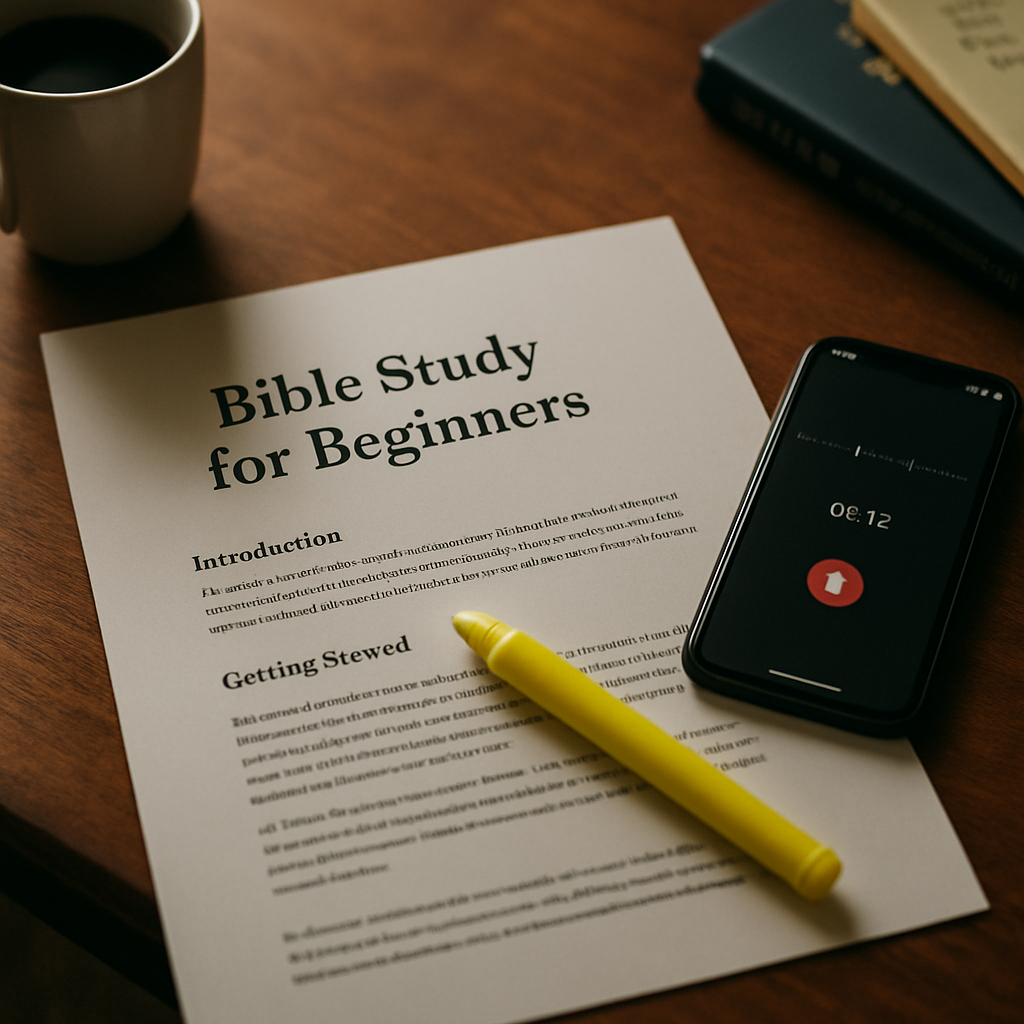
Ever feel like you start a new bible study for beginners pdf and then… nothing? You open the file, read the first verse, and the next day the PDF is buried under a pile of receipts.
That’s the exact moment I realized consistency is less about willpower and more about tiny signals that nudge you back every day.
Why consistency feels impossible
We all have busy mornings, endless to‑do lists, and that nagging voice saying “maybe tomorrow.” When the habit isn’t anchored to something concrete, “tomorrow” stretches forever.
But imagine a simple checkbox that says “prayer before, read, pray after.” Each tick feels like a tiny win, and those wins add up.
Start with a printable habit tracker
Grab a one‑page calendar, print it on cardstock, and hang it on the fridge. The 2BeLikeChrist team actually designed a daily Bible study progress tracker that breaks each day into four boxes: prayer before, reading, video (if you have one), and prayer after daily Bible study progress tracker. It’s a visual reminder that you’ve already committed, so you’re less likely to skip.
Every time you mark a box, your brain registers “I did it.” After a week you’ll see a string of green checks that says, “Hey, I’m actually doing this.”
Pair the tracker with your bible study for beginners pdf
Open the PDF, read the three‑part breakdown (background, reflection, action), then jump to your tracker and tick the day. It only takes five minutes, but the act of writing it down cements the habit.
If you prefer digital, create a simple spreadsheet with the same columns. The key is the same: a visible record you can glance at.
Set a non‑negotiable “mini‑window”
Pick a time slot that feels natural – maybe right after dinner while the coffee brews, or during your commute (listen to a voice memo of the PDF). Set a phone alarm titled “Bible minute.” When it buzzes, you know it’s go time.
Don’t aim for an hour; five to ten minutes is enough to keep momentum without feeling like a chore.
Use audio and visual nudges
Record yourself reading the verse and the reflection question. Play it while you’re cooking or walking the dog. The sound of your own voice makes the study feel personal, and the audio cue becomes a habit trigger.
Drop a small image in the margin of the PDF – a sunrise for a morning verse or a calm lake for a peace passage. Those visuals act as mental bookmarks that pull you back.
Review and adjust weekly
Every Sunday, flip through your tracker. Celebrate the streaks, note any missed days, and ask yourself why. Maybe you need a different time slot or a shorter reflection question.
Adjust the PDF layout if the font feels too small, or swap the habit tracker for a bullet‑journal spread you enjoy more. Flexibility keeps the system from feeling rigid.
Blend in a deeper resource
If the bite‑size PDF feels good but you crave more depth, sprinkle in Charlene Murray’s “Spiritual Food” e‑book or “Divine Direction.” Those books give you richer context without breaking the ten‑minute rhythm.
Just open to a short chapter after you’ve checked your tracker, read a paragraph, and note one extra insight in your journal.
Quick action checklist
- Print or set up a digital habit tracker.
- Schedule a consistent 5‑10 minute window.
- Read the bible study for beginners pdf, then tick the day.
- Record a brief audio recap and add a small image.
- Review your tracker weekly and tweak the routine.
Stick with these tiny steps, and before you know it, the habit feels as natural as brushing your teeth. Consistency isn’t a grand marathon; it’s a series of little, intentional moments that, together, turn a PDF into a living part of your day.
FAQ
What is a bible study for beginners pdf and how does it work?
Think of it as a tiny, printable workbook that breaks a verse into three bite‑size parts: a quick background, a reflection question, and a simple action step. You open the file, read the short intro, answer the question in one sentence, and then do the tiny action—maybe a prayer or a five‑minute walk. The whole thing fits into a ten‑minute window, so it feels doable even on a busy day.
How do I choose the right pdf for my schedule?
First, look at the layout. A clean design with plenty of white space lets you skim without feeling cramped. Next, check if the guide offers a quick‑start section that tells you exactly where to click on a phone or tablet—no extra apps needed. Finally, match the visual style to your routine: sunrise tones for morning devotion, softer blues if you study after dinner. When the PDF feels natural, you’ll actually want to use it.
Can I use a bible study for beginners pdf on my phone or tablet?
Absolutely. Most PDFs open in the native viewer on iOS or Android, so you can swipe through pages just like an e‑book. If you prefer a larger font, pinch‑zoom or adjust the view settings. Some people even add a tiny habit‑tracker calendar as a separate note in the same app, so the whole system stays in one place. The key is keeping the tech simple so it doesn’t become a barrier.
How long should I spend on each study session?
Aim for five to ten minutes total. Spend a minute reading the background, another minute answering the reflection question, and a final minute writing down the action step or a quick journal note. If you have extra time, you can add a short audio replay or a relevant image, but the core routine stays under ten minutes. That length makes it easy to fit into a coffee break or after‑dinner routine.
What if I miss a day? How do I get back on track?
Don’t beat yourself up. Grab the habit tracker, note the missed day, and write a brief “why” next to it—maybe a meeting ran late or you felt too tired. Then schedule a make‑up slot later in the week, even if it’s just a quick review of the missed verse. The visual record of your streak, combined with a honest note, helps you see patterns and adjust without feeling like you’ve failed.
Do I need any extra tools besides the pdf?
A plain pen or stylus is all you really need for the journal note and habit tracker. If you like audio, a voice‑memo app lets you record a 60‑second recap of the verse—perfect for listening while you cook or drive. Some people also print the tracker on cardstock so it can stick on the fridge, turning a daily reminder into a visual cue you can’t ignore.
How can I deepen the study without getting overwhelmed?
Start with the PDF alone for a week or two. Once the habit feels solid, add a short companion e‑book—something like Charlene Murray’s "Spiritual Food"—and read just one paragraph after your daily check‑off. You can also join a low‑key online community for accountability, but only if it feels supportive, not demanding. The idea is to layer depth gradually, not to pile on more than you can handle.
Conclusion
So you've walked through picking a bible study for beginners pdf, setting up a habit tracker, and even adding a quick audio note. By now you probably feel the tiny momentum building, like those green checkmarks on the fridge are cheering you on.
What does all this mean for your walk with God? It means you don't need a massive time block or a fancy library – just a clean PDF, a pen, and a ten‑minute window can turn Scripture into a daily conversation.
Remember the simple three‑part rhythm: background, reflection question, tiny action. When you stick to that pattern, the study stays bite‑size and avoids overwhelm. If a day slips, jot a quick note on why and jump back in tomorrow – the streak is a guide, not a judge.
Ready to make it stick? Grab one of Charlene Murray's e‑books, like Spiritual Food, and pair it with your PDF for that extra depth without sacrificing speed. Print the habit tracker on cardstock, slap it on the fridge, and set a phone alarm titled "Bible minute".
Give yourself a small win tonight: open the PDF, read the verse, write one sentence, and tick the day. Tomorrow repeat, and soon you'll have a habit as natural as brushing your teeth.
Keep it simple, stay consistent, and let the humble pdf be the bridge that brings Scripture into your everyday life.