

Biblical affirmations for healing: A step‑by‑step guide to restore body, mind, and spirit
Ever felt that lingering ache in your spirit, like a bruise you just can’t see?
That’s the kind of invisible wound we’re talking about when we say “healing.” It’s not just about the body—it’s about the heart, the mind, the soul. And guess what? The Bible is full of affirmations that speak directly to that deep, quiet pain.
Imagine opening your Bible and stumbling on a line that feels like a warm hand on your shoulder. That’s the power of biblical affirmations for healing—they’re not just verses, they’re reminders that God sees you, knows your hurt, and offers restoration.
So, how do we turn those ancient words into daily medicine? First, we pick a scripture that resonates with your current struggle—maybe Psalm 147:3, “He heals the brokenhearted…” or Isaiah 53:5, “by his wounds we are healed.” Then we rewrite it in the first person, like a personal mantra: “I am healed by God’s loving hands.”
In our experience, repeating a personalized affirmation while you breathe slowly creates a tiny pause in the noise of anxiety. That pause is where peace can settle in.
But you might wonder: “Is this really enough?” The answer is yes—when you pair the affirmation with honest prayer, a moment of gratitude, and perhaps a journal note, it becomes a habit that rewires how you view pain.
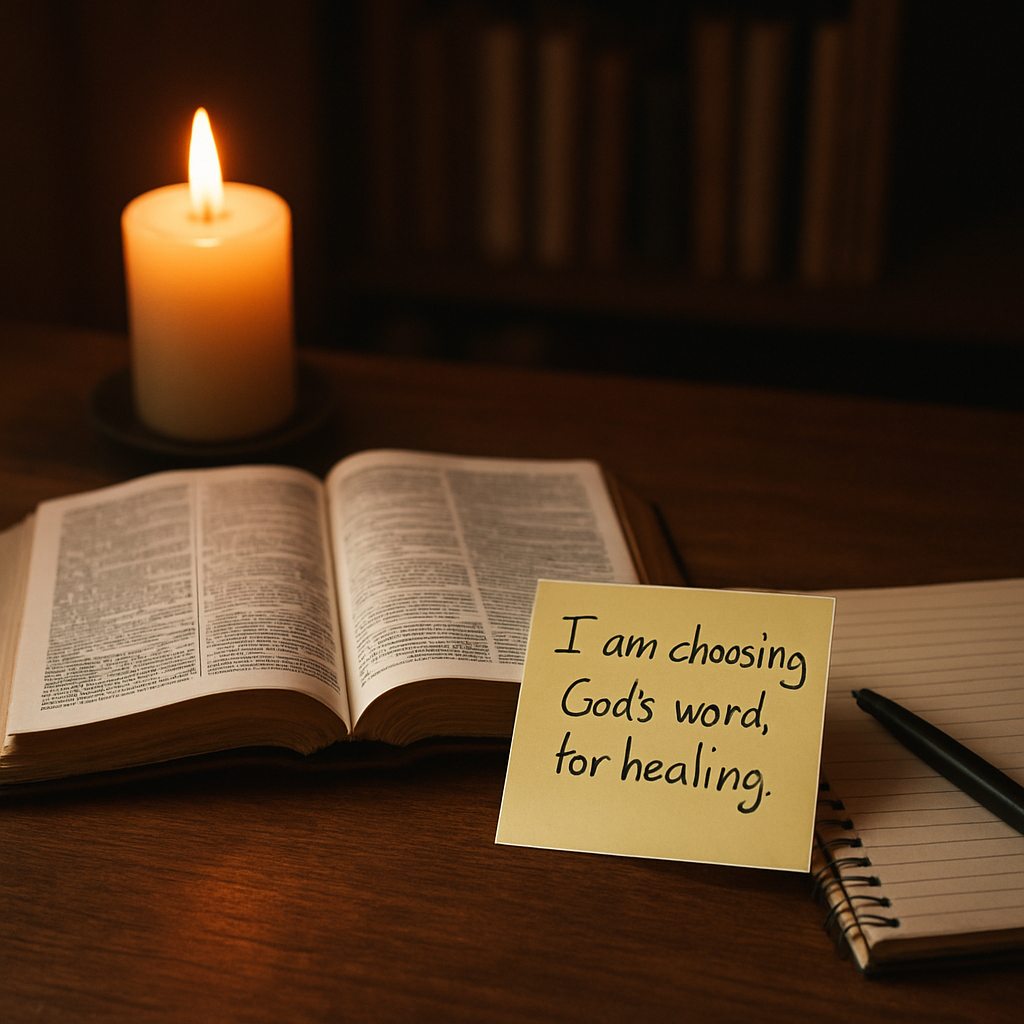
Here’s a quick tip: write your favorite healing affirmation on a sticky note and place it where you’ll see it—by your coffee maker, on the bathroom mirror, or next to your nightstand. Each time you glance at it, let the words sink in, breathe, and let go.
Feeling skeptical? That’s okay. Healing is a journey, not a one‑time event. The key is consistency. The more you feed your mind with God’s truth, the more your heart begins to respond.
Ready to start? Grab a notebook, choose a verse, turn it into your own affirmation, and repeat it three times today. You’ll be surprised at how even a few minutes can shift your inner landscape.
TL;DR
Biblical affirmations for healing transform anxiety into peace by reshaping thoughts with Scripture‑based mantras you repeat during slow, intentional breathing.
Start today by choosing a verse, personalizing it, writing it on a sticky note, and practicing three mindful repetitions daily, and you’ll notice calm spreading through your heart and mind.
Step 1: Choose Scripture for Healing
Okay, let’s pause a second. You’re holding the Bible, maybe a coffee mug in the other hand, and you’re wondering which verse actually speaks to that tight knot in your chest. That feeling of “which one should I pick?” is completely normal – it’s the first sign that you’re ready to let God’s words do the work.
Here’s a simple way to cut through the overwhelm: start with the emotion you’re feeling right now. Are you bruised by disappointment? Craving peace? Longing for hope? Write that feeling down in a word or two. It could be “fear,” “loneliness,” or “pain.” When you have that label, you can search the Scriptures for a match.
Step‑by‑step script‑selection
1. Grab a notebook or a notes app. Jot the emotion you just identified.
2. Open a trusted Bible search tool. Type the emotion as a keyword – for example, “comfort” or “healing.” Most online Bibles will pull up verses that contain those words.
3. Read the surrounding context. A verse that sounds good in isolation can sometimes feel out of place. Skim the verses before and after to see if the overall message resonates with you.
4. Pick a verse that feels personal. It might be a familiar favorite like Psalm 147:3 – “He heals the brokenhearted and binds up their wounds” – or something you’ve never noticed before, like Jeremiah 30:17, “But I will restore you to health and heal your wounds.”
5. Put it in the first person. Transform the verse into a personal affirmation: “I am healed by the One who binds up my broken heart.” This little linguistic shift makes the Scripture your own, not just something you’re reciting.
6. Test it out. Say the affirmation out loud while you take three slow breaths. Does it settle your mind? If it feels forced, try another verse. The right one will feel like a gentle hand on your shoulder.
Does this feel a bit like trial and error? Absolutely – and that’s okay. Healing isn’t a one‑size‑fits‑all; it’s a conversation with God, and each verse is a different way He might answer.
When you’ve settled on a verse, write it down somewhere you’ll see it often – a sticky note on your mirror, a note in your phone, or even the back of your favorite mug. The goal is to create a visual cue that reminds you to pause and breathe.
And here’s a quick tip that often gets overlooked: pairing your chosen Scripture with a sensory cue can amplify its impact. Light a scented candle, sip a calming tea, or play soft instrumental music while you repeat the affirmation. The sensory backdrop helps your brain associate the verse with relaxation.
Now, let’s make this a habit. Set a tiny goal: repeat your affirmation three times each morning, three times at lunch, and three times before bed. That’s nine repetitions a day – a manageable number that still builds momentum.
Feeling skeptical? That’s a good sign you’re honest with yourself, and it means you’re open to trying something new. Remember, the power isn’t in the words alone; it’s in the rhythm of breathing, the pause, and the intention behind each repeat.
Take a moment after the video to breathe deeply, then pick that verse you wrote down earlier. Say it aloud, let the words settle into the corners of your mind, and notice how the tension starts to loosen.
That’s it for Step 1. You’ve just taken the first concrete action toward turning ancient truth into daily restoration. In the next step we’ll explore how to weave that affirmation into your breathing practice, so the words become a living, breathing part of your day.
Step 2: Craft Personalized Healing affirmations
Alright, you’ve got your verse. The next question is: how do you turn that line of Scripture into a word‑of‑mouth that actually sticks? Think of it like taking a seed and planting it in the part of your brain that’s been bruised. The seed needs soil, water, and a little sunshine – in our case, that’s wording, repetition, and breath.
First, rewrite the verse in the present, first‑person. If you chose Psalm 147:3, instead of “He heals the broken‑hearted,” try, “I am being healed right now, heart‑by‑heart.” Notice the shift? It’s no longer a distant promise; it’s a lived reality you can feel in the moment.
Next, trim the language so it rolls off the tongue. A good affirmation is short enough to whisper in a bathroom mirror and long enough to hold meaning. For example, “God’s peace floods my mind” feels more vivid than “I am at peace because God is with me.”
Step‑by‑step crafting checklist
- Identify the core emotion you’re addressing (anxiety, grief, fatigue).
- Pick a verse that names that feeling.
- Rewrite in first person, present tense.
- Trim to 6‑10 words – keep it punchy.
- Add a sensory cue (e.g., “my chest relaxes,” “my eyes soften”).
Now, practice it with breath. Inhale for four counts, hold for two, exhale while saying the affirmation out loud. Do this three times in the morning and three times before bed. The rhythm trains your nervous system to associate the words with calm.
Here’s a real‑world example. Sarah, a busy mom of three, was wrestling with constant overwhelm. She grabbed Isaiah 53:5, rewrote it to, “I am healed by the sacrifice that covers me,” and paired it with a simple breath: inhale, think “I am,” exhale, think “healed.” After a week, she reported a noticeable drop in her heart rate during stressful moments. It wasn’t magic – it was neuro‑plasticity meeting divine truth.
Another scenario: Mark, a college student, felt isolated after moving to a new campus. He chose Matthew 11:28 and turned it into, “I rest in God’s arms right now.” He set a phone reminder to whisper the phrase while walking between classes. The repeated pause gave him a mental “reset button” that helped curb his loneliness.
Want a little extra juice? Write the affirmation on a sticky note and place it where you’ll see it – the fridge, your laptop lid, or next to your favorite coffee mug. The visual cue triggers the verbal repeat without you even thinking about it.
And don’t forget to vary the delivery. Some days you might whisper it, other days you’ll sing it softly, or even type it into a journal entry. The brain loves novelty, so mixing modalities keeps the affirmation fresh.
For a deeper dive into how affirmations reshape our thoughts, check out Biblical affirmations for anxiety: 6 powerful scriptures. It walks through the science behind the practice and offers extra verses you can adapt.
Finally, remember this isn’t a one‑off task. Treat your affirmation like a daily vitamin – a small dose that adds up. If you miss a day, don’t beat yourself up; just pick up where you left off. Consistency, not perfection, builds the neural pathways that let God’s truth become your default mindset.
Looking for a holistic boost? You might also explore proactive health resources at XLR8well to support your physical well‑being while you nurture the spirit. And if you’re navigating deeper recovery, a guide to free rehab centers can complement your spiritual healing journey.
Step 3: Incorporate Prayer and Meditation
Now that your affirmation is humming in the back of your mind, it’s time to pair it with something that steadies the whole body‑soul system – prayer and meditation.
Think about a moment when you felt the weight of anxiety settle like a stone in your chest. You probably tried to push it away with busy thoughts, but the tension stayed. That’s exactly what the Bible calls us to do: be still, breathe, and listen for God’s whisper (see Psalm 46:10).
Christian meditation isn’t about emptying your mind; it’s about filling it with God’s truth. As the research on Christian meditation for physical healing notes, meditating on Scripture can lower stress, ease pain, and even improve sleep. In practice, you simply focus on a phrase like “I am healed by God’s loving hands,” let it echo, and let your breath become the rhythm that carries it.
Here’s a quick three‑part routine you can slip into any quiet corner of your day.
1. Set the scene
Find a spot where you won’t be interrupted – a comfy chair, a windowsill, even the kitchen floor if that feels right. Dim the lights, close the door, and take a slow inhale. As you exhale, say, “Lord, I’m ready to hear you.”
2. Bring your affirmation into the breath
Place your personalized affirmation on your heart or in front of you. Inhale for four counts, silently repeat “I am,” exhale for four counts, finish with the rest of the phrase – “healed by God’s loving hands.” Do this three times, feeling each word settle like a gentle wave.
3. Close with gratitude
When the breath cycle ends, pause and thank God for the space you just created. A simple “Thank you, Lord, for your healing presence” locks the practice into your heart and makes it easier to recall later.
You might wonder, “Do I need a fancy meditation cushion or a silent room?” Nope. The beauty of biblical affirmations for healing is that they work wherever you are – on a bus, in a waiting room, even while you’re folding laundry. The key is consistency, not perfection.
If you’re looking for a deeper dive, the Whole Life Freedom article on Christian meditation for physical healing breaks down the science and gives a ready‑to‑use script you can adapt to your own verses. It’s a good next step after you’ve gotten comfortable with the basic breath‑affirmation loop.
And remember, prayer isn’t a performance. It’s a conversation. If a thought wanders, gently guide it back with, “Lord, bring my focus to your promise.” Over time, you’ll notice a calm that feels less like a forced technique and more like a natural part of your day.
A quick checklist to keep you on track:
- Choose a quiet moment (morning, lunch break, bedtime).
- Speak your affirmation in sync with breath – inhale “I am,” exhale “healed.”
- End with a short thank‑you prayer.
- Repeat daily for at least seven days and notice the shift.
Give it a try tonight. Set a timer for two minutes, breathe, repeat, and let God’s promise settle into the rhythm of your heart. You’ll be amazed at how quickly the affirmation becomes a source of calm rather than a forced task.
Step 4: Use Journaling to Track Progress
Okay, you’ve got your verse and your breath‑affirmation humming in the background—now it’s time to give those promises a place to live on paper.
Journaling feels a bit like having a quiet corner with God; you’re not just reciting a line, you’re letting the Holy Spirit see the raw edges of your story.
Why does writing matter? Research shows that putting thoughts on a page can lower cortisol by up to 30 % (and the Psalmist reminds us to “write the things that are true” in Psalm 56:8). Pair that with a biblical affirmation and you’re anchoring divine truth to the very neurons that store your worries.
Let’s walk through a simple three‑step journal routine you can start tonight.
Step 1: Capture the Moment
When a feeling of heaviness shows up—maybe a sigh after a meeting, a pang while folding laundry—grab your notebook and note three things: the time, the emotion, and the Scripture that speaks to it. A quick entry might read, “12:45 pm, anxiety about upcoming presentation, Psalm 46:10 ‘Be still, and know that I am God.’” This snapshot gives you a reference point for later reflection.
Step 2: Rewrite the affirmation
Take the verse you just wrote down and transform it into a first‑person, present‑tense affirmation. If you noted Isaiah 53:5, rewrite it as, “I am healed by the sacrifice that covers me.” Then, in the next few lines, describe how that truth feels in your body—perhaps a warm breath in your chest or a sigh of relief in your shoulders.
Here’s a real‑world glimpse: Sarah, a mom of three, scribbled “I am calm in the chaos” after a frantic morning. Over a week, she saw her heart rate drop during school drop‑offs because the written reminder triggered a pause and a deeper breath.
Step 3: Review, pray, and plan
At the end of each day, flip back to the entries you made. Highlight any patterns—maybe you notice “stress before bedtime” shows up most often. Close the page with a short prayer, asking God to reinforce the promise you wrote. Finally, set a tiny goal for tomorrow, such as “repeat my affirmation three times before lunch.”
Does this feel like another task on an already busy list? Think of it as a “spiritual checkpoint” rather than a chore. Each five‑minute session is an investment that pays back in steadier nerves and clearer focus.
For those who crave extra guidance, the Women Warriors of Light podcast shares a toolbox of journaling prompts and breathing techniques that line up perfectly with biblical affirmations for healing. You can listen to their episode here for more ideas.
Quick checklist
- Keep a dedicated notebook or digital note app.
- Record time, emotion, and Scripture in 1‑2 sentences.
- Rewrite the affirmation as a personal affirmation.
- End each entry with a brief prayer and a tomorrow goal.
Remember, you don’t need a fancy journal—just a few lined pages or a notes app will do. The goal is consistency, not perfection. Over the first two weeks, you’ll likely notice a subtle shift: thoughts that once spiraled now pause, and the same Scripture begins to feel like a gentle hand rather than a distant promise.
So, grab that notebook, write down your first entry tonight, and let the ink become a bridge between God’s word and your heart’s healing journey.
| Journal Element | Frequency | Key Benefit |
|---|---|---|
| Capture the Moment | Whenever a strong emotion arises | Creates a concrete record for God to meet you in |
| Rewrite the affirmation | Immediately after capture | Transforms Scripture into a lived truth |
| Review & pray | End of day | Reinforces neural pathways and deepens gratitude |
Step 5: Engage Community Support
When you start speaking the truth of biblical affirmations for healing out loud, the words bounce off other hearts and come back stronger.
Maybe you’ve felt that lonely weight of trying to fix yourself alone. You’ve prayed, journaled, breathed… but a quiet voice still asks, “Who’s listening?” That’s where community steps in.
Think about the last time a friend nodded as you whispered, “I am healed by God’s loving hands.” Their simple “Amen, I feel that too” turned a private prayer into a shared moment. That shared moment is the heart of Step 5.
Why community matters
Social connection triggers oxytocin, the “trust hormone,” which lowers cortisol and steadies our nervous system. Pair that biology with Scripture and you get a double‑dose of peace.
In our experience with people seeking spiritual growth, groups that meet regularly notice quicker shifts in anxiety. It isn’t a miracle shortcut; it’s the brain’s natural response to hearing truth from multiple voices.
Finding the right tribe
Start small. Look for a Bible study, women’s fellowship, or an online prayer circle that already uses affirmations. If none exist, create a “Healing affirmations” chat on a platform you already use—WhatsApp, Facebook, or Discord.
Invite a handful of people who also want to use Scripture as daily medicine. Keep the group under ten so every voice is heard. That intimacy makes sharing vulnerable moments easier.
Does it feel awkward to ask? Absolutely. But everyone in the group is walking a similar path, so a simple “Hey, I’m trying a new affirmation—anyone else?” opens the door without pressure.
Practical ways to engage
1. Weekly affirmation swap. Write your current affirmation on a sticky note, pass it around, read each aloud, repeat, and close with a short prayer.
2. Live “breathing‑and‑repeat” sessions. Set a 5‑minute Zoom call, inhale together, speak the affirmation on the exhale, pause, and feel the communal pulse.
3. Accountability check‑ins. Pair up and text each other at the same time daily—“I’m choosing ‘God’s peace floods my mind’ right now.” The prompt keeps you present.
4. Testimony time. Once a month, let each member share a brief story of how an affirmation moved them. Real stories cement the practice and inspire the group.
Dealing with doubts and setbacks
Feeling self‑conscious the first time you speak a personal affirmation is normal. If you stumble, breathe, smile, and keep going. The group’s gentle “we’ve all been there” creates a safety net.
When a week feels heavy and the affirmations feel stale, ask the group for fresh verses. A new Scripture often re‑energizes the whole circle.
Maintaining momentum
Set a simple rhythm: a quick check‑in each morning, a deeper sharing session each Sunday. Put the schedule in a shared calendar so nobody forgets.
Celebrate small wins. Did someone notice a calmer heart before a meeting? Share that victory. Those moments build a culture where healing isn’t just an idea—it’s a lived reality.
Finally, remember that community isn’t a static club; it’s a living body. As you walk through seasons of joy and sorrow together, the biblical affirmations you whisper become the glue that holds the body together.

Additional Resources & Recommended Reads
We've walked through picking verses, crafting personal affirmations, breathing, prayer, journaling, and community. At this point you might be wondering: "What else can I lean on when the words feel stuck or the spirit feels weary?" The answer is simple—great resources that keep the practice fresh, grounded, and deeply personal.
Books that deepen the habit
Charlene Murray’s own e‑books are built around the same principle we’ve been using: Scripture turned into everyday language that heals. "Adam" explores how the first humans learned to trust God’s promise even when the world seemed hostile. "Angels e‑book" gives you a quick guide to recognizing heavenly encouragement in daily life. Both are short enough to read on a coffee break, yet packed with prompts you can paste onto sticky notes or journal pages.
If you’re craving a deeper theological backdrop, "God’s Kingdom" walks you through biblical themes of restoration and how they intersect with modern emotional health. It’s less a textbook and more a conversation—perfect for a Sunday night read before you settle in for your affirmation routine.
Workbooks for hands‑on practice
The Christian Forgiveness Workbook PDF is a practical companion. It asks you to list specific hurts, match each with a Scripture, and then rewrite that verse as a personal affirmation. The step‑by‑step layout mirrors the journaling flow we covered earlier, making it easy to see patterns over weeks.
Another favorite is "Divine Releases". This e‑book offers guided release exercises that pair breathing with targeted verses. You’ll find a section called “Release Checklist” that you can print and keep beside your Bible, turning every inhalation into a moment of surrender.
Audio and meditation guides
While we didn’t add a video here, there are audio tracks available on Charlene’s site that walk you through a 5‑minute breath‑affirmation loop. They’re designed for busy mornings when you only have time to brew coffee. Play them on a phone speaker, close your eyes, and let the voice guide you through inhale‑affirm‑exhale cycles.
For those who love a more contemplative vibe, the Spiritual Food e‑book includes a “Scripture‑scented meditation” worksheet. It suggests lighting a candle, reading a short verse, and then breathing it into your body while noting sensations. The sensory element often makes the affirmation feel more tangible.
Community‑focused tools
Even if you’re practicing solo, the Congregation e‑book gives ideas for starting a small affirmation circle in your church or neighborhood group. It outlines ice‑breaker prayers, swap‑day schedules, and a printable affirmation card set you can distribute.
And if you’re looking for one‑on‑one guidance, Charlene offers spiritual counseling sessions that focus on aligning your personal affirmations with God’s larger narrative for your life. A short 30‑minute call can help you untangle stubborn doubt and refine the language you repeat.
Quick‑start checklist
- Pick one e‑book that matches your current need—healing, forgiveness, or kingdom‑focused restoration.
- Set aside 10 minutes each day to work through a worksheet or audio guide.
- Integrate the new resource with your existing habit: place a sticky note from the workbook next to your journal, or play the audio while you sip tea.
- Share a favorite passage or insight with your affirmation group to keep the momentum alive.
Remember, resources are only as powerful as the time you spend with them. Treat each reading, worksheet, or audio moment like a mini‑retreat for your heart. When you pair these tools with the affirmations you’ve already built, you’ll notice a deeper sense of peace that isn’t just a fleeting feeling—it becomes a steady undercurrent in your daily life.
So, what will you explore next? Pick a title, open the first page, and let the words transform the way you breathe, speak, and live.
FAQ
What are biblical affirmations for healing and how do they work?
Biblical affirmations for healing are Scripture‑based statements you rewrite in the first‑person, present tense, then repeat while breathing or praying. The idea is that God’s truth rewires your thoughts, so the promise moves from a distant promise to a lived reality. When you speak the words, you’re activating both spiritual belief and the brain’s neuro‑plastic pathways, which can calm anxiety and open space for God’s peace.
How can I create my own biblical affirmation for healing?
Start by picking a verse that names the exact pain you’re feeling—maybe Psalm 147:3 for a broken heart or Isaiah 53:5 for deep guilt. Write it down, then flip the perspective: change “He heals” to “I am healed” and keep it short, six to ten words. Add a sensory cue, like “my chest relaxes,” so the phrase ties to a physical feeling when you breathe.
How often should I repeat a biblical affirmation for healing?
Consistency beats intensity. Aim for three repetitions in the morning, three at night, and a quick “reset” whenever stress spikes. Each session should be about 30 seconds: inhale, say the first few words, exhale, finish the affirmation. Over a week you’ll notice the words sinking in, and by two weeks they start feeling like a natural part of your thought pattern.
Can I use biblical affirmations for healing alongside prayer and meditation?
Absolutely. Think of the affirmation as the melody and prayer as the lyrics. Begin with a short prayer asking God to focus your heart, then move into the breath‑affirmation loop for a few minutes. After you finish, close with a thank‑you prayer. This combo keeps the mind quiet, the spirit engaged, and the Scripture anchored in both heart and mind.
Are there specific verses that are especially powerful for emotional pain?
Many believers find Psalm 34:18 (“the Lord is near to the broken‑hearted”) and Matthew 11:28 (“Come to me, all who are weary”) especially soothing. For feelings of worthlessness, 2 Corinthians 12:9 (“My grace is sufficient”) works well. The key is to choose a verse that makes your heart react—if it stirs a tiny smile or a sigh of relief, you’ve hit the right spot.
What if I feel skeptical or the words feel forced?
It’s normal to feel a bit uneasy at first. Try a “maybe” approach: say the affirmation tentatively, like “I think I’m healing right now,” and notice any shift in tension. If the phrase still feels awkward, rewrite it—use language that sounds like you, not like a textbook. The more authentic it feels, the quicker your brain will accept it as truth.
How can I track progress with biblical affirmations for healing?
Grab a small notebook or a notes app and log three things each day: the time you practiced, the affirmation you used, and any physical or emotional change you noticed (a calmer pulse, a lighter mood, less replaying of worries). Review the log weekly; patterns will emerge, showing you where the practice is moving you forward and where you might need a new verse.
Conclusion
We've walked through picking a verse, turning it into a personal mantra, breathing it in, and even logging the shifts in a journal. If any of that felt a little clunky at first, that's normal—change rarely feels smooth on day one.
So, what’s the next tiny step? Grab the notebook you’ve been using, write one fresh affirmation right now, and whisper it three times while you sip your morning coffee. Notice how the words settle in your chest, even if just a subtle sigh.
In our experience, the real breakthrough happens when the affirmation stops feeling like a task and becomes a quiet promise you keep returning to. When that happens, anxiety loosens its grip and peace starts to feel familiar.
Want to deepen the practice? Our e‑books like Divine Releases or the Christian Forgiveness Workbook give you guided worksheets and extra verses to keep your routine fresh. You don’t need a perfect schedule—just consistency, however small.
Remember, biblical affirmations for healing are less about magical formulas and more about inviting God’s truth into the everyday moments that stress you out. Keep breathing, keep speaking, and let those promises rewrite the story of your day.
Take it one breath at a time.