

Biblical Meditation for Sleep: A Step‑by‑Step Guide to Restful Nights
Ever found yourself scrolling through verses on your phone, hoping the words will magically lull you into a night’s rest?
It’s that restless moment when the mind races—“Did I pray enough today? Did I forget something?”—and sleep feels like a distant friend.
That’s exactly why we talk about biblical meditation for sleep. It’s not just another bedtime routine; it’s a gentle way to invite God’s peace into the very thoughts that keep you awake.
In our experience, the most effective approach isn’t a long sermon before bed but a simple, focused meditation on a scriptural promise. Imagine breathing in the truth of Psalm 4:8—“In peace I will lie down and sleep, for you alone, Lord, make me dwell in safety”—and letting each inhale and exhale echo that assurance.
So, what does that look? First, you pick a verse that speaks directly to your heart’s worries. Then, you find a quiet corner, dim the lights, and gently repeat the words, letting the rhythm of your breath match the cadence of the passage.
Do you ever notice how a favorite hymn can calm your nerves before a big day? Biblical meditation works the same way, only you’re engaging the mind and spirit together, creating a sanctuary that the world can’t disturb.
And here’s a little secret: you don’t need a fancy journal or a timer. A simple sticky note on your nightstand with the chosen verse can become your nightly anchor. When the thoughts start to swirl, you glance at it, breathe, and let the scripture settle the storm.
Feel that tug of hope? That’s the promise of God’s presence, gently pulling you toward rest. By the end of this guide, you’ll have a step‑by‑step plan to turn biblical meditation for sleep into a nightly habit that leaves you waking refreshed and spiritually renewed.
Ready to trade tossing and turning for tranquil nights? Let’s dive in.
TL;DR
Biblical meditation for sleep transforms restless nights by anchoring your thoughts to comforting Scripture, letting God’s promises guide each breath into calm.
Follow our simple step‑by‑step plan—choose a verse, breathe slowly, repeat mindfully, and awaken refreshed, confident that God’s peace guards your dreams each night without struggle and renewed hope.
Step 1: Prepare Your Space for Biblical Meditation
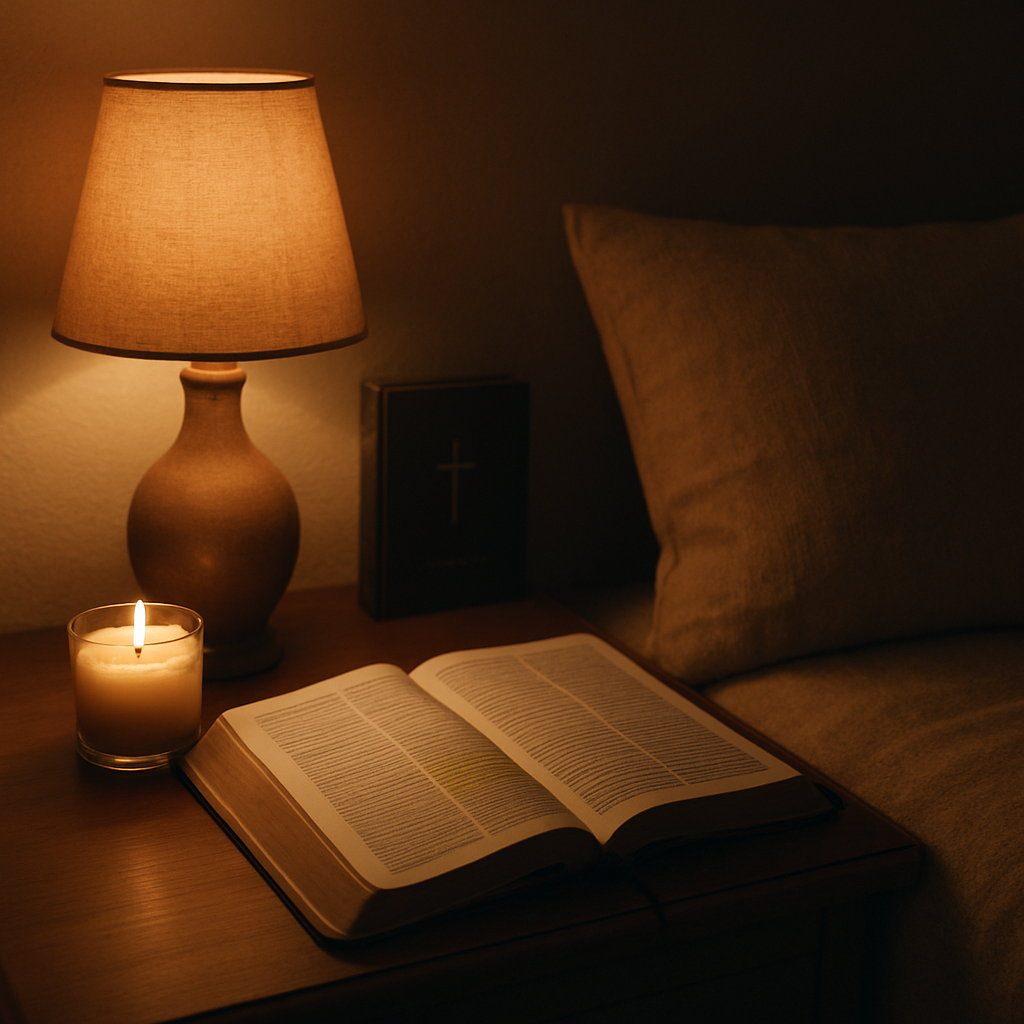
First thing’s first: you need a spot that feels like a quiet hug from God, not a noisy hallway of thoughts. It doesn’t have to be a fancy meditation room; a corner of your bedroom, a comfy armchair, or even the foot of the bed can work—just make sure it’s a place you can claim for a few minutes without interruption.
Ask yourself: What’s the one thing that usually pulls my attention away at night? For many of us it’s the glow of a phone screen or the hum of a TV. Turn those distractions off, at least for the duration of your practice. Trust me, the extra 10‑minute “screen‑free” window is worth the deeper rest you’ll earn.
Set the physical atmosphere
Lighting is a secret weapon. Dim the lights, light a candle, or use a soft‑glow night lamp. The gentle illumination cues your brain that it’s time to wind down. If you enjoy a faint scent, a dab of lavender essential oil can add a soothing layer—just keep it subtle so it doesn’t become another distraction.
Comfort matters, too. Grab a pillow you love, drape a lightweight blanket over your shoulders, and sit in a position that lets you breathe easily. You don’t need to be perfectly still; a relaxed posture that supports natural breathing is all you need.
Gather your scriptural anchor
Pick a verse that speaks directly to the worries that keep you awake—maybe Psalm 4:8, Psalm 91, or a promise about God’s peace. Write it on a sticky note, a small card, or type it on your phone (but keep the phone on silent). Having the words right in front of you turns the space into a visual reminder of God’s promise.
Here’s a quick tip: place the verse where you’ll see it without having to look down—like the edge of your nightstand or taped to the inside of your bedroom door. The next time your mind starts racing, your eyes will catch the promise before your thoughts do.
Now, let’s bring a little multimedia help into the mix. Below is a short video that walks through a simple breathing rhythm you can pair with your verse. It’s only a minute long, so you won’t feel like you’re adding another task to your bedtime routine.
Take a breath in for four counts, hold for two, and exhale for six. As you breathe, let each inhale whisper, “God’s peace,” and each exhale release the tension of the day. When your mind wanders, gently guide it back to the verse—no judgment, just a quiet return.
Once you feel settled, you can add a final touch: a soft piece of instrumental worship music in the background. It should be low enough that you can still hear your own breath and the words you’re meditating on. If you’re not into music, the natural hush of a fan or a white‑noise app works just as well.
Check your environment checklist
- Lights dimmed or candle lit
- Comfortable seating or lying position
- Verse displayed within view
- Phone on silent, notifications off
- Optional gentle background sound
Run through this checklist before you start. It only takes a minute, but it signals to your brain that you’re shifting from “day mode” to “rest mode.”
And remember, the goal isn’t perfection. If the blanket slips or a pet jumps onto your lap, just smile, adjust, and keep going. The very act of returning to the verse is the meditation itself—it trains your heart to trust that God is present, even in the little hiccups.
Step 2: Choose Scripture Passages That Calm the Mind
After you’ve made the room feel like a soft hug, the real magic begins with the verse you’ll hold onto. That’s the moment your mind gets a concrete anchor instead of a vague “good night” wish.
So, what should you look for? Think of a passage that does two things at once: it speaks directly to the worry that’s keeping you awake, and it paints a picture of peace that your imagination can settle into.
1. Target the night‑time worry
Maybe you’re replaying the day’s to‑do list, or a fear that tomorrow will be harder. A verse like Matthew 11:28 – “Come to me, all who are weary, and I will give you rest” – names the fatigue and offers an invitation. When you whisper that line, you’re not just reciting; you’re handing your anxiety a hand‑off.
2. Keep it short enough to breathe with
Shorter verses let your breath follow the rhythm. Psalm 4:8 (“In peace I will lie down and sleep, for you alone, Lord, make me dwell in safety”) works well because it’s under twenty words. You can inhale on “In peace I will lie down,” exhale on “for you alone, Lord…”. The cadence becomes a prayerful breath‑count.
3. Choose a visual cue
Picture the scene the verse paints. Psalm 91:1‑2 talks about “dwelling in the shelter of the Most High.” Imagine a gentle canopy of stars above you. When you close your eyes, that image nudges your brain away from scrolling thoughts.
One trick we’ve seen work for many of our readers is to write the line on a small card, fold it, and place it on the nightstand. Each time your eyes meet the paper, the words jump back into the rhythm of your heartbeat.
4. Rotate verses, don’t stick to one forever
Our experience shows that a fresh verse each week keeps the practice from feeling stale. One week you might linger on Isaiah 26:3 (“You will keep in perfect peace those whose minds are steadfast”), the next you could try Jeremiah 31:25 (“I will refresh the weary and satisfy the faint”). The variety trains your mind to associate many promises with sleep.
And if you ever feel stuck, the Abide blog lists ten verses that are especially sleep‑friendly – a handy shortcut when you’re short on time 10 Bible verses for better sleep.
5. Pair the verse with a gentle sound
Even a low‑volume instrumental track can help the words settle. A simple worship instrumental on YouTube, like this calming piece soothing worship music video, creates a subtle backdrop without stealing the focus.
Try this quick checklist before you lie down:
- Pick a verse that names your specific worry and offers peace.
- Make sure it’s under 25 words so you can breathe with it.
- Write it on a card or sticky note you can see.
- Play a soft instrumental in the background, if you like.
- Repeat the line for three breath cycles, then let it fade.
When you combine a purposeful verse with a calm environment, biblical meditation for sleep becomes less a task and more a nightly conversation with God. You’ll notice the mind’s chatter quieting, the body loosening, and the night slipping into a gentle, God‑filled rest. Give it a try tonight and see how quickly peace settles over your thoughts.
Step 3: Guided Breathing & Reflection with Scripture
Okay, you’ve got your space set up and your verse chosen—now it’s time to bring breath into the picture.
Guided breathing isn’t some fancy yoga trick; it’s simply using the rhythm of your inhale‑exhale to lock onto God’s truth.
Ever notice how a deep sigh can feel like a tiny surrender? That little pause is the body’s way of saying, “I’m ready to listen.”
When you pair that pause with a Scripture promise, the breath becomes a bridge between nervous thoughts and divine peace, turning biblical meditation for sleep into a lived experience.
Step‑by‑step breathing script
Here’s a quick, repeatable pattern you can try tonight. Pick a verse under 25 words—Psalm 4:8 or Matthew 11:28 work great.
- Inhale slowly for a count of four while silently saying, “Lord, I breathe in…”
- Hold the breath for a gentle two‑second pause, letting the words settle.
- Exhale for a count of six, whispering the key phrase of your verse (e.g., “peace” or “rest”).
- Repeat the cycle three times, then sit in quiet for a few natural breaths, simply resting on the promise.
The trick is to match the length of the verse to the breath. If the line is short, let the inhale be a bit longer; if it’s a longer promise, extend the exhale. Your body naturally syncs with the cadence of God’s Word.
Need a little guidance? The Abide blog walks you through scripture‑infused breathing exercises that are designed specifically for restful sleep scripture‑infused breathing exercises. Their step‑by‑step outline mirrors what we’re doing here, so feel free to peek if you want a voice‑over.
Reflection while you breathe
After the third cycle, keep your eyes closed and let the verse linger in the back of your mind. Ask yourself, “What does this promise look like in my life right now?”
Maybe you’re holding onto a worry about tomorrow’s meeting. As you breathe out, picture the promise—“I shall not want” from Psalm 23—washing over the anxiety like a gentle tide.
This isn’t a mental exercise; it’s a spiritual one. You’re allowing the Holy Spirit to quiet the chatter, because Romans 12:2 reminds us to renew our minds. Each breath becomes a small act of surrender.
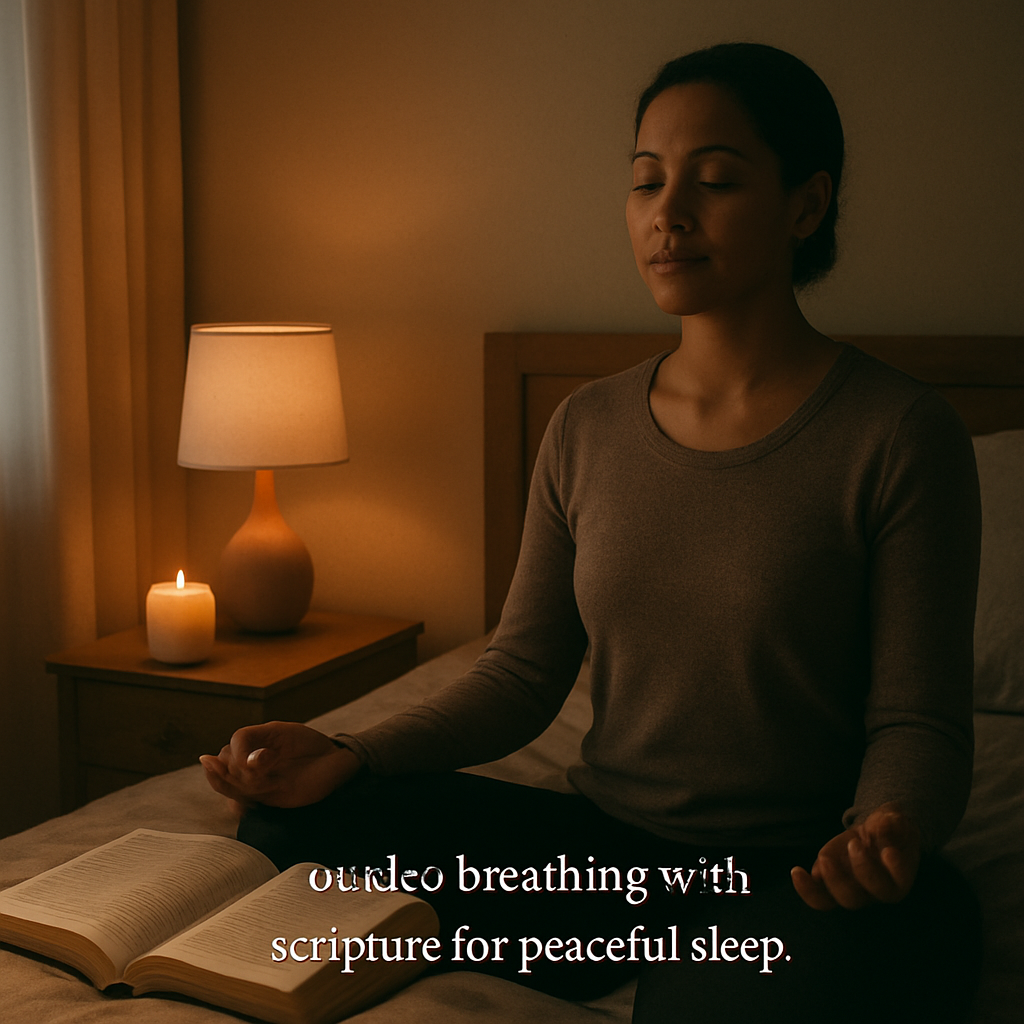
Personalizing the practice makes it stick. If you love nature, try opening a window and breathing in the night air while you repeat your verse. If you’re a night‑owl reader, place a sticky note with the verse on your nightstand so your eyes find it before your mind does.
For our community of spiritual seekers, you might even journal a one‑sentence reflection after the breathing—something like, “God’s peace steadied my racing heart.” It’s a tiny habit that compounds over weeks, turning biblical meditation for sleep from a task into a nightly conversation with God.
So, what’s the next step? Set a timer for two minutes, pick your verse, and run through the inhale‑hold‑exhale loop three times. Notice how quickly the tension loosens, and let that calm carry you into sleep.
Give it a try tonight, and watch how a simple breath paired with a timeless promise can turn restless tossing into restful, God‑filled rest.
Step 4: Build a Consistent Nightly Routine
We've already set the scene and chosen a verse. The next puzzle piece is making sure that the whole process repeats night after night without you having to rethink it each time. Consistency is the quiet engine that turns a one‑off meditation into a sleep‑inducing habit.
So, what does a truly consistent routine look like? Imagine you’re stepping into a familiar hallway every evening – the lights are dim, the scent of lavender lingers, and a single line of Scripture waits on your nightstand. That mental picture is the anchor you’ll return to, day after day.
1. Map Out a Mini‑Schedule
Start with a 10‑minute window before you intend to fall asleep. Break it down into three bite‑size phases:
- Wind‑down (3 min): Turn off screens, dim the lights, and maybe play a soft instrumental track.
- Scripture breathing (4 min): Follow the inhale‑hold‑exhale pattern from Step 3, pairing each breath with a phrase from your chosen verse.
- Reflection & release (3 min): Let the promise settle, then jot a one‑sentence note or simply thank God silently.
Keeping the timeline tight helps your brain recognise the pattern – it knows exactly when “sleep mode” flips on.
2. Choose a Consistent Cue
We all have that one thing we do without thinking: brushing teeth, washing hands. Pick a cue that signals it’s time for biblical meditation. It could be as simple as lighting a single tealight, or opening a specific prayer app. The cue should be easy, repeatable, and spiritually meaningful.
One of our readers, a busy nurse, lights a tiny candle shaped like a cross each night. The flame’s steady glow reminds her to breathe in God’s peace. Within two weeks she reported falling asleep faster and waking up feeling less jittery.
3. Keep the Environment Stable
Temperature, noise level, and even the position of your pillow matter. If you notice a draft on the left side of the room, move a blanket there. If a street car’s horn always rattles at 10 p.m., shift your bed a foot away. Small adjustments prevent the brain from launching a new “problem‑solving” loop when you’re trying to rest.
4. Track Your Progress (Without Over‑Analyzing)
Use a simple habit‑tracker – a paper calendar, a bullet‑journal box, or even a phone note. Mark each night you completed the routine. When the streak reaches five, you’ll feel a quiet pride that fuels the next night.
For those who love a bit of tech, the Theo prayer‑meditation app offers a gentle reminder feature that can ping you at your chosen time.
5. Adjust, Don’t Abandon
If a verse feels stale after a few weeks, swap it out – the routine stays, the script changes. If you’re consistently waking up at 3 a.m., experiment with a shorter breathing cycle or a different cue. The goal isn’t rigidity; it’s a dependable framework that bends just enough to stay useful.
And remember, you don’t have to go it alone. A life‑coaching session can help you identify hidden obstacles and fine‑tune your nightly flow. Transform Your Life with Bettina Rodriguez Aguilera offers exactly that kind of personalized support.
| Routine Element | Typical Duration | Key Tip |
|---|---|---|
| Wind‑down (lights, scent) | 3 min | Use a single, calming cue (candle, soft music). |
| Scripture‑breathing | 4 min | Match breath length to verse phrasing. |
| Reflection & journal | 3 min | One sentence or silent gratitude. |
Finally, if you’re just starting out, our Christian Meditation Techniques for Beginners guide breaks each of these steps down even further, with printable worksheets and a quick‑start checklist.
Give this routine a try for a full week. Notice how the cue, the breath, and the promise start to feel like a familiar lullaby. Before you know it, your brain will associate bedtime with peace, and you’ll drift off with God’s word echoing softly in the background.
Step 5: Overcome Distractions and Nighttime Anxiety
We’ve built a solid breathing rhythm, picked a verse, and nailed a mini‑routine. Yet when the lights dim, the mind often throws a curveball—notifications, lingering to‑do lists, or that nagging “what‑if” that refuses to quiet down.
First, treat the bedroom like a sacred border. Turn off every electronic glow at least fifteen minutes before you start. If a phone buzzes, place it face‑down in another room; the silence is a signal that God’s peace, not the next email, is your priority.
Second, create a “worry dump” habit. Keep a small notecard on your nightstand. When a thought pops up—“Did I remember to call Mom?”—write it down in a sentence, then close the notebook and return to your breath. The act of externalising the thought removes its grip.
Third, use a gentle auditory anchor. A low‑volume fan, rain app, or soft worship instrumental can mask sudden house noises that would otherwise yank you awake. The key is consistency; the same sound cue trains your brain to associate that hum with calm.
If anxiety spikes, lean into Scripture instead of fighting it. The nighttime prayers for rest collection offers ready‑made petitions that echo verses you already love. For example, a simple prayer based on Matthew 11:28—“Lord, I lay my burdens at your feet”—can be spoken aloud while you inhale, then exhaled with the phrase “rest in you.”
Another powerful tool is a brief body scan. Starting at your toes, notice any tension, breathe into it, and release on the exhale. Pair each scan segment with a word from your verse—“peace,” “safety,” “rest.” This keeps the mind busy enough to stop spiralling, yet soft enough to stay restful.
When thoughts still race, practice the “5‑4‑3‑2‑1” grounding technique. Identify five things you can see, four you can touch, three you can hear, two you can smell, and one you can taste. Doing this while your breath follows Psalm 4:8 anchors you in the present and pulls the anxiety loop loose.
If you find yourself waking at 3 a.m., resist the urge to check your phone. Instead, sit up, place your hand over your heart, and repeat the verse silently three times. The physical pause interrupts the habit loop that tells your brain it’s time to be alert.
Finally, track your progress without over‑analyzing. A simple habit‑tracker—just a checkbox on a calendar—lets you see patterns. When you notice a streak of calm nights, celebrate it with a gratitude prayer. The momentum builds confidence, and confidence is a quiet antidote to nighttime anxiety.
Research shows that regular meditation can lower cortisol, the stress hormone that keeps us wired at night. The Mayo Clinic notes that a consistent meditation practice improves sleep quality and reduces the time it takes to fall asleep. So, when you pair that science with Scripture, you’re covering both the physiological and the spiritual bases.
By combining these distraction‑busting steps with the biblical meditation for sleep framework you’ve already set, you give your mind a clear path to let go and let God take over. Give it a week, and you’ll likely find the night becoming a place of renewal rather than a battlefield.
Step 6: Track Your Sleep Improvements
Alright, you’ve set the space, chosen a verse, and practiced the breathing. The next piece of the puzzle is actually watching what happens when you sleep. Sounds a bit nerdy, but trust me—seeing the tiny shifts can keep the habit from feeling like a guess‑work experiment.
So, why bother? Because a little data turns “I feel rested” into something you can actually see, measure, and improve. It’s the same idea athletes use when they log workouts—only here the goal is calm, not a personal best.
Why tracking matters
When you close your eyes, a lot is happening behind the curtain—heart rate, brain waves, and that little voice that keeps replaying tomorrow’s to‑do list. By jotting down a few key points, you give those invisible processes a name, and naming them makes them easier to calm.
Pick a simple tracking tool
You don’t need a fancy spreadsheet. A paper calendar, a bullet‑journal box, or even the notes app on your phone works fine. If you like a little digital nudge, the Headspace app includes a sleep‑tracker that lets you tap “I slept well” or “restless night” with a single tap.
What to record each night
Keep it to three columns: (1) the verse you used, (2) a quick rating of how calm you felt on a 1‑5 scale, and (3) any wake‑ups or thoughts that stole the night. You can add a fourth “sleep quality” rating if you like, but don’t let the sheet become a homework assignment.
Spotting patterns
After a week or two, step back and look for trends. Do certain verses line up with higher calm scores? Does a 4‑minute breathing cycle beat a 6‑minute one? A 2018 study in Frontiers showed that even a brief mindfulness induction can cut pre‑sleep arousal and boost perceived rest. That research backs up what you’ll see on your own chart.
Using data to fine‑tune your meditation
When a verse consistently scores low, try swapping it for another promise that speaks to the same worry. If you notice you’re still waking at 3 a.m., experiment with a longer exhale or add a quick gratitude prayer before you close the notebook. The goal is to let the numbers guide tiny adjustments—not to create a new source of stress.
Quick sanity check: keep it light
If you find yourself obsessively counting perfect scores, pause. Tracking is a tool, not a test. Celebrate a streak of three calm nights with a simple prayer or a favorite hymn, and let the habit stay gentle. Remember, the ultimate aim is peace, not perfection.
A visual cue can make the data stick in your mind. Draw a tiny bar graph on a sticky note—each bar representing a night’s calm rating. When you see the bars slowly rise, it’s a quiet reminder that God’s peace is actually moving in your life. This tiny visual wins over the brain’s love of patterns and keeps you motivated without any extra tech today.
Give yourself a week of logging and then look at the picture you’ve painted. You’ll likely see more calm nights than you expected, and that evidence can fuel the next round of biblical meditation for sleep with confidence.
Conclusion
We've walked through the whole process—from setting a quiet corner, to picking a verse that actually speaks to your night‑time worries, to breathing the promise in and tracking the results. If any part felt a little fuzzy, just remember the core idea: let Scripture become the rhythm that steadies your breath.
So, what does that look like tomorrow night? You’ll dim the lights, place that sticky note with Psalm 4:8 on your nightstand, inhale slowly, whisper the line, and exhale any tension. A quick glance at your simple habit tracker will show you whether the night grew calmer, and that tiny data point fuels confidence.
And here's a gentle nudge: after a week of consistent practice, pause and celebrate the small victories—a smoother fall asleep, fewer 3 a.m. wake‑ups, or just a deeper sense of peace. Those moments are the real proof that biblical meditation for sleep works.
Finally, if you’re craving deeper guidance, our collection of e‑books offers step‑by‑step expansions on meditation, prayer, and spiritual wellness. Keep the habit gentle, stay curious, and let God’s promises lull you into rest night after night.
Remember, consistency beats intensity; even five minutes each evening can transform restless nights into a sanctuary of divine calm.
FAQ
What exactly is biblical meditation for sleep and how is it different from regular meditation?
Biblical meditation for sleep is simply breathing in a Scripture promise and letting it guide your thoughts as you drift off. Instead of a blank‑mind mantra, you’re anchoring each inhale and exhale to a verse that speaks directly to your nighttime worries. The difference? The focus stays on God’s truth, so your mind has a gentle, trustworthy story to follow rather than an abstract sound.
How long should I spend on biblical meditation before I try to fall asleep?
Start with just three to five minutes. Pick a short verse—under twenty‑five words—and sync your breath to its rhythm. You might inhale on the first phrase, hold briefly, then exhale on the second. If you feel calmer after that, add another minute or two the next night. The goal isn’t a marathon; it’s a quick, consistent reset that signals your brain it’s time to wind down.
Which Bible verses work best for calming anxiety at night?
Verses that name the feeling and offer peace tend to stick. Psalm 4:8 (“In peace I will lie down and sleep…”) is a favorite because it matches the bedtime rhythm. Matthew 11:28 (“Come to me, all who are weary, and I will give you rest”) names fatigue and invites rest. Isaiah 26:3 (“You will keep in perfect peace those whose minds are steadfast”) works well when you need a mental anchor.
Can I play background music while I do biblical meditation for sleep?
Absolutely—just keep it low and instrumental. A soft worship piano track or gentle nature sounds can mask sudden house noises without stealing the focus from the Scripture. The key is consistency; using the same calm background each night trains your brain to associate that sound with peace, making the transition into sleep smoother.
What should I do when my mind keeps wandering during the practice?
When a thought pops up, acknowledge it with a brief “Okay,” then gently return your breath to the verse. Some people find it helpful to jot the intrusive thought on a notecard before resuming, so the brain sees it’s been noted and can let it go. Over time, the habit of bringing the focus back becomes a quiet conversation with God rather than a mental tug‑of‑war.
How can I track my sleep improvements without getting obsessive?
Use a simple checkbox or a one‑line journal entry each night: verse used, calm rating (1‑5), and any wake‑ups. After a week, glance at the streak—maybe three calm nights in a row—and celebrate with a short gratitude prayer. The data is there to guide tiny tweaks, not to become another source of stress.
Is it better to stick with one verse or rotate them each night?
Both approaches have merit. Sticking with one verse for a week lets your brain fully embed the promise, creating a strong habit loop. Rotating every week keeps the practice fresh and prevents boredom. If a particular verse stops resonating, swap it out—just keep the overall rhythm of breath‑paired Scripture consistent.