Christian Meditation for Sleep: A Practical Step‑by‑Step Guide
Ever found yourself staring at the ceiling, mind buzzing, and wondering why sleep feels like a distant friend?
You're not alone. Many of us—especially when we try to juggle work, family, and a desire to grow spiritually—end up with restless nights. The good news? There’s a gentle way to coax your brain into rest, and it starts with Christian meditation for sleep.
Imagine slipping into a quiet moment before bed, breathing in God’s peace, and letting Scripture settle like a soft blanket over your thoughts. It’s not some lofty practice reserved for monks; it’s a simple, heartfelt habit anyone can adopt.
In our experience at Charlene Murray, we’ve seen how pairing a short, scripture‑focused meditation with a calming bedtime routine can turn tossing‑and‑turning into sweet, restorative sleep. It’s especially powerful for those of you seeking deeper spiritual growth while also craving a good night’s rest.
So, how does it actually work? First, you choose a short passage—perhaps Psalm 4:8 or John 14:27—that speaks of peace. Then, you breathe slowly, letting each inhale draw in that promise and each exhale release the day’s worries. Over time, your brain learns to associate those verses with relaxation, making it easier to drift off.
Does it sound a bit too simple? That’s because it is. The beauty of Christian meditation for sleep lies in its simplicity—no fancy equipment, no lengthy sessions, just a few minutes of focused, faith‑filled breathing.
And if you’re looking for a deeper dive, our e‑books walk you through step‑by‑step guides, complete with scripture suggestions and tips for creating a sleep‑friendly environment. Think of it as a personal toolbox for nightly peace.
Ready to give your evenings a gentle, God‑centered reset? Let’s explore how this practice can become a nightly ritual that honors both your faith and your need for rest.
TL;DR
Christian meditation for sleep transforms restless nights by pairing brief scripture breathing with a calming bedtime routine, letting God’s peace replace anxiety. Try a simple three‑minute practice tonight and discover how steady, faith‑filled breathing can guide you into deeper, restorative sleep and wake refreshed for tomorrow's blessings, feeling calmer, hopeful.
Step 1: Prepare Your Mind and Space
Before you even think about breathing on a verse, take a moment to look at the room you’re about to settle into. Does the lighting feel harsh? Is there a lingering scent of dinner or a buzzing phone that keeps your thoughts jumping? Our experience shows that the environment you create is the stage for the quiet that lets God’s peace step in.
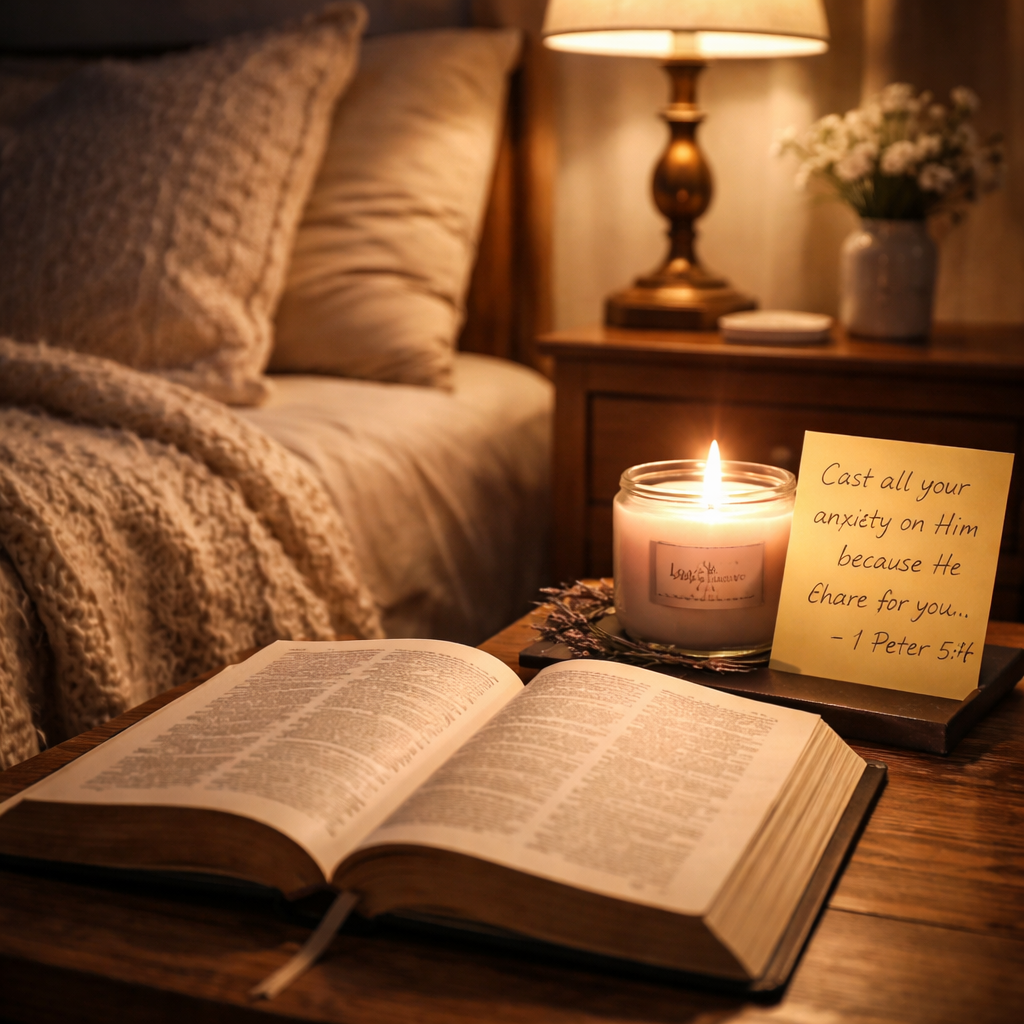
Start by dimming the lights or swapping them for a soft lamp. If you have a favorite scented candle, light it—lavender works especially well because its aroma is known to calm the nervous system. Speaking of lavender, you might enjoy checking out Lavender Soap for Skin: The Top Benefits That Make Your Routine Glow for a gentle, skin‑loving addition to your bedtime ritual.
Next, clear the clutter. A tidy nightstand with just a journal, a glass of water, and perhaps a small cross or inspirational token signals to your brain that it’s time to shift gears. If you’re the type who scrolls on your phone until you’re exhausted, try leaving it in another room or turning on XLR8well’s sleep‑focused wellness tips to help you wind down without the blue‑light buzz.
Now, choose a Scripture that speaks of peace—Psalm 4:8, John 14:27, anything that whispers, “You can rest.” Write the verse on a sticky note and place it where you’ll see it first thing when you sit down. This simple visual cue turns your mind’s focus from the day’s worries to God’s promise.
Once the space feels inviting, sit on a comfortable cushion or chair, close your eyes, and let the verse settle in the back of your mind. If you’re new to this, you might follow the steps in Biblical Meditation for Sleep: A Step‑by‑Step Guide to Restful Nights. It breaks the practice down into bite‑size actions that feel natural rather than forced.
Here’s a quick checklist you can keep on your nightstand:
- Dim lights or use a soft lamp.
- Light a calming scent (lavender works wonders).
- Remove electronic distractions.
- Place a Scripture note where you can see it.
- Set a timer for 3‑5 minutes of breathing on the verse.
When you’re ready, press play on this short video that walks you through a gentle breathing rhythm while you focus on the Scripture. It’s a visual guide, not a lecture, so you can follow along at your own pace.
After the video, stay seated for another minute, simply noticing how your body feels. Are your shoulders a little lower? Is there a subtle calm spreading through your chest? That awareness is the first sign that your mind is learning to associate God’s peace with the physical space you’ve prepared.
Finally, consider a brief gratitude pause before you drift off. Thank God for the safe space you’ve created, for the quiet moment, and for the promise in the verse you just meditated on. This tiny act of thankfulness can seal the practice, making it easier to return night after night.
Step 2: Scripture‑Based Breathing Rhythm
After you’ve set the scene, the real magic begins when your breath meets the Word. It feels a little like turning the volume up on a favorite hymn – the deeper you go, the more the melody settles into your bones.
What we’re after isn’t a complicated pattern; it’s a simple rhythm that lets Scripture become the inhaled promise and the exhaled release. Think of each breath as a tiny prayer: you draw in God’s peace, you let go of the day’s noise.
Pick a breath count that feels natural
Most people find a 4‑4‑4 count (inhale‑hold‑exhale) easy to follow, but you can also try 5‑5‑5 or even a gentle 3‑3‑3 if you’re new to focused breathing. The key is consistency – the brain learns the pattern and starts to associate it with the verse you’re holding.
Step‑by‑step rhythm
- Close your eyes and place the Bible page at eye level.
- Read your chosen verse silently once, letting the words settle.
- Begin the count: inhale slowly for four counts, feeling the breath fill your chest.
- Hold the breath for the same four counts, allowing the verse to echo in your mind.
- Exhale gently for four counts, visualising the words drifting out like a soft prayer.
- Repeat this cycle for three to five minutes, or until you feel a sense of calm washing over you.
Notice how the verse becomes a backdrop to each breath. When your mind wanders – which it will – gently bring it back to the count and the Scripture. That’s the practice, not a performance.
Choosing the right passage
Short, peace‑focused verses work best because they’re easy to hold in memory. Psalm 4:8, John 14:27, or Isaiah 26:3 are favorites. If you’re unsure, try a verse you’ve loved in a worship service – the familiarity adds an extra layer of comfort.
Common pitfalls and how to sidestep them
- Rushing the count. Slow down; the rhythm is meant to be soothing, not a sprint.
- Letting the mind race. When thoughts pop up, acknowledge them (“I’m thinking about tomorrow”) and return to the breath‑verse loop.
- Skipping the hold. The pause lets the promise sink in; if you skip it, you lose that anchoring moment.
Remember, it’s okay if you stumble. The goal isn’t perfection; it’s a gentle re‑training of your nervous system.
If you’d like a deeper dive into beginner‑friendly practices, check out Christian Meditation Techniques for Beginners – it walks you through variations of breath work, posture tips, and how to weave prayer into every inhale.
Finally, make this rhythm part of your nightly routine. Set a soft alarm for three minutes, dim the lights, and let the verse guide each breath. In a week you’ll notice your mind slipping into quiet more quickly, and your sleep will feel less like a battle and more like a gentle surrender to God’s peace.
Step 3: Guided Prayer Visualization
Now that your breath is syncing with a verse, it’s time to add a little picture in the mind. Think of it as turning a quiet song into a short, vivid movie that God himself is directing.
Start by closing your eyes and taking one slow inhale. As the air fills you, picture a gentle scene – maybe a sunrise over a calm sea, or the soft glow of a candle in a quiet chapel. The key is to choose something that whispers peace, not panic.
Once the image is there, bring the verse into the frame. Imagine the words of Psalm 4:8 written in the sand at the water’s edge, each syllable washing ashore with every breath you take. When you exhale, see the tide pulling the worries away, leaving only the promise of rest.
Does this feel a bit odd at first? Absolutely. Our minds love to wander, especially after a busy day. That’s why we keep it simple: one image, one verse, one breath cycle. If another thought pops up, acknowledge it – “I’m thinking about tomorrow’s meeting” – and gently steer back to the visual.
Step‑by‑step visualization
1. Choose a calming scene. It could be a favorite place from a sermon, a garden you love, or even a simple white sheet of light.
2. Anchor the verse. See the Scripture appearing in the scene, either as glowing text, a whispering wind, or a soft voice you hear.
3. Sync with your breath. Inhale for four counts, letting the image grow brighter. Hold, then exhale for four counts, watching the scene settle into stillness.
4. Repeat. Do this loop for three to five minutes, or until you feel your heart rate slowing.
That’s it. No fancy equipment, just your imagination and God’s Word.
So, what if you’re not a visual person? No problem. You can focus on a sensory detail instead – the scent of lavender, the feel of a soft blanket, the distant hum of a hymn. The goal is the same: pairing a God‑filled sense with your breathing.
Here’s a quick tip: after a week of practice, try swapping the verse for a prayer you’ve written yourself. That personal touch can make the visualization feel like a private conversation with God.
And if you ever wonder whether you’re doing it “right,” remember the purpose isn’t perfection. It’s about gently retraining your nervous system to associate God’s peace with the act of falling asleep.
Want a deeper dive into how to layer prayer, breath, and imagination? Check out our beginner‑friendly Christian meditation guide for more examples and troubleshooting tips.
Before you finish, take a moment to thank the Lord for this quiet time. A simple “Thank you, Lord, for the stillness” spoken softly can seal the practice, turning the visualization into a prayer of gratitude.
When the alarm goes off in the morning, you’ll notice a subtle shift: the day feels less rushed, the mind less cluttered, and the heart a little lighter.

Step 4: Incorporating Psalms and Hymns
So far, you’ve learned to breathe with a verse and let your imagination settle. Now we add Psalms and hymns—the musical heartbeat of rest. Think of it as turning prayer into a soft song you drift to, with God guiding the tempo.
Does it feel a little unusual at first? That’s okay. Many of us grew up hearing Scripture as words, not lullabies. With practice, Psalms become anchors you can hold onto as you fall asleep. And a gentle hymn hum in the background can steady the mind without tugging you into woke-up-wrenches‑level alertness.
In our experience, Psalms are especially comforting because they move from raw emotion to steady reassurance. The cadence, imagery, and promises invite you to exhale with trust. A short Psalm like Psalm 4:8 or Psalm 23 can become a nightly shoreline — you walk along it with your breath and let the tide bring peace.
Ready to weave these into your routine? Here’s how to make it natural, not forced.
Choose restorative Psalms and a simple hymn
Select 1–2 short Psalms that speak directly to rest, safety, and God’s care. You don’t need to read the entire chapter—just a few verses that land gently. Pair that with a familiar, calming hymn or a simple, non-disruptive hymn tune you can hum softly as you exhale. You don’t need to sound like a choir; you just need the rhythm to feel safe and familiar.
Ever notice that a familiar tune carries peace even when the room is quiet? That’s the point. The goal is not perfect singing but a sense of grounded calm that your nervous system recognizes as rest.
Connect the verse, breath, and song
Read the chosen Psalm aloud once in a whisper. Then breathe in slowly for four counts, letting the verse echo in your chest. On the exhale, hum a gentle note or softly sing the hymn line you love. If you prefer, simply hum on the exhale while visualizing the Psalm’s image settling over you like a soft blanket.
For example: inhale with Psalm 4:8 in mind, exhale while gently humming a line from a soothing hymn. If thoughts drift, acknowledge them and return to the breath–verse–hum loop. It’s not about perfection; it’s about consistency turning into habit.
Practical sequence you can try tonight
- Choose a Psalm (a few lines) and a short hymn you can hum quietly.
- Sit or lie down in a comfortable position, close your eyes, and take a calm, cleansing breath.
- Whisper the Psalm’s verse once, then begin your breath cycle (inhale 4, exhale 4).
- Hum softly on the exhale as you visualize the Psalm’s imagery easing your thoughts into sleep.
- Repeat for 3–5 minutes, then finish with a quiet moment of grateful rest.
Need a more scripture-focused toolkit? Our Bible‑centered resources expand on verses and prayer methods. For a deeper dive into scripture-driven practice, check out The Bible e-book and let the verses guide your nightly rhythm.
As you practice, you’ll notice your body relaxing earlier, your breathing deepening more quickly, and your heart settling into stillness. This isn’t magic—it’s a trained response: a little more surrender each night, a touch more peace with every dawn.
And if you’re curious about weaving these steps into a broader Christian meditation routine, Charlene Murray’s approach offers practical tools grounded in faith and wellness. Let’s keep moving forward together, one restful night at a time.
Step 5: Consistency and Tracking Progress
You've already built the space, the breath, the verse, and the hymn. The missing piece is the habit loop that turns those moments into a nightly rhythm.
Why consistency matters more than intensity
Think about learning any skill—whether it's playing a simple chord on a guitar or memorising a Psalm. A single marathon session feels impressive, but five minutes a day sticks. Your nervous system craves repetition; each night you repeat the same breath‑verse‑hum pattern, it creates a neural shortcut that says, “It’s time to rest.”
In our experience, people who miss a night or two often notice a dip in sleep quality, then bounce back once the pattern is re‑established. So the goal isn’t perfection; it’s a gentle “show up” promise to yourself.
Set up a simple tracking system
Grab a small notebook or use the notes app on your phone. Write down three columns: date, verse or hymn used, and a quick rating of how rested you felt in the morning (1‑5). It only takes a minute before bed, and the act of writing reinforces the habit.
If you prefer a visual cue, draw a tiny checkbox next to each night. When the box is filled, you get a tiny dopamine hit—enough to keep you motivated without turning it into a chore.
Use a “sleep tracker” without the tech overwhelm
Many smartphones have a built‑in sleep‑stage log. You don’t need fancy wearables; just enable the basic sleep‑tracking feature and glance at the graph in the morning. Look for patterns: does a night when you hum “Amazing Grace” show deeper REM? Do you fall asleep faster when you choose Psalm 23?
Notice the trends, not the numbers. If you see a steady rise in your morning rating over a week, celebrate that small victory. If a particular verse feels “stuck,” try swapping it out and observe the change.
Build a cue‑routine‑reward loop
Pick a cue that signals it’s time to start. It could be lighting a specific candle, turning off the bedside lamp, or even a gentle reminder on your phone at 9 p.m. The cue triggers the routine (your breath‑verse‑hum sequence) and the reward is the calm feeling you notice after the practice.
Write the cue on a sticky note and place it where you’ll see it—maybe on the back of your pillow. Over time your brain will associate that visual cue with the soothing practice, making the whole process almost automatic.
When life throws a curveball
Maybe you have a restless child, a late‑night work call, or an unexpected prayer need. Instead of scrapping the habit, shrink it. Even a 30‑second breath with a single verse is better than nothing, and it keeps the loop intact.
Remember the “just one more minute” mindset. It reduces guilt and preserves the consistency you’re cultivating.
Review and adjust every two weeks
Set a calendar reminder for a quick review. Flip through your notebook, note which verses sparked the deepest peace, and ask yourself: “Am I still excited to do this?” If the answer is a lukewarm “maybe,” consider a fresh Psalm or a new hymn line.
Adjustments keep the practice fresh without breaking the habit. It’s like swapping out a worn‑out running shoe for a new pair—you still run, you just feel better.
Make it a shared journey
If you have a spouse, roommate, or close friend who also wants better sleep, invite them to join. Doing the practice together doubles accountability and creates a sense of community that mirrors the fellowship we find in prayer.
Even a simple “We’re doing this tonight” text can reinforce the habit for both of you.
Quick checklist for consistency
- Choose a cue (candle, alarm, note) and keep it visible.
- Write a one‑line log each night: date, verse/hymn, 1‑5 rest rating.
- Review the log every 14 days and swap any stale verses.
- Celebrate small wins – a deeper breath, a quicker fall‑asleep.
For a deeper roadmap, check out the Christian Meditation Techniques for Beginners guide. By treating your nightly practice like a gentle, measurable habit, you give Christian meditation for sleep the structure it needs to become second nature. The more you track, the clearer the connection between Scripture and rest becomes, and the easier it is to drift into God’s peace night after night.
Comparison of Popular Christian Sleep Meditations
When you start experimenting with Christian meditation for sleep, you quickly realise there isn’t a one‑size‑fits‑all recipe. Some nights you crave a whisper of Scripture, other evenings a soft hymn feels more soothing. The good news? There are a few go‑to approaches that many of us have tried, tweaked, and fallen back on night after night.
So, which style might feel like the right fit for your bedtime routine? Below you’ll see three of the most popular formats, broken down into the basics you need to know before you settle in.
1. Guided Scripture‑Based Breath
This is the method we often recommend in our Christian Meditation Techniques for Beginners guide. You pick a short verse—say Psalm 4:8—read it once, then let each inhale carry the promise and each exhale release the day’s tension. It’s straightforward, requires no music, and works well if you like a clear, verbal anchor.
2. Psalm‑Focused Prayer Loop
Here you repeat a beloved Psalm line (often Psalm 23 or Isaiah 26:3) while gently humming a related hymn. The rhythm of your voice becomes a soft lullaby, and the repeated phrase reinforces God’s reassurance. Many find this especially calming because the melody stays in the back of the mind without pulling you into full‑on singing.
3. Visual‑Imagery Meditation
Think of a peaceful scene—a still lake at sunrise—while you breathe and recite a verse. The visual cue gives your brain a concrete picture to hold onto, which can be a lifesaver when thoughts start racing. If you’re more of a visual learner, this tends to settle the mind faster than words alone.
Does one of these feel like a natural next step for you? If you’re still on the fence, try a quick “test run” tonight: set a timer for three minutes, pick the method that sounds most appealing, and notice how quickly you drift off.
| Style | Typical Length | Key Benefit |
|---|---|---|
| Guided Scripture‑Based Breath | 3‑5 minutes | Clear verbal anchor; easy to switch verses |
| Psalm‑Focused Prayer Loop | 4‑6 minutes | Combines word and melody for deeper calm |
| Visual‑Imagery Meditation | 2‑4 minutes | Leverages mental imagery for fast relaxation |
Remember, consistency beats perfection. Pick the style that feels least like a chore and most like a quiet conversation with God. Rotate them when you need a fresh cue—maybe a verse one night, a hymn the next, and a visual scene when you’re especially restless. Over time you’ll notice a subtle shift: falling asleep becomes less of a battle and more of a gentle surrender to God’s peace.
Give one of these a try tonight and see which one whispers you into rest the best. Sweet dreams await.
FAQ
How do I start a Christian meditation for sleep routine if I’m brand‑new?
If you’ve never tried Christian meditation for sleep, start simple. Pick a quiet corner, a short verse, and set a timer for three minutes. Sit or lie down, close your eyes, and breathe in God’s peace while you silently repeat the verse on each inhale. When your mind wanders, gently bring it back—no judgment, just a quiet conversation with God. Doing this nightly builds the habit without overwhelming you.
Which Bible verses work best for bedtime breathing?
Many believers find Psalm 4:8 (“In peace I will lie down and sleep”) works like a lullaby for the soul. John 14:27 (“My peace I leave…”) is another favorite because it’s short and comforting. If you’re looking for something even briefer, try “Be still, and know that I am God” (Psalm 46:10). Write your chosen line on a sticky note so you can glance at it while you breathe.
How long should I meditate before I actually fall asleep?
Three minutes is a solid starting point, but don’t stress about the clock. The goal is to train your brain to associate the verse with relaxation, not to force sleep. If you finish the timer and still feel awake, simply keep breathing gently for another minute or two. Most people notice a drop in sleep latency after a week of consistent practice, so give it a few nights to settle.
Can I use a phone app without hurting my sleep?
It’s tempting to reach for a sleep app, but the blue light can undo your calm. If you do use an app, choose one that offers scripture‑filled audio and keep the screen dimmed or use the phone’s night‑mode. Set a gentle chime to signal the start, then turn the device face‑down. In our experience, the ritual of a soft hymn plus a verse works better than any visual cue.
How do I stay consistent when life gets busy?
Life gets noisy, so the trick is to make your meditation cue as automatic as brushing your teeth. Keep a small card with your verse on the nightstand and pair it with a consistent cue—maybe the smell of lavender or a soft lamp. When you notice you’re skipping, simply add a micro‑habit, like a one‑minute prayer before the breath work. Small adjustments keep the practice alive without adding stress.
Is it okay to combine Christian meditation with other sleep aids like melatonin?
Yes, you can combine Christian meditation for sleep with gentle sleep aids, but keep the focus on God’s peace. A low dose of melatonin taken 30 minutes before your breathing practice can help regulate your rhythm, yet the meditation should remain the core of the routine. Avoid heavy sedatives that cloud awareness; you want to wake feeling refreshed, not groggy. Always check with a healthcare provider if you’re unsure.
Conclusion
We’ve walked through everything from setting a sacred space to pairing breath with Scripture, and you’ve seen how a simple nightly ritual can turn restless tossing into peaceful surrender.
So, what’s the next step? Tonight, pick one verse—maybe Psalm 4:8—set a soft timer for three minutes, and let each inhale whisper “In peace I will” while the exhale releases the day’s worries. Keep a tiny card on your nightstand; the visual cue will become as automatic as brushing your teeth.
Remember, consistency beats intensity. Even if you miss a night, don’t judge yourself. Just restart tomorrow and notice the tiny improvement in how quickly you drift off.
You might wonder if this feels too simple for a world that tells us we need fancy apps or expensive retreats. Truth is, the heart of Christian meditation for sleep lives in the quiet moments you create yourself. By trusting God’s promise and pairing it with breath, you’re building a sanctuary that no gadget can replace.
Key takeaways
- Prepare a calm nook and dim the lights.
- Use Scripture‑based breathing rhythms.
- Track your verses and sleep quality to see patterns.
- Lean on resources like Charlene Murray’s e‑books for deeper guidance.
If you’re ready to make Christian meditation for sleep a regular part of your evenings, give yourself permission to start small and grow. The peace you’re seeking is only a breath away.