
Christian Personal Development Ebook: A Step‑by‑Step Guide to Spiritual Growth
Ever felt like you’re juggling a thousand to‑do lists while the deeper part of you is whispering for more meaning?
That tug‑of‑war between daily grind and spiritual yearning is something many of us know all too well. You’re not alone when you wonder whether there’s a resource that can bridge practical growth with your faith.
Enter the christian personal development ebook – a tool that blends timeless biblical principles with modern self‑help tactics. Think of it as a guidebook you can carry in your pocket, offering bite‑sized lessons for those moments you have between meetings, chores, or a quiet cup of coffee.
In our experience, readers who pair these ebooks with a simple daily routine—like a five‑minute prayer journal or a quick reflection on a verse—report feeling more focused, hopeful, and equipped to handle life’s curveballs.
Imagine waking up, opening the ebook, and finding a short chapter that speaks directly to the anxiety you felt yesterday. You pause, breathe, and apply one practical tip right then. By the end of the day, you’ve already made progress on both your spiritual walk and personal goals.
So, what makes a christian personal development ebook different from any other self‑help book? It’s the intentional weaving of scripture, prayer prompts, and actionable steps that honor your belief system while encouraging measurable growth.
If you’re skeptical, ask yourself: have I ever tried a habit tracker without a spiritual anchor and felt something was missing? Many believers tell us that the missing piece is exactly that connection to God’s purpose.
Let’s be honest—change isn’t instant, but having a resource that respects both your heart and your hustle can make the journey feel less lonely.
Ready to see how a well‑crafted ebook can spark that shift? Stick around, because we’ll walk through what to look for, how to choose, and ways to integrate it into your everyday life.
TL;DR
If you’re looking for a quick way to merge faith and growth, a christian personal development ebook gives you bite‑size scripture‑anchored lessons, prayer prompts, and actionable steps you can slot into a busy day. By choosing a guide that respects both your spiritual heartbeat and hustle, you’ll feel more focused, hopeful, and equipped to handle life’s curveballs while progressing toward deeper purpose.
Step 1: Define Your Spiritual Goals
Ever sit with a notebook, stare at a blank page, and wonder what you actually want God to move you toward? That moment of pause is the perfect launch pad for setting spiritual goals that feel both real and reachable.
First, get honest with yourself. Grab a coffee, open your favourite christian personal development ebook, and ask: "What part of my life feels stuck, and where do I sense God whispering for change?" Write down whatever pops up—maybe it’s deeper prayer time, more intentional service, or simply learning to trust daily prompts.
Turn vague wishes into concrete targets
Instead of "be more faithful," try "spend ten minutes each morning in scripture meditation and write one gratitude note before work." The trick is to make each goal measurable, so you can see progress and stay motivated.
One handy trick is to use the SMART framework (Specific, Measurable, Achievable, Relevant, Time‑bound). For example, "Read one chapter of a christian personal development ebook every Tuesday night and journal a key takeaway by midnight." Suddenly that big‑picture desire becomes a tidy, doable habit.
And don’t forget to align your goals with biblical principles. When you tie your ambitions to verses—like Romans 12:2 for transformation—you give them spiritual weight that fuels persistence.
Here’s where a good resource helps: Finding Quality Christian eBook PDFs: A Practical Guide walks you through picking ebooks that actually support your goals, not just add to the noise.
Now, let’s talk tools. If you’re juggling work, family, and study, a simple timer can keep you honest. The Pomodoro method—25 minutes focused, 5 minutes break—works wonders for digging into an ebook chapter without feeling overwhelmed. Check out this Pomodoro timer guide for editing manuscripts for a quick setup you can adapt to your devotional time.
Physical health matters, too. Spiritual growth thrives when your body feels cared for. Partnering with a holistic health service can give you that extra push. I’ve seen readers benefit from programs at XLR8well, where proactive health coaching complements the inner work you’re doing with your ebook.
Take a minute after the video to jot down one spiritual goal that feels fresh. Maybe it’s a new prayer focus or a habit of sharing a weekly verse with a friend.

When you’ve written those goals, break them into weekly checkpoints. Use a simple spreadsheet or a paper planner—whatever you’ll actually look at. Review every Sunday: Did you hit the target? If not, why? Adjust, don’t abandon.
Remember, defining goals isn’t a one‑time event. Life shifts, and so do the ways God nudges you. Schedule a quarterly “spiritual audit” where you revisit your list, prune what no longer serves, and add fresh aspirations.
Finally, share one of your goals with a trusted friend or a small faith group. Accountability turns private intention into communal momentum. When you’re honest about where you’re heading, others can pray for you and keep you on track.
So, grab that ebook, set a specific goal, pair it with a timer, check in with your body, and watch how a clear vision reshapes your daily walk with God.
Step 2: Curate Relevant Scripture and Teachings
You've got your spiritual goals mapped out. Now it’s time to anchor them in scripture and timeless teachings that keep you steady when life gets loud. It’s not about surface motivation; it’s about a truth you can return to again and again.
In our experience, the most practical faith growth happens when you couple a concrete goal with a verse that fits it like a lock and key. So let’s curate scripture and teachings that feel personal, redoable, and actionable for busy days.
Ground your goals in Scripture
Start by revisiting the gaps you noticed in Step 1. For each gap, pick one verse that directly speaks to that need. Write that verse beside your goal so the Word becomes a built‑in reminder. If your aim is to grow in integrity at work, Colossians 3:23 can be your anchor. If you want more peace in parenting, Psalm 46:10 offers a steady heartbeat when the day spins out of control.
Ask yourself, does this verse feel truthful in my daily rhythms? If yes, keep it. If not, try another—the right verse should land with you, not feel forced. This is the moment to let God’s word shape the ordinary moments of your life, not just Sunday mornings.
Tie teachings to daily life
Teachings aren’t abstract ideas here; they’re prompts that guide your actions. Turn each verse into a tiny practice you can do in under five minutes: a morning reflection, a grateful note, a quick prayer with a specific intention. For example, Colossians 3:23 invites you to work wholeheartedly—so you might add a 60‑second check on your posture and intention before starting a task.
Pair the verse with a simple question you can ask yourself through the day: How can this moment reflect God’s guidance? The goal is to move from reading to doing, from intention to a tiny daily habit that compounds over time.
So, what should you do next? Choose one verse per goal, write it clearly, and attach one concrete action to it. That’s how a christian personal development ebook becomes a living conversation between your heart, your actions, and God’s truth.
Create a personal teaching plan
Now, map a 30‑day plan that makes these scriptures and prompts the backbone of your routine. Start with a 5‑ to 10‑minute daily practice: read the verse, reflect on it, and record one tangible action you’ll take that day. Then schedule a quick Sunday review to notice patterns and adjust.
1) Pick 1 verse per goal and write it on a sticky note you’ll see first thing. 2) Write a one‑line daily action derived from the verse. 3) Block 5 minutes each morning for reflection. 4) Keep a simple journal entry—even a sentence or two will do. 5) End the month with a short evaluation and a revised plan. It’s simple, doable, and powerful.
To turn this into real momentum, keep a running list of verses you’ve paired with goals and revisit them weekly. The Bible isn’t a checklist; it’s a living guide that helps you show up as the person you’re becoming.
Remember, this approach isn’t just theory. It’s a practical pathway you can follow with or without perfect memory. In 2026, the timeless practice of grounding goals in scripture still works when you show up with consistency and honesty.
If you’re looking for a cohesive collection to support this work, consider Divine Direction Christian eBook as a companion resource to help you hear God’s guidance in daily life.
Step 3: Choose the Right Christian Personal Development Ebook
Alright, you’ve already nailed down a goal and paired it with a verse. Now the real question is: which ebook will actually help you walk that path?
It’s easy to get lost in a sea of titles that promise “miracle breakthroughs” but deliver nothing more than fluff. The trick is to treat the ebook like a trusted companion – one that speaks your language, backs you up with solid Scripture, and gives you bite‑size actions you can actually do.
Ask yourself these three litmus tests
First, does the author have a track record of ministry or counseling? A writer who’s spent years in pastoral care or spiritual coaching will usually know how to translate lofty theology into everyday steps.
Second, how deeply does the book weave Scripture into its framework? Look for clear verse references next to each habit, not just a random “Bible quote” tacked on at the end of a chapter.
Third, are the exercises realistic for a busy life? You want prompts you can finish in five minutes, not a full‑hour workbook that sits untouched on your nightstand.
So, what should you do next? Grab a notebook, write down the answers, and compare a handful of titles side‑by‑side.
Real‑world examples that illustrate the difference
Take Maya – a marketing professional who struggled to keep a gratitude habit. She tried an ebook that offered a “30‑day gratitude challenge” but the challenges were vague. After three weeks, she felt stuck.
Then she switched to a different Christian personal development ebook that paired each day’s gratitude prompt with Psalm 107:1 and a quick journaling template. Within a week, she was ticking off entries, and her mood visibly lifted.
Or consider Jake, a college student battling procrastination. The first ebook he bought listed “beat procrastination” as a chapter, but the advice was generic time‑management tips. The second ebook he tried, however, anchored each tip in Colossians 3:23 and gave a 2‑minute “pause prayer” before every study session. Suddenly, his focus improved, and he started finishing assignments early.
Both stories show that the right ebook can turn a vague intention into a concrete habit.
Quick checklist for the ebook you’re about to buy
- Author’s background: ministry, counseling, or proven personal‑development experience.
- Scripture integration: verse cited for each principle, not just a bibliography.
- Actionability: daily prompts that take under 10 minutes.
- Format you love: PDF for easy printing, Kindle for on‑the‑go reading, or audio for commutes.
When you line up these criteria, the decision becomes a lot less overwhelming.
What the market looks like
Even the biggest online retailers give us a clue about what’s resonating. For instance, Amazon’s top Christian personal development ebooks consistently feature authors with pastoral credentials and clear, scripture‑driven action steps.
That’s not a coincidence – readers gravitate toward books that feel both spiritually authentic and practically useful.
Comparison table
| Feature | What to Look For | Why It Matters |
|---|---|---|
| Author credibility | Pastoral or counseling experience | Ensures theological soundness and real‑world insight |
| Scripture integration | Verse cited beside each habit | Keeps you anchored to God’s word, not just self‑help buzzwords |
| Practical exercises | 5‑minute daily actions | Fits busy schedules, builds momentum quickly |
Use this table as a quick scan before you click “add to cart.” If a book checks all three boxes, you’re probably looking at a solid investment.
Finally, remember that an ebook is only as good as the consistency you bring to it. Pair your chosen title with the habit‑tracker you set up in Step 1, and schedule a weekly “check‑in” with a friend or a small group. That accountability loop turns reading into real transformation.
Take a moment right now: pick one ebook that meets the checklist, add it to your cart, and set a reminder for tomorrow morning to open the first chapter. You’ve just moved from planning to doing.
Step 4: Integrate Daily Practices & Reflection
Okay, you’ve got your goal, your verse, and the ebook you’ve chosen. Now the magic happens when you weave those pieces into the rhythm of everyday life.
Ever notice how a habit feels easy when you do it right after you brush your teeth? That’s the sweet spot we’re after – pairing spiritual practice with something you already do.
Pick a “anchor moment” for each habit
Think about the moments that already have a cue: morning coffee, the commute, bedtime prayer. Attach a 3‑minute practice from your christian personal development ebook to that cue. For example, if your ebook suggests a gratitude journal, open the notebook right after you finish your first sip of coffee.
Does that sound doable? If not, tweak the cue until it feels natural. The goal is to create a chain reaction, not a forced schedule.
Set up a micro‑reflection checkpoint
Reflection doesn’t have to be a 30‑minute sit‑down. A quick “pulse check” works wonders. After each anchor moment, ask yourself:
- What did the verse say today?
- How did I apply it in this brief action?
- One sentence: what did I feel?
Jot those three bullets in a tiny notebook or a notes app. Over a week you’ll start seeing patterns – the verses that truly move you, the practices that stick, the ones that need tweaking.
So, what should you do next? Grab that notebook now and write “Morning Anchor” at the top. It’s that simple.
Weekly “review & reset” ritual
Every Sunday, block 10 minutes for a deeper dive. Pull up your habit tracker, flip through the week’s journal snippets, and ask:
Did the practice align with the scripture? Did it bring a sense of peace, focus, or joy? If the answer is “meh,” adjust the action – maybe shorten it, swap the verse, or move the cue.
In our experience, that weekly pause turns scattered effort into a coherent story of growth. It’s like editing a film; you cut the fluff, keep the good takes, and keep moving forward.
Leverage community accountability
Even if you’re a solo rider, a quick text to a friend or a comment in a small group can boost consistency. Share the verse you’re living out, the tiny step you took, and ask for a quick prayer. The accountability loop isn’t about judgment; it’s about encouragement.
Imagine you’re reading the “Divine Direction” ebook and you’ve paired Colossians 3:23 with a “pause‑prayer” before work tasks. Send a one‑liner to a fellow reader: “Just prayed for excellence before my meeting – feeling centered.” That tiny exchange fuels momentum for both of you.
And remember, reflection isn’t only for successes. When a day feels off, note the disconnect without self‑criticism. Ask, “Which verse felt distant today, and why?” That honesty creates space for growth.
Turn the ebook into a living companion
Instead of treating the ebook as a static PDF, treat it like a notebook you can annotate. Highlight the verse, write a margin note about how you applied it, and tick off the daily action. Over time, the ebook morphs into a personalized guidebook – a record of where you started and how far you’ve come.
One practical tip: use a highlighter that doesn’t bleed through, or if you’re on a Kindle, add a “note” with the date and a brief reflection. When you flip back months later, you’ll see a trail of tiny victories.
Does this feel overwhelming? Not at all. It’s just a series of tiny, intentional moments that add up. Think of each practice as a single brushstroke; together they paint a masterpiece of spiritual growth.
Finally, give yourself permission to pause and celebrate. After a month of consistent anchors, treat yourself to a quiet walk, a favorite hymn, or a short devotional video. That celebration reinforces the habit loop.
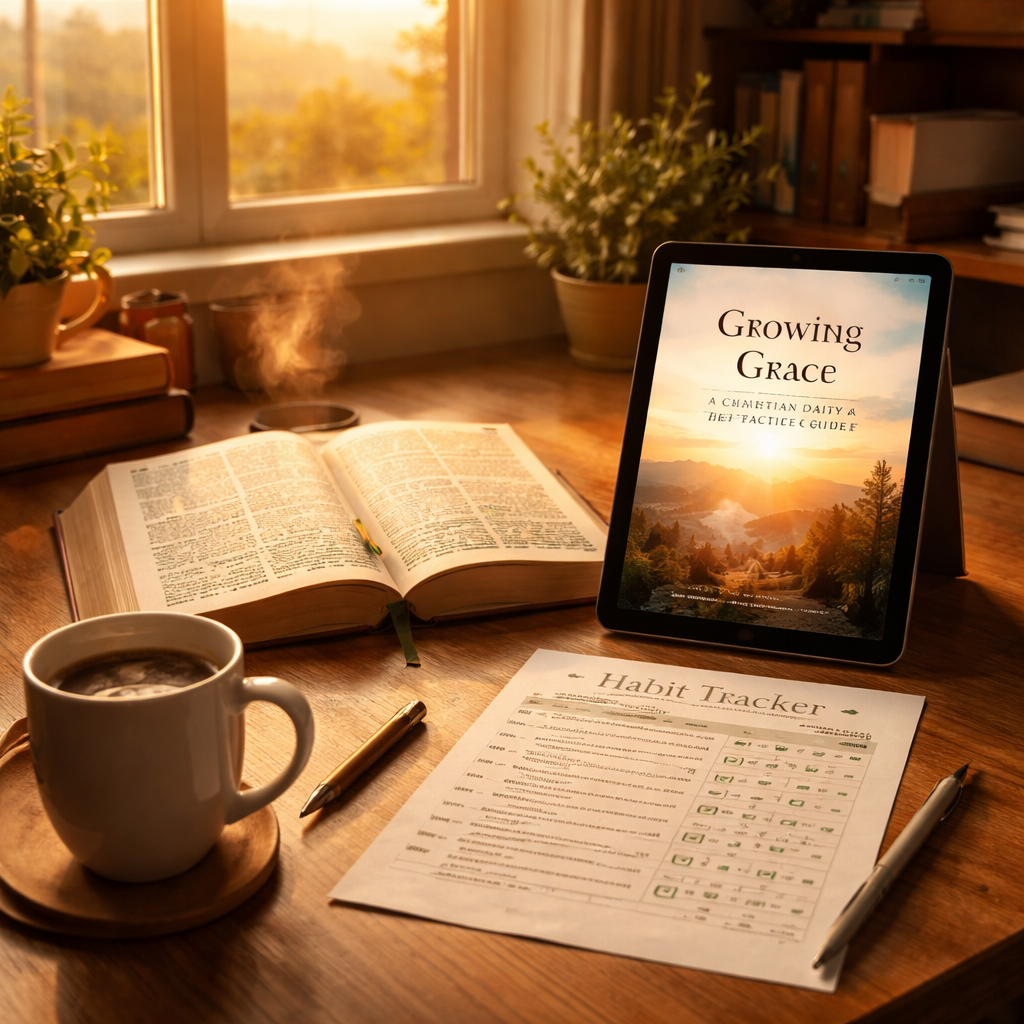
Step 5: Track Progress and Adjust Your Path
Alright, you’ve set your goal, paired a verse, and chosen an ebook. The next question is: how do you know it’s actually working?
Tracking isn’t about becoming a data‑nerd; it’s about giving yourself a mirror that reflects where God is moving in you.
Pick a Simple Tracker
Grab whatever feels natural – a bullet‑journal spread, a phone notes page, or a spreadsheet. The key is consistency, not flashiness.
Write down three columns: Date, Scripture/Prompt, and a one‑sentence reflection. Keep it short, like a tweet. That way you’ll actually fill it in.
Set a Weekly Check‑In Ritual
Every Sunday (or whatever day works for you) set aside five minutes. Flip through the week’s entries and ask yourself:
- Did the verse speak to me?
- Did the tiny action feel genuine?
- What surprised me?
Jot a quick “win” and one “adjustment” note. This tiny habit turns scattered effort into a story.
So, what should you do next? Pull out your tracker right now and write today’s date, the verse you’re living out, and a sentence about how you applied it.
Use Numbers When They Help
If you love a little quantifiable feedback, add a rating of 1‑5 for “spiritual focus” after each practice. Over a month you’ll see a trend line that points out when you’re most aligned with God’s rhythm.
Remember the advice from a Christian counselor: “A personal growth plan should include regular reflection to keep the heart honest and the mind focused.”Christian counseling perspective on reflection
Adjust, Don’t Abandon
When a pattern emerges – maybe you’re skipping the evening reflection because you’re exhausted – don’t quit. Tweak the cue. Move the habit to a different anchor moment, like after dinner instead of before bed.
Or, if a verse feels stale, swap it for another that sparks fresh hunger. The ebook you’re using, such as the Divine Direction guide, often offers multiple verses per chapter, so you have options built right in.
Think about it this way: tracking is the GPS, adjustment is the reroute. The destination stays the same – deeper spiritual growth – but the road can change.
Celebrate Tiny Victories
When you see a streak of green checkmarks, give yourself a small celebration. Maybe a quiet walk, a favorite hymn, or a short devotional video. Celebration reinforces the habit loop and reminds you that progress, however small, is a gift.
And if you hit a slump? Write a brief note saying, “I’m feeling stuck today,” then pray for fresh eyes. That honesty keeps the process honest and God‑centered.
Finally, consider sharing a snapshot of your tracker with a trusted friend or a small group. A quick text like, “Just logged a verse about patience – felt a calm wash over me,” can spark encouragement and accountability.
Tracking isn’t a chore; it’s a conversation with yourself and with God about where you’re heading and how He’s shaping you.
Bonus: Recommended Christian Personal Development Ebooks
Ready for a little extra boost? Below are some of our favorite christian personal development ebook picks that can turn a good habit into a life‑changing routine.
1. Divine Direction – your daily compass
If you’re looking for a guide that blends scripture with bite‑size actions, Divine Direction is a solid starter. Each chapter gives you a verse, a short reflection, and a 5‑minute practice you can slot into any part of your day.
What we love about it is the built‑in flexibility: you can swap verses when one feels stale, or adjust the action to match a busy work schedule. It feels less like a textbook and more like a friendly mentor whispering suggestions.
2. The House Within Your Heart and Mind
This ebook digs deeper into the mental patterns that keep us from walking in God’s purpose. It pairs biblical truth with cognitive‑behavioral techniques, so you get both spiritual and psychological traction.
Try the “mind‑reset” exercise after a stressful meeting – read the highlighted Psalm, breathe, then write a one‑sentence gratitude note. In our experience, the mix of faith and practical psychology makes the habit stick faster.
3. Patience – a slow‑burn powerhouse
Patience isn’t just a virtue; it’s a skill you can train. This short ebook offers a weekly focus, each anchored by a verse like James 1:4, plus a micro‑task you can complete while waiting for a coffee order.
Because the actions are tiny, you won’t feel overwhelmed. Over a month you’ll notice a calmer response to traffic, emails, or family chaos.
4. Benefits of Doing God’s Will
Ever wonder how obeying God’s prompts actually improves your health, relationships, and career? This guide lays out real‑world examples, then gives you a checklist to track obedience daily.
Use the checklist alongside the habit‑tracker you set up in Step 1 – tick off each “Will‑aligned” action and watch the momentum build.
5. Spiritual Food – nourishment for the soul
Think of this ebook as a spiritual meal plan. It provides a daily “spiritual snack” – a verse, a short prayer, and a practical tip – that fits neatly into a lunch break.
When you pair the snack with a quick journal entry, you create a feedback loop that reinforces growth without adding extra time to your day.
How to make the most of these ebooks
First, choose one that speaks to the specific area you’re working on – whether it’s focus, patience, or aligning with God’s will. Then, open the ebook at the same cue you use for any habit – right after your morning coffee, before you log into your computer, or during a commute.
Second, treat each chapter like a mini‑workshop. Read the verse, pause for a breath, then do the action. Mark it in your tracker and note a single sentence about how it felt.
Third, review weekly. Flip back to the chapters you’ve completed, compare notes, and decide if you need to swap a verse or tweak an action. The ebook becomes a living document, not a static PDF.
Bonus tip: combine two ebooks for a powerhouse combo
Pair Divine Direction’s daily prompts with The House Within Your Heart and Mind’s mindset tools. The result is a spiritual‑psych blend that tackles both heart and head.
Set a 10‑minute “combo session” after dinner: read the verse from Divine Direction, then do the mental‑reset exercise from The House Within Your Heart and Mind. You’ll end the day feeling grounded and mentally clear.
So, which one will you grab first? Pick the title that matches your most pressing need, set a simple cue, and let the ebook guide you into consistent, God‑centered growth.
Conclusion
We've walked through everything—from setting spiritual goals to picking the right ebook and turning it into a daily habit.
So, what does it all mean for you? It means you now have a clear roadmap to let a christian personal development ebook become a living companion, not just a PDF you skim once.
In our experience, the smallest cue—like opening the ebook with your morning coffee—creates a ripple that steadies your whole day.
Remember the three checks we kept returning to: scripture‑anchored action, a tiny anchor moment, and a weekly review. If those stay together, progress feels natural instead of forced.
Got a busy schedule? Swap the evening read for a commute, or pair the “Divine Direction” guide with a quick breath prayer. The flexibility is built right into the format.
And if you ever hit a stall, ask yourself: which part feels stale? Change the verse, shorten the practice, or move the cue. Adjust, don’t abandon.
Ready to take the next step? Grab the ebook that resonates most with your current need, set a simple cue, and watch the habit grow one checkmark at a time.
May your journey be filled with purpose, peace, and the steady sense that God’s guidance is just a page turn away.
FAQ
What is a christian personal development ebook and how is it different from a regular ebook?
Think of it as a study guide that lives at the intersection of faith and growth. A christian personal development ebook weaves Scripture directly into each habit, reflection, or exercise, so you’re not just reading theory—you’re applying God’s truth to daily life. Unlike a generic self‑help PDF, it includes verse citations, prayer prompts, and spiritual checkpoints that keep you anchored to your walk with Christ.
How do I choose the right christian personal development ebook for my busy schedule?
Start by spotting the “anchor moment” you already have—like your morning coffee or a commute. Then scan the ebook’s table of contents for bite‑size chapters that promise 5‑minute actions. Look for clear verse citations and a habit‑tracker template. If the layout lets you flip between a short devotion and a quick journal entry, you’ll be more likely to stick with it even on hectic days.
Can I use a christian personal development ebook alongside my existing Bible study plan?
Absolutely. Treat the ebook as a supplemental tool that reinforces what you’re already studying. For example, if your study group is tackling Romans 12, pick an ebook chapter that pairs that verse with a practical habit—like a gratitude note after each work task. Write the verse in the margin, jot a one‑sentence reflection, and you’ll see the same truth showing up in both contexts.
How often should I review my progress with a christian personal development ebook?
We recommend a quick “pulse check” each day—just a line noting the verse, the action you took, and how you felt. Then set a deeper weekly review, maybe on Sunday, where you tally checkmarks, read back your notes, and ask: Did the practice bring peace, focus, or a sense of God’s presence? Adjust the cue or verse if something feels stale, and keep the loop moving.
Is it okay to skip a day if I’m feeling overwhelmed?
Yes, and it’s actually healthier than forcing a habit that feels like a chore. When you skip, write a short note like “today was heavy; praying for rest.” Use that note as a cue for the next day—perhaps choose a gentler verse or a shorter prayer. The goal is consistency over perfection, so a brief pause keeps the momentum honest. It also reminds you that God’s grace covers the gaps.
What if the verses in the ebook don’t resonate with me?
That happens more often than you think. Scripture is personal, so if a verse feels flat, swap it for another that speaks to the same theme. Most ebooks, including ours, give you multiple options per chapter. Pick a verse that lights up your heart, rewrite the associated action, and you’ll notice the practice feeling more alive and purposeful. It turns reading into a living conversation with God each day.