

What Does Forbearance Mean in the Bible – A Comprehensive Guide
Ever found yourself scrolling through a Bible verse about patience, then wondering, what does forbearance really mean in the bible?
You're not alone. That word shows up in Psalms, in the letters to the Romans, and it can feel like an old‑fashioned synonym for "tolerance." But there's a depth behind it that most readers miss – a divine patience that stretches far beyond human goodwill.
Think about the last time you slipped up, maybe missed a deadline or said something harsher than you intended. You probably expected judgment, right? Yet the Scriptures tell a different story: God’s forbearance is His willingness to hold back the full weight of His justice while we work through our messes.
In plain language, forbearance means "bearing with" – standing beside someone despite their flaws, giving them space to grow. It’s the same patience you feel when a friend keeps borrowing your favorite book and you still smile and say, "Sure, take it again." That everyday patience mirrors the way God interacts with us.
For those on a spiritual growth journey, recognizing this helps shift the focus from fearing punishment to embracing a relationship built on mercy. When you understand that God’s forbearance is a gift, it changes how you treat yourself and others.
So, how can you apply that biblical forbearance today? Start by pausing before reacting to a mistake – ask yourself, "Is this the moment to extend grace?" Then, practice a small act of patience, like listening fully to a loved one vent without interrupting.
And if you’re looking for deeper guidance, our e‑book "God’s Forbearance" walks you through Scripture, real‑life stories, and practical steps to live out this grace daily. It’s designed for anyone craving a softer heart and a clearer picture of God’s long‑suffering love.
Ready to let that divine patience reshape your daily walk? Let’s explore together, one verse at a time.
TL;DR
Forbearance in the Bible is God’s patient willingness to hold back judgment, bearing with our flaws so we can grow into His love.
Understanding this divine patience helps you replace fear with grace, encouraging everyday acts of kindness and deeper spiritual growth, just like the gentle example we explore throughout this guide.
Biblical Definition of Forbearance
When you hear the word “forbearance” in a sermon, what picture pops into your mind? Maybe you picture a patient teacher waiting for a stubborn student to finally get it. That’s close, but the biblical nuance goes deeper.
In the original Hebrew and Greek, the root literally means “to bear with” or “to endure.” It isn’t just tolerance; it’s an active, loving endurance. God isn’t passively sitting back—He’s intentionally holding back judgment so we have space to turn.
Think of a parent who watches their child stumble on the first steps. The parent could push the child away, but instead they stay right there, steadying the hand, waiting for the moment the child finds balance. That waiting‑with‑grace mirrors what the Psalms call hesed—steadfast love that endures.
One of the clearest biblical snapshots is in Romans 2:4: “God’s kindness is meant to lead you to repentance.” The word translated “kindness” is actually “forbearance.” God’s patience isn’t a loophole for us to keep sinning; it’s a gentle invitation to change.
So, what does that look like in everyday life? Imagine you’re late to a small group meeting because traffic was terrible. Instead of a sharp rebuke, the leader smiles, says, “We’ve all been there,” and moves on. That moment is a tiny echo of divine forbearance—bearing with us, not condemning us.
Another scriptural anchor is 2 Peter 3:9
“The Lord is not slow about his promise, as some think, but is patient with you, not wanting anyone to perish.” Here, forbearance is paired with the ultimate goal: our salvation, not our punishment.
Why does this matter for someone on a spiritual growth path? Because recognizing God’s forbearance reshapes our own heart. When we understand that the divine patience is purposeful, we’re more likely to extend that same patience to ourselves and others.
Practical tip: the next time you feel the urge to criticize a friend for a misstep, pause and ask, “Am I reflecting God’s forbearance or just my own frustration?” That quick check can turn a potentially hurtful comment into a moment of grace.
And here’s a small habit that helps. Each evening, write down one situation where you chose patience over irritation. Over a week, you’ll notice a pattern—a growing capacity to bear with others just as God bears with us.
Below is a short video that walks through a few key verses and offers a visual reminder of this concept.
Notice how the narrator ties the idea of “bearing with” to everyday relationships. It’s a gentle nudge to let the truth settle in your heart.

In sum, biblical forbearance is God’s intentional, loving patience—a pause that invites transformation. It’s not a license to ignore sin, but a compassionate space for growth. As you walk this journey, let that divine patience shape how you respond to mistakes—both yours and others'.
Forbearance in the Old Testament
When you flip through the early chapters of Scripture, the word “forbearance” pops up more often than you might expect. It’s not just a fancy synonym for patience; it’s God’s deliberate choice to hold back judgment while humanity stumbles.
Think about Genesis 6:6‑7. God looks at a world gone sideways, feels grief, yet He doesn’t wipe everything out in an instant. He pauses, giving Noah a chance to build an ark. That pause? Pure forbearance. He’s bearing with a people who keep breaking the same rules, hoping a remnant will turn back.
Why does that matter for us today? Because it shows God’s love isn’t a reaction to perfection—it’s a commitment to the messy, unfinished story we’re living.
Old Testament Portraits of Forbearance
Consider Abraham. In Genesis 12‑13, God calls him to leave everything familiar. Abraham obeys, but then his wife Sarai lies about their relationship (Genesis 12:10‑20). Instead of instantly condemning them, God lets the situation unfold, later revealing a deeper covenant. That patience is forbearance in action: God lets us learn, fail, and grow.
Another vivid picture is the story of Joseph. His brothers sell him into slavery, expecting an immediate downfall. Yet God’s forbearance stretches over decades, allowing Joseph to rise in Egypt, ultimately saving his family. The delay isn’t neglect; it’s purposeful waiting for redemption.
Even the Psalms echo this theme. Psalm 103:8 declares, “The Lord is compassionate and gracious, slow to anger, abounding in love.” The Hebrew phrase for “slow to anger” captures the essence of forbearance—God’s intentional restraint.
Real‑World Parallel: Parenting and Forgiveness
Imagine you’re a parent watching your teen repeatedly break curfew. Your instinct might be to slam the door, but you choose to ask, “What’s going on?” and give them space to explain. That’s forbearance: you’re holding back the full weight of disappointment because you trust the relationship will heal.
In the same way, a Christian counselor might hear a client confess a repeated sin. Instead of delivering a harsh verdict, the counselor reflects God’s forbearance—offering grace while encouraging honest change.
Practical Steps to Mirror Old‑Testament Forbearance
- Pause before reacting. When someone disappoints you, count to ten, then ask, “Is this a moment to extend forbearance?”
- Replace judgment with curiosity. Ask, “What’s behind this behavior?” rather than issuing a reprimand.
- Set a “grace window.” Give the person a specific, short timeframe to make amends before escalating the issue.
- Model the wait. Share a personal story of how you benefited from someone’s patience, reinforcing the cycle of grace.
Want to dive deeper into how God’s forbearance shapes our everyday choices? Our e‑book God’s Forbearance unpacks these Old Testament examples and gives you daily worksheets to practice the same heart.
So, what does forbearance mean in the Bible? It’s God’s strategic patience—a loving hold‑back that invites transformation. When you adopt that posture, you’ll notice relationships soften, conflicts de‑escalate, and your own spiritual walk gains depth.
Forbearance in the New Testament: Teachings and Examples
When you flip to the New Testament, the word "forbearance" starts to feel less like an ancient term and more like a daily toolbox for how we walk with others. It’s the same gentle restraint we saw in Genesis, but now it’s wrapped in the life of Jesus and the letters Paul wrote to early churches.
Jesus' Hands‑On Forbearance
Picture the scene in John 8:1‑11, the woman caught in adultery. The crowd is ready to stone her, the law‑books are open, and the tension is thick enough to cut. Yet Jesus says, "Let anyone among you who is without sin cast the first stone." He doesn’t excuse the sin; He simply withholds the full weight of judgment.
That pause—waiting for self‑reflection before executing punishment—is the heart of New Testament forbearance. It’s a strategic patience that says, "I’m not ignoring the problem, I’m giving space for transformation."
Does that make sense for you when you’re dealing with a friend who keeps slipping up? Imagine saying, "I see you’re struggling, I’m here, but I’m not going to shut you out today." That’s the Jesus model in action.
Paul’s Practical Teachings
Paul takes the concept into community life. In Romans 12:19‑21 he writes, "Do not take revenge…" and then urges us to "overcome evil with good." He’s basically telling believers: instead of reacting instantly, let God’s forbearance guide your response.
Later, in Galatians 6:1, Paul says, "If anyone is caught in sin, restore them gently. But watch yourself, because you also can be tempted." The word "gently" translates from the Greek praus, a term closely linked to forbearance. It’s a reminder that our correction should be soaked in patience, not harshness.
So, what does that look like in a modern church small group? Maybe you hear someone admit they’ve been late to meetings. Instead of calling them out publicly, you invite them to share what’s been weighing them down, offering grace while encouraging consistency.
Epistles to the Churches: Forbearance as Unity Builder
1 Corinthians 13, the love chapter, ends with “...and now these three remain: faith, hope and love. But the greatest of these is love.” While “love” is the headline, the surrounding verses describe a love that “always protects, always trusts, always hopes, always perseveres.” That perseverance is essentially forbearance—holding onto someone even when they test your limits.
And in James 5:9, we read, "Don’t grumble against one another, brothers. Whoever is angry, do not sin; don’t let the devil get a foothold through your anger." James is warning us that unchecked anger erodes the very patience God models for us.
Ever felt that sting of a quick‑tempered reply? James nudges us to pause, breathe, and let forbearance defuse the situation.
Putting It Into Practice
Here are three quick ways you can mirror New Testament forbearance today:
- When a conflict arises, count to ten before you speak—just like Jesus gave space before responding.
- Use “gentle restoration” language: "I see you’re struggling; how can I walk this with you?"
- Make a habit of praying for the person before you address the issue, inviting God’s own patience into the conversation.
In my work with spiritual counseling, I’ve seen these steps turn heated arguments into moments of deeper trust. It’s not magic; it’s intentional forbearance.
Quick Comparison
| New Testament Example | Key Aspect of Forbearance | Application Today |
|---|---|---|
| Jesus and the adulterous woman (John 8) | Withholding immediate judgment | Give someone space to confess before deciding on consequences. |
| Paul’s gentle restoration (Gal 6:1) | Correcting with humility and patience | Offer help quietly, remembering you’re also vulnerable. |
| James on anger (James 5:9) | Preventing anger from becoming sin | Pause, pray, and choose a calm response. |
So, what does forbearance really mean in the New Testament? It’s God’s strategic patience modeled by Jesus and codified by the apostles—a purposeful holding back of harshness so love can do the heavy lifting.
If you’re craving more tools to practice this grace, the e‑book "God’s Forbearance" digs deeper into each example and gives you daily worksheets to train your heart.
Comparing Forbearance, Patience, and Mercy
Where do the three overlap?
When you first hear the words together, it’s easy to think they’re just different flavors of the same virtue. In reality, each one points to a distinct posture God takes toward us, and each invites us to respond in a slightly different way.
Forbearance is the deliberate holding back of judgment. It’s the “pause button” God hits when He could instantly punish, giving us space to turn back. Patience, on the other hand, is the endurance of waiting without complaining – a personal stamina that lets us stay calm while the delay unfolds. Mercy adds another layer: it’s the active kindness that flows from a heart that feels compassion, often moving us to do something generous for the person in need.
Forbearance versus Patience
Think about a time you waited in line at a coffee shop. Patience is you staying cool, maybe humming a song while the barista works the espresso. Forbearance would be the barista choosing not to snap at a rushed customer who’s late for a meeting, instead giving them a moment of grace.
In Scripture, James 5:9 urges believers to “prevent anger from becoming sin.” That’s forbearance – a conscious choice to withhold harshness. Paul’s advice in Romans 12:12 to “be patient in hope” speaks to personal endurance. The difference shows up in the verb choice: “withhold” versus “endure.”
Practical tip: When you feel irritation rising, ask yourself, “Am I just waiting, or am I choosing to hold back a reaction?” If the latter, you’re exercising forbearance.
Forbearance versus Mercy
Mercy is love in motion. It’s the moment you see a friend’s broken heart and you reach out with a hug, a meal, or a prayer. Forbearance can set the stage for mercy, but mercy goes further – it actively seeks the other’s wellbeing.
Jesus’ encounter with the woman caught in adultery (John 8) shows both. He first forbeared the crowd’s demand for stoning, then extended mercy by speaking words of forgiveness. The forbearance created the space; the mercy filled it.
If you’re wrestling with a colleague’s repeated missed deadlines, forbearance might be giving them extra time without criticism. Mercy would be offering help to reorganize their workload, perhaps sharing a resource or a prayer.
Patience versus Mercy
Patience can sometimes feel passive – “I’ll wait until you’re ready.” Mercy feels active – “I’ll walk with you now.” Both are needed, but they play different roles. A patient heart can sustain us through long seasons, while mercy moves us to intervene in the moment.
Imagine you’re counseling someone who’s stuck in a cycle of addiction. Patience helps you stay present over months or years. Mercy prompts you to bring a Bible study, a supportive community, or a simple act of kindness that says, “I see you, and I care.”
Putting the three together
When we line them up, a pattern emerges: Forbearance creates the pause, patience keeps us steady during the pause, and mercy fills the pause with love. It’s like a three‑part song – the intro (forbearance), the verses (patience), and the chorus (mercy).
For those on a spiritual growth journey, recognizing this rhythm can transform how you handle conflict. Instead of reacting instantly, you might first count to ten (forbearance), then breathe and remind yourself you’ll stay calm (patience), and finally ask, “What can I do to help?” (mercy).
In our own experience helping individuals seeking deeper spiritual wellness, we’ve found that practicing this trio leads to relationships that feel less like transactions and more like genuine companionship.
So next time you’re tempted to snap, pause, stay steady, and choose a kind action. That’s the holy trinity of grace in everyday life.
Living Out Forbearance: Practical Applications
So, you’ve felt the pause of forbearance in Scripture—now what? That gentle “hold‑back” isn’t just a theological concept; it’s a daily tool you can practice in relationships, work, and even your inner dialogue.
First, think about the moment you feel the urge to react. Maybe a coworker missed a deadline, or a family member forgets an anniversary. Your immediate impulse might be irritation, a sharp retort, or silent resentment. Forbearance asks you to press pause, to let the storm settle before you decide how to respond.
Step 1: Create the Grace Window
We call it a “grace window” because it’s a deliberate, short period where you withhold judgment. Set a timer for three minutes, count to ten, or simply take three deep breaths. Those few seconds shift your brain from the amygdala’s fight mode into the prefrontal cortex’s reasoning mode.
In our experience coaching spiritual seekers, that tiny window often transforms a potential argument into a conversation. You’ve literally given God’s forbearance a foothold in the present.
Step 2: Ask the “Why” Before the “What”
Instead of launching into correction, ask yourself, “Why might this person be acting this way?” You might discover fatigue, stress, or a misunderstanding. That curiosity replaces condemnation with compassion.
Picture this: a friend repeatedly shows up late. Your first thought is “they don’t respect me.” After a grace window, you ask, “What’s going on for them today?” The answer could be a chaotic morning or a health issue. Suddenly, the scene changes from offense to empathy.
Step 3: Offer Gentle Restoration
Now that you’ve paused and understood, respond with gentle restoration. Use language that invites partnership, not accusation. For example, “I noticed we missed the deadline. How can we adjust the plan together?” This mirrors the New Testament’s call to “restore gently” (Gal 6:1) while staying within the forbearance mindset.
Notice the difference between “You messed up again” and “Let’s figure out a smoother workflow.” The latter preserves relationship capital and invites growth.
Step 4: Pair Forbearance with Actionable Mercy
Forbearance creates space; mercy fills it. Once you’ve held back judgment, look for a concrete act of kindness. It could be a coffee delivered to a stressed teammate, a prayer note slipped into a sibling’s bag, or simply a listening ear.
These small acts signal that you’re not just tolerating the mistake—you’re actively investing in the person’s well‑being.
Everyday Scenarios to Practice
• Parenting: When your teen slams the door, count to ten, then ask, “What’s bothering you?” instead of issuing an immediate curfew.
• Marriage: If your spouse forgets to take out the trash, pause, then say, “I see you’ve had a long day. Want me to handle it tonight?”
• Self‑talk: Catch yourself thinking, “I’m a failure.” Insert a grace window, then replace it with, “I’m learning; God’s forbearance extends to me too.”
Each scenario follows the same rhythm: pause (forbearance), stay steady (patience), act lovingly (mercy).
What if you’re in a high‑stress environment, like a crisis counseling call? The stakes feel higher, but the principle stays the same. Breathe, acknowledge the caller’s pain, and then offer a calm, compassionate suggestion rather than a hurried directive.
Over time, these practices rewire your default response. You’ll notice less resentment, deeper connections, and a quieter inner critic. That’s the holy trinity of grace in motion.
Want a visual reminder? Try placing a simple sticky note on your mirror that reads, “Pause, Pray, Partner.” When you see it, you’ve just invited forbearance into the room.
And remember, you don’t have to master every step perfectly from day one. Start with one relationship—a friend, a coworker, or even yourself—and experiment. The more you practice, the more natural the pause becomes.
Living out forbearance isn’t about being a “nice‑person” all the time; it’s about embodying the very character God showed when He held back judgment for us. When you let that divine patience shape your everyday choices, you become a living illustration of the gospel’s gentle power.
So, what will you try first? A three‑minute grace window during your next disagreement? A gentle question instead of a sharp rebuke? Whatever it is, know that each small step is a ripple of God’s forbearance flowing into the world.
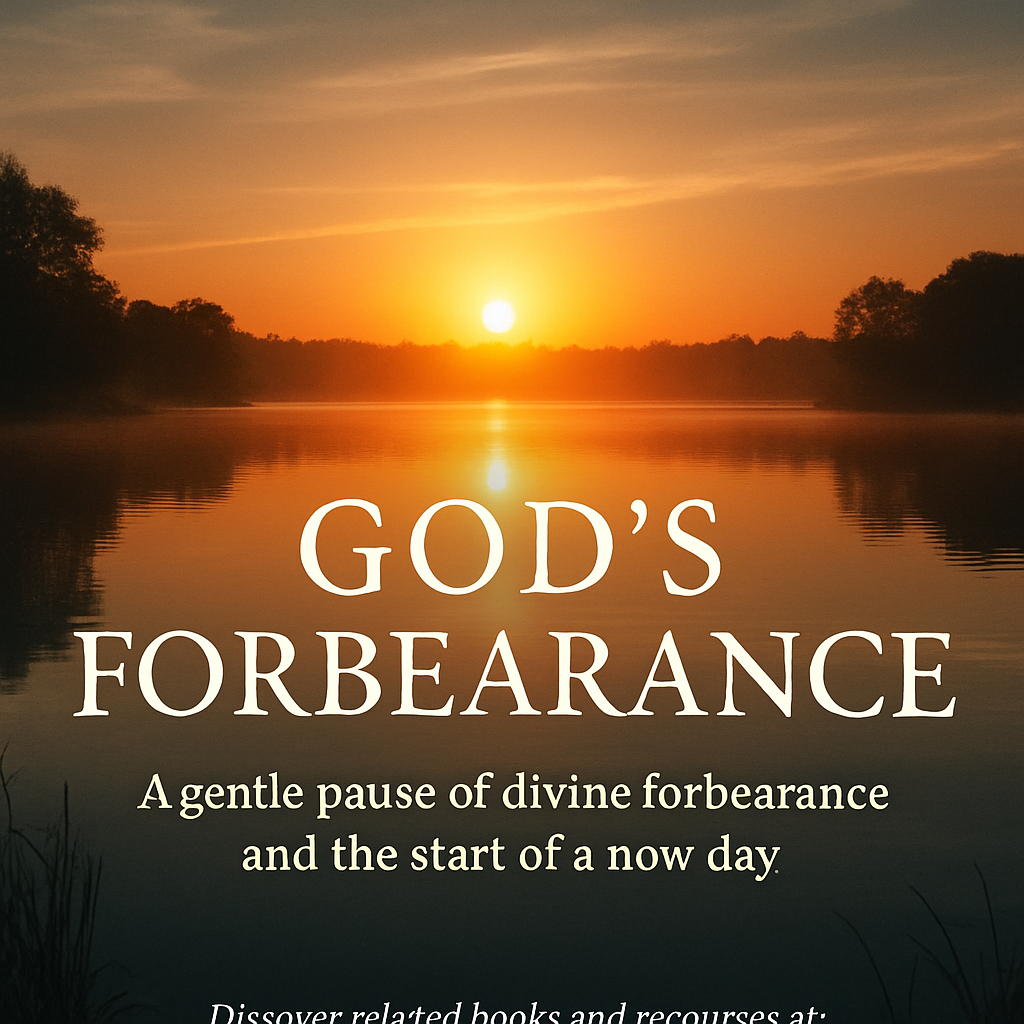
Recommended Books and Services for Deeper Study
Now that you’ve seen how forbearance works in everyday moments, you might be wondering where to go next. What’s the next step for someone who wants to dig deeper into “what does forbearance mean in the bible” without feeling overwhelmed?
Start with a Core Companion
Our flagship e‑book, God’s Forbearance, is designed exactly for that moment. It takes the biblical definition, walks you through the Old and New Testament stories we just explored, and then gives you concrete reflection questions you can use during devotions or small‑group study. Readers tell us the worksheets feel like a gentle coach nudging them toward that pause‑button we talked about.
If you’ve already tasted the concept and want a complementary perspective, the Patience e‑book expands the conversation. While patience focuses on endurance, it shows how forbearance and patience feed each other—like two gears in the same spiritual engine.
Pairing Books with Practical Tools
For the hands‑on learner, consider pairing any of the forbearance‑focused books with our Spiritual Counseling service. A short, one‑on‑one session can help you personalize the insights, answer lingering questions, and set up a realistic “grace‑window” practice plan.
We also offer speaking engagements for churches or small groups. Imagine a 30‑minute talk that ties the biblical stories to real‑life scenarios—perfect for a youth group or a mid‑week fellowship. It’s a low‑commitment way to taste the deeper study before diving into a full e‑book.
Explore Related Themes
If you’re curious about how forbearance intersects with forgiveness, the Forgiveness: How We Should Utilize It e‑book provides a natural next step. It outlines the psychological and spiritual benefits of letting go, and it references forbearance as the groundwork that makes true forgiveness possible.
Another thread worth pulling is the “Divine Direction” series. Understanding God’s timing—another facet of divine forbearance—helps you align daily decisions with that patient heart we’ve been unpacking.
Build a Personal Study Routine
Here’s a quick checklist to turn those books into a habit:
- Pick one e‑book that resonates most with your current season.
- Set a 10‑minute “reflection slot” each morning or evening.
- Use the included worksheets to journal a specific forbearance moment you experienced that day.
- If you hit a snag, schedule a 15‑minute call with a spiritual counselor to troubleshoot.
Doing this for a couple of weeks often reveals patterns you didn’t notice before—like how you tend to rush judgment in work meetings but are more patient at home. Spotting those gaps is the first step toward a more consistent, Christ‑like pause.
Why Investing in Deeper Study Pays Off
Think about the ripple effect: the more you understand God’s forbearance, the easier it becomes to extend that patience to friends, family, and even yourself. It changes conflict from a showdown to a conversation, and it shifts resentment into compassion.
People who have completed the “God’s Forbearance” study report feeling less reactive, more hopeful, and oddly enough, more productive. The calm confidence that comes from knowing you’re walking in God’s intentional patience can free up mental space for creativity and service.
Next Steps
So, which resource feels like the right fit for you right now? Maybe the core e‑book, maybe a counseling session, or perhaps a speaking engagement that you can share with your small group.
Whatever you choose, remember that the journey isn’t about ticking boxes—it’s about letting that divine pause become a habit that reshapes how you relate to the world. Grab a copy, set a simple practice, and watch how your everyday interactions start to echo the gentle, patient heart of God.
FAQ
What does forbearance mean in the Bible?
In biblical language, forbearance is God’s intentional “hold‑back” of judgment while we work through our messes. It’s more than patience – it’s a purposeful restraint that creates space for repentance and growth. Think of a parent who doesn’t scold the child the instant they spill milk, but gives them a chance to clean up and learn.
How is biblical forbearance different from ordinary patience?
Patience is mostly about waiting calmly for something to happen. Forbearance adds a relational twist: it’s the decision to not act harshly toward someone, even when you could. The Bible frames it as God “bearing with” our flaws, not merely enduring inconvenience. That extra layer changes how we respond to people who keep stumbling.
Why does God practice forbearance?
God’s forbearance reflects His love and desire for transformation. By holding back the full weight of justice, He invites us to turn back, to grow, to experience mercy. It’s a divine strategy that turns judgment into an opportunity for redemption, showing that His heart is more about restoration than retribution.
Can I apply forbearance in my marriage?
Absolutely. When your spouse forgets an anniversary, the instinct might be to bring up a list of grievances. Instead, try a grace window: pause, ask what’s going on, and offer a gentle solution. That mirrors the biblical model – you’re withholding a harsh reaction and giving space for understanding.
How does forbearance affect my personal spiritual growth?
Practicing forbearance trains your heart to mirror God’s character. Each time you choose to hold back a quick retort, you’re building spiritual muscle that makes you less reactive and more reflective. Over time, you’ll notice a calmer inner dialogue and a deeper sense of peace, which fuels further growth.
What practical steps can I take to develop forbearance?
Start with a “grace window.” When you feel the urge to criticize, count to ten or take three deep breaths. Then ask, “What’s behind this behavior?” Replace judgment with curiosity, and finish with a gentle invitation to collaborate. Repeating this three‑step habit turns a reflex into a purposeful act of love.
Where can I find more resources on biblical forbearance?
If you want deeper study, consider the e‑book “God’s Forbearance,” which walks you through Scripture, offers worksheets, and suggests daily practices. Pairing the reading with a short counseling session can help you personalize the concepts and set realistic goals for applying forbearance in everyday life.
Conclusion
We’ve walked through what does forbearance mean in the bible, from Genesis’s gentle pauses to Jesus’s courtroom restraint.
Notice how the pattern is the same: a grace window, a pause, then a loving response. That rhythm isn’t just theological—it’s a practical habit you can start right now.
So, what’s the next step for you? Try counting to ten the next time you feel a sharp retort bubbling up. Ask, “What’s behind this?” before you react. You’ll be surprised how quickly the tension eases.
In our experience, people who pair that simple pause with a short reflection from the e‑book “God’s Forbearance” find their relationships soften within a few weeks.
Remember, forbearance isn’t about being a doormat; it’s about mirroring the divine patience that gives us room to grow. When you practice it, you’ll feel a quieter heart and deeper peace.
Ready to make that change stick? Grab a copy of the forbearance guide, set a daily reminder, and watch the ripple effect in your family, work, and inner dialogue.
If you’re hungry for more depth, the “Patience” e‑book dives into how waiting and forbearance work hand‑in‑hand, while our spiritual counseling service can help you map a personalized practice plan. Think of it as a small group study you can do on your own couch.