

What Does the Bible Say About Crystals? A Biblical Guide to Gemstone Beliefs
Ever walked into a crystal shop and felt a rush of sparkle, then wondered if that shimmer has any footing in Scripture? You’re not alone—many of us who crave spiritual depth also notice the glow of quartz or amethyst and ask, what does the bible say about crystals?
The short answer is that the Bible doesn’t mention modern “healing crystals” by name, but it does speak loudly about objects that people once venerated—idols, talismans, and anything people claim holds power apart from God.
When you flip through Exodus, you’ll see the golden calf (Exod 32) and the bronze serpent (Num 21) as examples of tangible things that became shortcuts to worship. The problem wasn’t the material itself; it was the belief that the object could replace a relationship with the Creator.
That same principle shows up in Deuteronomy 18:10‑12, where the law warns against divination, sorcery, and “any form of witchcraft” that tries to tap unseen forces. Many Christians interpret those verses as a blanket caution against using crystals as spiritual shortcuts.
But here’s the nuance: the Bible also celebrates creation’s beauty. Psalm 19:1 says, “The heavens declare the glory of God,” and verses about gems in Revelation (e.g., the New Jerusalem’s foundations of jasper, sapphire, and amethyst) celebrate their splendor, not their magical power.
So, for someone seeking genuine spiritual growth, the question shifts from “Are crystals biblical?” to “Am I using them as a crutch or as a reminder of God’s artistry?” If a crystal sits on your desk and nudges you toward prayer, that can be a harmless visual cue.
And if you feel uneasy, remember you’re not the first to wrestle with this tension. In our experience guiding believers through spiritual counseling, we’ve seen many choose simple prayer beads or a smooth river stone as a focal point—objects that point back to God rather than replace Him.
Practical tip: whenever you pick up a crystal, ask yourself a quick question—“Is this helping me draw nearer to Christ, or am I looking for a magical fix?” If the answer leans toward the latter, it might be time to set it aside.
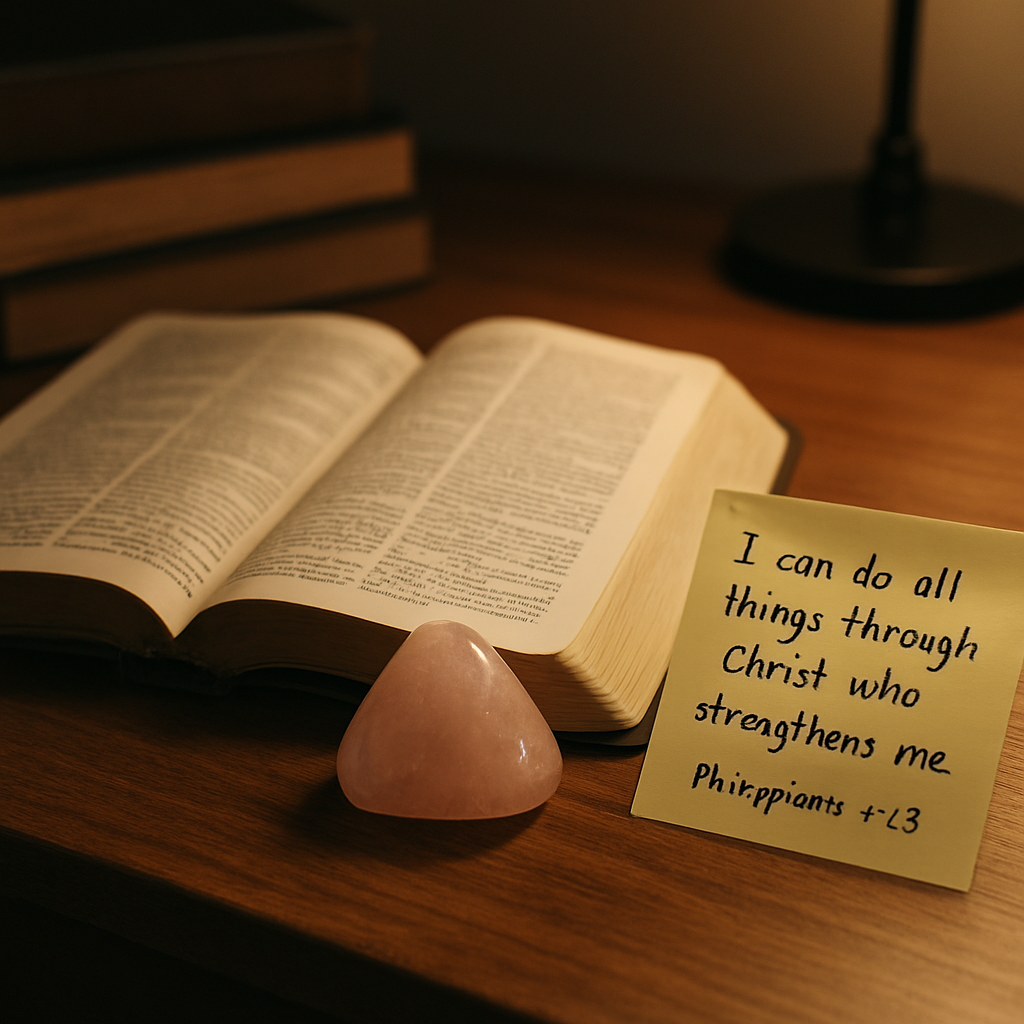
Another helpful habit is to pair any physical reminder with a Scripture memory. For instance, place a piece of quartz next to a sticky note that reads Philippians 4:13. The stone then becomes a cue, not a source, of strength.
Ultimately, the Bible invites us to worship God in spirit and truth (John 4:24). Objects, whether crystal, candle, or cross, are only as good as the heart behind them.
So, as you explore the glittering world of crystals, keep your eyes on the ultimate source of light. Let the conversation we’re starting here guide you toward a faith that’s rooted in God’s Word, not in the sparkle of a stone.
Ready to dive deeper? We’ll unpack biblical passages, historical practices, and practical ways to honor God while navigating the crystal craze. Let’s keep the journey honest and hopeful.
TL;DR
The Bible doesn’t endorse healing crystals, but it warns against treating any object as a spiritual shortcut, urging believers to keep their focus on Christ.
Use a crystal as a reminder beside a Scripture—like quartz with Philippians 4:13—so it points you back to God, not as a source of power.
Biblical References to Crystals
When you flip through the Old Testament, you’ll notice a handful of verses that mention shining stones—not as healing tools, but as symbols of glory, judgment, or covenant. Think of the high priest’s breastplate, studded with twelve precious gems (Exodus 28:17‑21). Each stone represented a tribe of Israel, a reminder that the value lay in what God ordered, not in any magical power the stone might hold.
And then there’s the vision of the New Jerusalem in Revelation 21. The city’s foundations are described as “jasper, sapphire, agate, emerald, and gold” (Rev 21:19‑20). Those are beautiful, but the text isn’t telling us to line our living rooms with them for health benefits. Instead, it paints a picture of the eternal glory that awaits believers—beauty pointing back to God’s perfect creation.
So, what does the Bible actually warn against? Deuteronomy 18:10‑12 says, “Do not practice divination or sorcery….” The ancient Israelites associated those practices with objects they believed could manipulate unseen forces. If you’re eyeing a crystal because you think it can “channel” divine energy, you’re walking a thin line that those verses caution against.
But here’s a nuance that often gets missed: the Bible also celebrates the natural world’s sparkle. Psalm 104 marvels at “the heavens, the firmament, the sea, and everything that moves therein.” The sparkle of a quartz or amethyst can be a reminder of God’s handi‑handed artistry—if we keep the focus where it belongs.
In our experience counseling believers who love both faith and aesthetics, we’ve seen a helpful pattern: use a crystal as a visual cue, not a spiritual crutch. Place a smooth piece of rose quartz beside your prayer journal and let it whisper, “Remember to pray,” instead of “Pray to me.” That’s the difference between a tool and an idol.
And if you’re wondering where to find trustworthy guidance, you might check out Frequency Device’s insights on spiritual focus. They explore how everyday objects can either sharpen or blur our walk with Christ.
Another resource worth a glance is XL R8 Well, which offers practical tips for turning ordinary items into reminders of God’s promises. Their approach aligns with the idea of “reminder stones” that point you back to Scripture.
Lastly, for those who crave deeper reflection, Gratitude Studios provides guided meditations that pair visual symbols—like a crystal—with verses such as Philippians 4:13. It’s a gentle way to keep the crystal’s sparkle in service of the Gospel.
Now, let’s pause and watch a quick video that walks through how to set up a crystal‑and‑Scripture reminder station in your home. It’s simple, visual, and grounded in biblical principle.
Notice how the presenter emphasizes pairing the stone with a verse, not substituting the stone for prayer. That’s the heart of what Scripture teaches: any object is useful only as a conduit pointing to the Creator.
Here’s a quick checklist you can use the next time you pick up a crystal:
- Ask yourself: “Is this helping me draw nearer to Christ?”
- Pair the stone with a specific verse that speaks to your need.
- Use the stone as a visual cue, not a source of power.
- Pray over the stone, asking God to use it for His glory.
By keeping those steps in mind, you’ll honor both the beauty of God’s creation and the authority of His Word.
Remember, the Bible doesn’t condemn the sparkle itself—it cautions us about where we place our trust. Let the crystal’s glitter be a reminder of the One who made the crystal, not a replacement for Him.
Historical Christian Views on Gemstones
When you flip through the Old Testament you’ll notice God never bans a stone because it’s “nice.” He cares about the heart behind the sparkle.
Take the high‑priest’s breastplate in Exodus 39. Twelve gems—carbuncle, chrysolite, emerald, and the rest—were set in gold to represent Israel’s tribes. They weren’t magical talismans; they were visual reminders of the covenant, a way to keep God front‑and‑center during worship.
So, why do some readers wonder if those same stones could be used for “healing”? The key is the intention. The Bible praises creation’s beauty, but it draws a line at attributing power to the object itself.
Old Testament warnings about occult practices
Deuteronomy 18:9‑12 is blunt: “Don’t learn the detestable ways of the nations…don’t practice divination, sorcery, or consult the dead.” The surrounding culture loved amulets—tiny stones sewn onto bracelets, thought to keep evil at bay. Ezekiel even calls out false prophetesses who made “magic charms” (Ezekiel 13:18‑21). Those verses aren’t about the mineral itself; they’re about the hidden spiritual system that tries to replace God.
Imagine a friend handing you a polished amethyst and saying, “Wear this and you’ll stay safe.” In the biblical worldview, that’s a shortcut—trust placed in a stone rather than in the Creator.
New Testament visions of crystal‑like purity
Jump forward to Revelation. The New Jerusalem’s walls are described as “jasper, clear as crystal” (Rev 21:11). Later, the river of life flows “as clear as crystal” (Rev 22:1). Here the term “crystal” is a metaphor for holiness and clarity, not a prescription for using crystal as a tool.
Notice the pattern: the New Testament uses crystal language to illustrate God’s glory, then immediately warns that those who practice “magic arts” will be barred from that very city (Rev 22:14‑15). The contrast is intentional.
Early Church encounters with occult magic
Acts 8 tells us about Simon the sorcerer, a man who dazzled Samaria with “magic arts.” After encountering the gospel, many who had practiced such arts burned their books (Acts 19:17‑19). The early believers learned that true power comes from Christ, not from any stone or incantation.
That historical lesson still rings true today. When you feel drawn to a crystal for “energy,” ask yourself: am I looking for a visual cue that points me back to Jesus, or am I hoping the stone will do the work for me?
Practical takeaways for today’s believers
Here’s a simple habit that respects the biblical view: choose a stone you love, then pair it with a Scripture memory. Place a small quartz next to a sticky note with Psalm 19:1 – “The heavens declare the glory of God.” The stone becomes a reminder, not a source.
If you ever sense the crystal is becoming a crutch, swap it for a plain river stone or a prayer bead. Both serve the same visual purpose without the baggage of occult association.
For a deeper dive into what the Bible actually says about crystals, check out BibleInfo’s overview of crystals. It pulls together the verses we’ve mentioned and adds a helpful perspective on why the Bible warns against occult practices.
Bottom line: Christianity has a long history of admiring gemstones as God’s handiwork while simultaneously warning against treating them as sources of spiritual power. By keeping the focus on Christ, you can enjoy the beauty of a crystal without compromising your faith.
Biblical vs. Modern Spiritual Interpretations of Crystals
When you first pick up a sparkling quartz, you might feel a rush of wonder – is that sparkle a reminder of God’s handiwork, or is it tapping into a whole New‑Age vibe? That tug‑of‑war is exactly why we need to line up the biblical picture side‑by‑side with what today’s spiritual market is selling.
Where the Bible draws the line
First off, the Scriptures never call a stone “healing” or “energy‑balancing.” They talk about gems as symbols of beauty, purity, or covenant – think of the high‑priest’s breastplate (Exodus 39) or the crystal‑clear river of life in Revelation 22. The focus is always on God, not the mineral. Even when the Bible warns against occult practices (Deuteronomy 18:10‑12), the danger isn’t the stone itself; it’s the belief that the stone can replace prayer or the Holy Spirit.
Got Questions sums it up nicely: what the Bible says about crystals is that they’re fine as decorative reminders, but using them as spiritual shortcuts runs afoul of biblical teaching.
What modern spirituality adds
Today’s crystal craze is wrapped in language like “vibrational frequency,” “energy clearing,” and “chakra alignment.” Those ideas come from Eastern mysticism and New‑Age circles, not from the biblical narrative. The marketing often promises physical relief – better sleep, reduced anxiety – by “charging” the stone with intention.
That sounds appealing, especially when you’re stressed, but notice the shift: the stone becomes the source of change, not the One who created it. For many believers, that subtle pivot feels like a spiritual compromise.
Practical side‑by‑side check
Here’s a quick table that lets you compare the two lenses at a glance. Use it when you’re deciding whether a crystal belongs on your nightstand, in your prayer journal, or in your meditation corner.
| Aspect | Biblical Interpretation | Modern Spiritual Interpretation |
|---|---|---|
| Origin | Created by God as part of His beautiful creation (Psalm 19:1). | Seen as a natural conduit of Earth’s energy fields. |
| Purpose | Visual reminder that points you back to Christ; no intrinsic power. | Tool to “balance” chakras, boost aura, or attract specific outcomes. |
| Scriptural Guidance | Use with caution; avoid treating as a talisman (Deut 18:10‑12). | Often quoted with “law of attraction” principles, not biblical. |
| Common Practice | Paired with Scripture memory, prayer bead, or river stone. | Cleared under moonlight, programmed with intent, placed on chakras. |
| Spiritual Risk | Potential to become a crutch that replaces dependence on God. | May lead to syncretism, blending biblical faith with occult ideas. |
Notice how the biblical column always circles back to Christ, while the modern column spins outward into personal “energy” systems. That difference matters when you’re seeking lasting peace versus a quick feel‑good fix.
How to keep the focus on Christ
Try this simple habit: pick a stone that catches your eye, then write a short Scripture on a sticky note and attach it to the stone. Every time you glance at the quartz, the verse—not the crystal—does the work. If you ever feel the stone becoming a “magic wand,” swap it for a plain river stone or a prayer bead. Both look nice and stay safely in the biblical lane.
We’ve seen many of our readers use a small amethyst as a “thinking stone” during quiet time. The trick that keeps it biblical is to start with a prayer: “Lord, give me clarity like this crystal, not power from it.” The stone is just a visual cue; the prayer does the heavy lifting.
So, does this really matter for your daily walk? Absolutely. When you know the difference between a God‑crafted reminder and a New‑Age energy hack, you can enjoy the aesthetic beauty without slipping into a spiritual shortcut.
Bottom line: the Bible celebrates the sparkle of creation but warns against giving any object the authority to heal or protect. Modern spirituality flips that script, handing the stone its own power. Choose the view that keeps your heart anchored in Christ, and let the crystal be a beautiful backdrop, not the main act.
Spiritual Risks and Theological Concerns
When you first pick up a pretty stone, it’s easy to feel a little lift—maybe you think, “this could be my secret weapon.” That spark of excitement is exactly what the Bible warns us to watch out for.
The temptation of a shortcut
Imagine you’re stressed, you grab the crystal, and suddenly you feel a sense of calm. It feels like the stone is doing the work, right? The danger is that the calm becomes a crutch. Deuteronomy 18:10‑12 tells us to steer clear of any practice that claims to tap unseen forces. The verse isn’t about quartz or amethyst specifically; it’s about the mindset that puts a created thing above the Creator.
In our experience, many believers start with a good intention—using a crystal as a visual cue for prayer—and then the habit slips into “I need this stone to feel God’s peace.” That shift is subtle, but it can turn a harmless reminder into an idol of sorts.
Idolatry and the heart’s focus
The Bible’s biggest warning about objects lives in the heart, not the material. Exodus 20:4‑5 says, “You shall not make for yourself a carved image.” The command isn’t about statues of marble; it’s about assigning worship‑level trust to anything that isn’t God. When a crystal starts to feel like a “source” of protection, we’re walking that line.
Think about the golden calf. The people weren’t angry at the metal; they were angry at the belief that the metal could represent God. The same principle applies today. If you catch yourself whispering, “I’m holding this stone because it’s what God wants me to use,” pause and ask, “Is the stone really the answer, or is it pointing me back to Scripture?”
Even the New Testament keeps the focus on Christ. John 4:24 reminds us that true worship is “in spirit and truth.” Anything that distracts us from that—whether a candle, a charm, or a crystal—needs a quick check.
Spiritual risks in everyday life
One common risk is the “energy” language that floods social media. Phrases like “high‑vibration” or “cleansing aura” sound uplifting, but they borrow from a worldview that operates outside biblical truth. When we start measuring spiritual health by how “charged” a stone feels, we’re stepping into a belief system that the Bible calls “detestable.”
Another risk is the subtle isolation it can cause. If you rely on a crystal for comfort, you might withdraw from the community that God designed for encouragement—small groups, prayer partners, or pastoral counseling. The stone becomes a private “spiritual shortcut” that replaces the communal “spiritual food” we’re meant to share.
Practical guardrails
- Pair every stone with a specific Scripture. Write Philippians 4:13 on a sticky note and attach it to the crystal. The verse does the heavy lifting, not the mineral.
- Set a timer. Use the stone for five minutes of quiet, then put it away and finish with a prayer that acknowledges God as the source of peace.
- Do a weekly “heart audit.” Ask yourself, “Did I treat this stone as a tool or as a source?” If the answer leans toward source, replace it with a plain river stone or a prayer bead.
- Invite a trusted friend to observe your habit. A fresh perspective can spot when the crystal is edging toward a spiritual crutch.
And if you ever feel uneasy, remember you’re not alone. Early Christians faced similar temptations with amulets and charms—see Acts 8 and Acts 19, where believers burned their magic books and turned fully to Christ. Their example shows us that walking away from “spiritual shortcuts” is both possible and powerful.
Bottom line: the Bible celebrates the beauty of God’s creation, but it draws a hard line at giving any creation the power to replace Him. By treating crystals as beautiful reminders rather than sources of power, you keep the focus where it belongs—on Christ, on His Word, and on the community He’s given us.
Practical Guidance for Believers
Okay, you’ve seen the biblical warnings and you’ve felt the sparkle of a crystal on your desk. The next question is: how do we keep that pretty stone from becoming a spiritual shortcut? The answer lies in turning a habit into a disciplined practice that points straight back to Christ.
Step 1 – Choose a Purpose, Not a Power
First, decide what you want the stone to do. Is it a visual cue for prayer? A reminder of a specific promise? Write that purpose on a sticky note and attach it to the crystal. For example, place a clear quartz next to a note that reads “Philippians 4:13 – I can do all things through Him.” The stone then serves as a reminder, not the source.
In our experience, people who pair a verse with a stone report a stronger habit of scripture memorization. It’s the Word that does the work, the crystal just catches the eye.
Step 2 – Set a Time Limit
Give the crystal a designated “quiet time.” Set a timer for five minutes, hold the stone, close your eyes, and pray. When the timer ends, put the stone away and finish with a short prayer of gratitude. This prevents the habit from turning into an endless, mind‑less ritual.
Try it tomorrow morning before coffee. You’ll be surprised how a brief pause can reset your whole day.
Step 3 – Do a Weekly Heart Audit
Every Sunday, ask yourself: “Did I treat this stone as a tool or as a source?” Write a quick note in a journal. If the answer leans toward source, swap the crystal for a plain river stone or a prayer bead. The audit keeps the heart honest.
One reader told us she noticed a shift after three weeks – the crystal stopped feeling “magical” and became just a beautiful reminder.
Step 4 – Involve a Trusted Companion
Invite a friend or small‑group member to observe your practice once a month. A fresh pair of eyes can spot when the stone is edging toward a crutch. Ask them to gently call you out if they sense you’re leaning on the object instead of God.
This mirrors the early‑church practice of accountability, where believers checked each other’s hearts (Acts 2:42‑47).
Step 5 – Pair With Spiritual Food
Think of the crystal as a plate and Scripture as the meal. If you’re already feeding your soul with daily devotionals, the stone becomes an extra garnish, not the main course. For a deeper dive on nourishing your spirit, see our guide on Understanding What Is Spiritual Food in the Bible.
When you read a passage, place the stone nearby. The visual cue reinforces the truth you just heard.
Step 6 – Create a “Crystal Journal”
Grab your phone or notebook, snap a photo of the stone, write down the verse you paired it with, and note any insight you felt during prayer. Review the entries after a month. Patterns will emerge – maybe you’re more patient on Tuesdays or more grateful after a particular verse.
Documenting the experience transforms a decorative object into a spiritual growth tool.
Step 7 – Know When to Let Go
If you ever feel uneasy, remember the biblical examples of the golden calf or Simon the sorcerer. The warning isn’t about the material; it’s about the heart’s trust. When the stone starts to feel like a “magic wand,” set it aside and replace it with a simple prayer bead or even a smooth stone you found on a walk.
Walking away isn’t failure – it’s a step back into dependence on God alone.
Bottom line: the crystal can be a beautiful backdrop to a Christ‑centered life, but only if you keep the focus where it belongs – on Scripture, prayer, and community.
Personal Testimonies & Christian Counseling
When I first heard someone say, “I feel lighter after holding this quartz,” I felt that familiar tug between curiosity and caution. It’s the same pull many believers experience: a desire for tangible comfort, yet a wariness that the object might become a shortcut.
In our counseling sessions at Charlene Murray, we’ve collected dozens of stories that illustrate that tension. One mother, juggling homeschooling and a newborn, confessed she kept a smooth river stone on her desk. She told us it reminded her of God’s steady presence during chaotic mornings. The stone never claimed power; it simply sparked a prayer habit.
What the testimonies reveal
Across the board, the most honest testimonies share a pattern: the crystal or stone works when it points back to Scripture, not when it replaces Scripture. A young professional shared, “I placed an amethyst beside my favorite verse, Psalm 19:1. When I glance at it, the verse pops into my mind, not the stone’s sparkle.” That tiny shift—seeing the stone as a visual cue—keeps the focus on Christ.
Another client, dealing with anxiety after a job loss, tried a “healing crystal” for a week. He reported a brief lift, but soon felt uneasy, wondering if the comfort was coming from God or the mineral. In counseling, we helped him replace the crystal with a prayer bead and a daily gratitude journal. The change was subtle but lasting: his peace grew from the habit, not the object.
How Christian counseling reframes the experience
Our approach isn’t to ban all physical reminders. Instead, we ask three questions during a session:
- What is the heart’s intention behind keeping the stone?
- Does the stone prompt a Scripture memory or a prayer?
- Is there a risk the stone feels like a “magic wand”?
If the answers point to Scripture and prayer, we encourage the practice. If they lean toward reliance on the stone’s “energy,” we suggest a gentle transition—perhaps swapping the crystal for a simple river stone or a wooden cross‑shaped token that carries no occult baggage.
One practical tip that repeatedly surfaces is the “Verse‑Stone Pairing.” Write a favorite verse on a small card, attach it to the stone, and set a reminder to read the verse before you touch the stone each day. Over time, the verse, not the stone, becomes the source of comfort.
When to let go
Sometimes the heart tells us it’s time to let go. A teenager we’ve worked with confessed that the crystal started to feel “magical.” She felt guilty, as if she’d been sneaking around God. Together we created a “release ritual”: a short prayer, a symbolic placing of the stone back in the earth, and a fresh start with a journal. The ritual honored her feelings while realigning her focus.
These stories remind us that personal testimonies are powerful, but they’re only as trustworthy as the process behind them. Christian counseling provides that safe space to test motives, adjust habits, and keep Christ at the center.
So, what should you do if you’re wrestling with a crystal right now? First, pause and ask, “Is this object pointing me to God or pulling me away?” Then, try the Verse‑Stone Pairing for a week. If you notice the stone becoming a crutch, consider the release ritual we just described.
Ultimately, the goal isn’t to eliminate all beautiful things from our lives; it’s to ensure they serve the One who created them. When a crystal becomes a reminder of God’s artistry rather than a source of power, it can coexist peacefully with a vibrant faith.
FAQ
What does the Bible actually say about crystals?
The Bible mentions “crystal” and other precious stones as symbols of beauty, purity, or covenant—but never as sources of healing or power. Passages like Revelation 22:1 describe crystal‑clear water to illustrate God’s holiness, while Deuteronomy 18:10‑12 warns against practices that treat any object as a spiritual shortcut. In short, the Scripture treats stones as created‑good, not as magical tools.
Are crystals considered a form of idolatry?
Idolatry is about placing ultimate trust in something other than God. If a crystal becomes the “source” of comfort, protection, or guidance, it slides into that dangerous territory. The heart‑check is simple: does the stone point you back to Christ, or does it pull you away? When the focus shifts from the Creator to the created, you’re edging toward idolatry.
Can I use a crystal as a reminder for Scripture?
Yes—if the stone is purely a visual cue. Pair a quartz with a sticky note that reads Philippians 4:13, then let the stone sit on your desk. When you glance at it, the verse, not the mineral, does the work. The habit stays biblical because the crystal never claims power; it merely helps you remember God’s promise.
What are the spiritual risks of keeping a crystal?
The biggest risk is the “crutch” mentality. You might start relying on the stone for peace, then neglect prayer, community, or Scripture. That subtle dependence can isolate you from the body of believers and give the impression that the object has its own “energy.” Over time, that mindset conflicts with the biblical call to worship “in spirit and truth.”
How can I create a biblically safe habit with a stone?
Start with a purpose: write a short intention on a card, attach it to the stone, and set a timer for five minutes of quiet prayer. After the timer, close with a thank‑you prayer that acknowledges God as the source of peace. Do a weekly “heart audit”: ask yourself if the stone felt like a tool or a source, and adjust accordingly.
Should I avoid all gemstones in my home?
You don’t have to purge every pretty stone. The Bible celebrates creation’s sparkle—think of the high‑priest’s breastplate in Exodus 39. If a gem sits on a shelf and consistently draws your eyes back to a verse or a prayer, it’s harmless. The key is intention: keep the focus on Christ, and replace any stone that starts to feel “magical” with a plain river stone or prayer bead.
Where can I find more biblical guidance on spiritual practices?
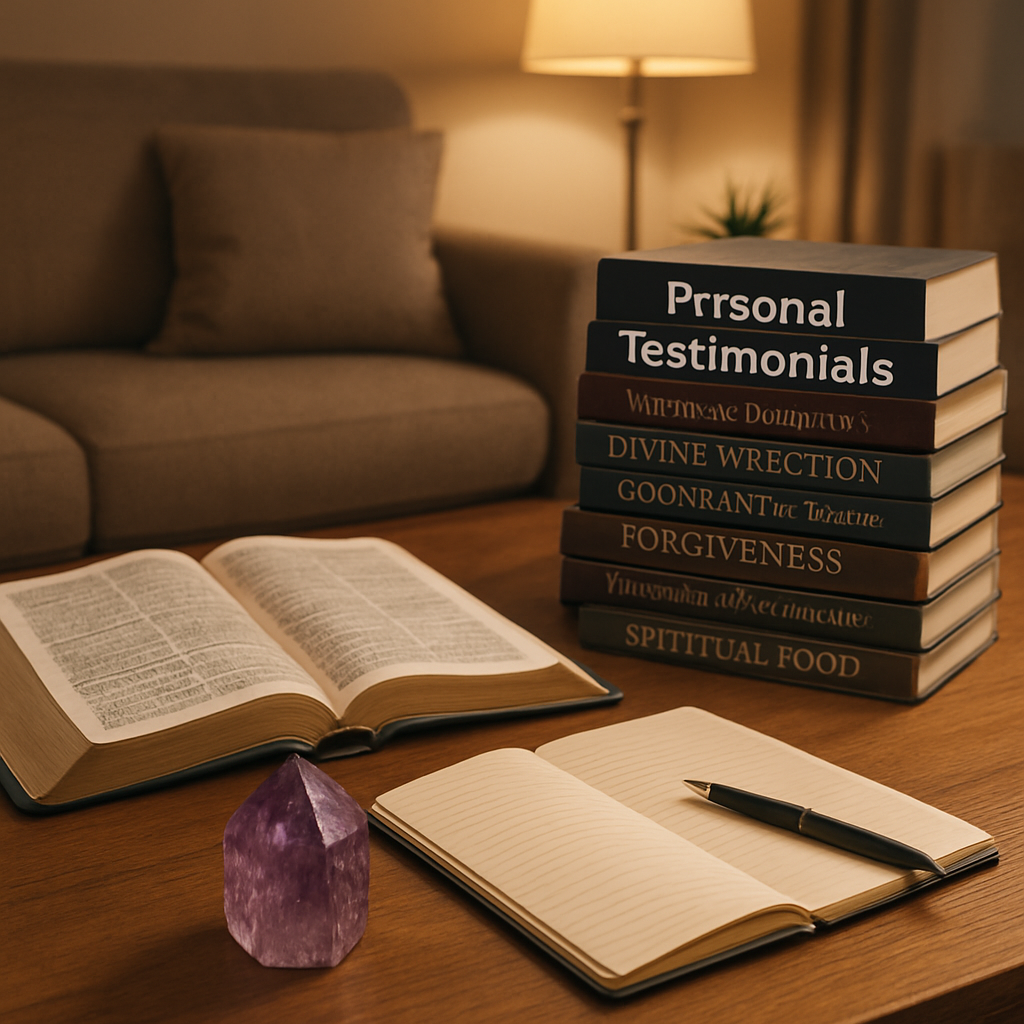
Our own resources dive deeper into how Scripture shapes everyday habits. Charlene Murray’s e‑books on spiritual food, divine direction, and forgiveness give practical steps for aligning your heart with God’s Word. Pair those teachings with the simple FAQs here, and you’ll have a toolbox that honors both beauty and biblical truth.
Conclusion
So, after digging through Scripture, tradition, and everyday habits, what does the Bible say about crystals? The short answer is: they’re beautiful creations that can point us back to Christ, but they’re never a source of power.
We’ve seen that the high‑priest’s breastplate used gems as visual reminders, and Revelation calls crystal‑clear water a picture of holiness—not a magic ingredient. When a stone becomes a “shortcut” to peace, we cross the line Deuteronomy warns about. Keep the focus on God, not on the mineral.
Here’s a quick check‑list you can run each week: does the stone spark a Scripture memory or a prayer? Does it feel like a tool or a source? If the answer leans toward source, swap it for a plain river stone or a prayer bead. Simple habits like a five‑minute quiet time with a verse on a sticky note keep the heart anchored.
Feeling ready to make that shift? Grab one of our e‑books on divine direction or spiritual food for deeper guidance, and let the crystal be a backdrop, not the main act. Your walk stays Christ‑centered, and the sparkle becomes a reminder of His glory.
Remember, the true shine comes from the One who fashioned the stone, and that light never fades.