

What Does the Bible Say About Fallen Angels: A Comprehensive Guide
If you've ever stared at a dramatic scene in a movie where a winged being falls from the sky and wondered what the Bible actually says about fallen angels, you're not alone.
The short answer? Scripture paints a surprisingly clear picture of angels who chose rebellion over service, and it does so without the Hollywood glitter.
We see the first glimpse in Genesis 6, where the phrase “the sons of God” is understood by many scholars as referring to heavenly beings who stepped out of their appointed role. Their desire for control led to the birth of the Nephilim, a reminder that even the divine can be tempted.
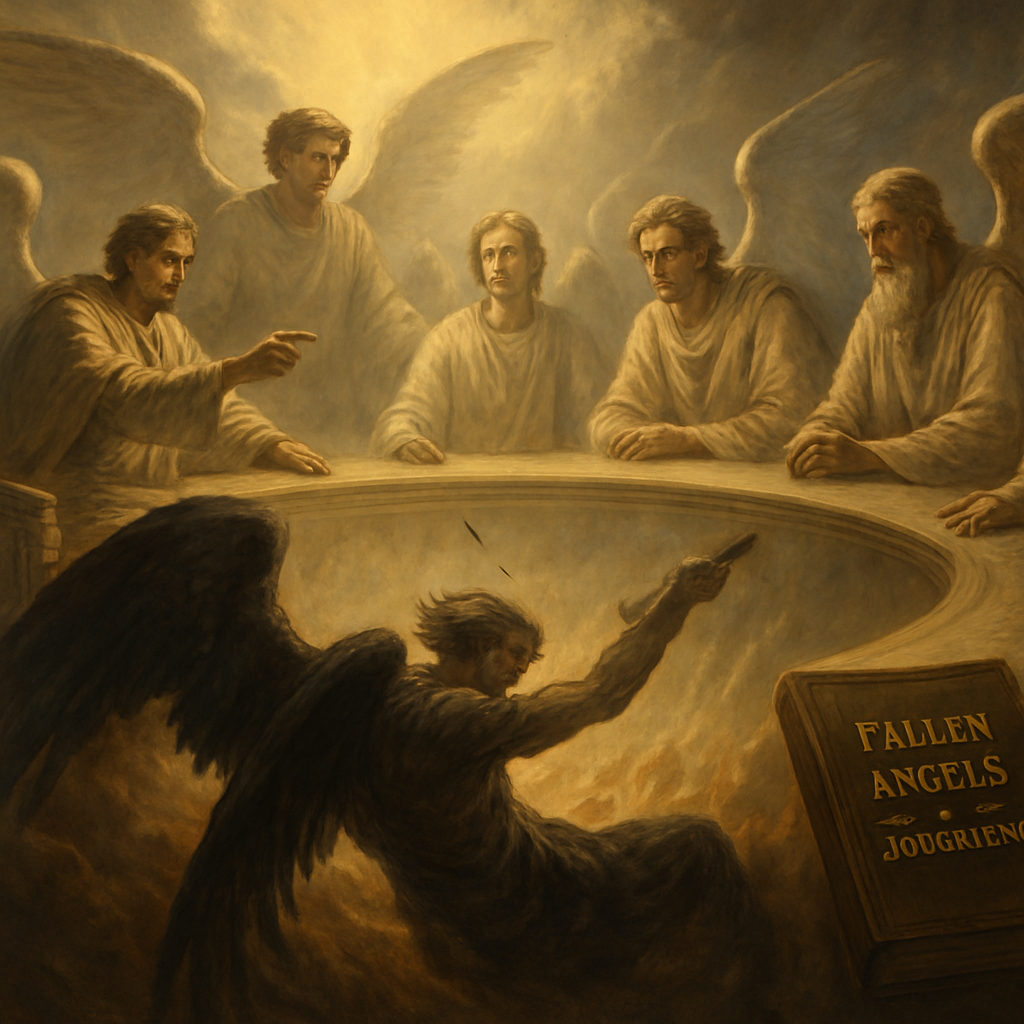
Later, the book of Job introduces “the sons of God presented themselves before the LORD,” hinting that a council of angels gathered in heaven—some of whom would later turn away. The most vivid account, however, lands in Revelation 12, where a war erupts in the heavenly realm and a dragon is cast out, identified as Satan and his followers, the fallen angels.
So why does this matter for someone on a spiritual growth journey? Knowing that angels once held the same free‑will we do helps us see our own choices in a new light. If even celestial beings can stumble, our setbacks aren’t failures—they’re invitations to return to God’s design.
That’s where a thoughtful study can turn curiosity into clarity. By tracing the biblical passages—from Genesis 6, through Job 1, to Revelation 12—you’ll discover a narrative arc that points to God’s justice, mercy, and the ultimate restoration of all things. And if you’re looking for a deeper dive, Charlene Murray’s e‑book “Fallen Angels Judgment” walks you through each scripture, offering reflection prompts that bridge ancient text and everyday life.
Ready to explore what the Bible really says? Grab a notebook, open the verses, and let the story of the fallen angels guide you toward a more intentional walk with God.
TL;DR
What does the Bible say about fallen angels? It reveals they were once holy beings who rebelled, proving even heavenly creatures can choose wrong and reminding us our failures invite God’s grace.
Explore Genesis 6, Job 1, Revelation 12, and our Fallen Angels Judgment e‑book to deepen more daily personal spiritual growth now.
Understanding Fallen Angels in Scripture
When we move from the quick overview to a deeper look, the Bible actually spells out who these fallen angels were and why they matter for our daily walk.
Genesis 6 and the “sons of God”
First, Genesis 6 introduces the mysterious phrase “sons of God.” Many scholars see this as a reference to angelic beings who chose to step out of their appointed role. Their attraction to human women led to the birth of the Nephilim, a stark reminder that even created beings can crave control.
If you’re looking for a place to process those feelings, Gratitude Studios offers guided reflection tools that help you wrestle with the same temptation of pride.
Job’s heavenly council
Next, the book of Job gives us a courtroom‑like scene: “the sons of God presented themselves before the LORD.” This snapshot suggests a heavenly council where angels gathered—some of whom would later rebel. The text doesn’t name the rebels, but it sets the stage for the cosmic split.
For anyone wanting to keep the momentum of spiritual growth, XLR8Well provides practical wellness practices that keep your heart aligned while you study these heavy passages.
Revelation 12: The cosmic battle
The most vivid picture arrives in Revelation 12. John describes a war in heaven, a great dragon thrown down with his angels. This apocalyptic drama shows that the rebellion was not a one‑time glitch but a full‑blown coup that reshaped the spiritual realm.
Why does this ancient drama matter today? Because the same freedom that let angels choose makes us responsible for our choices. When we see that even celestial beings can stumble, our own slip‑ups feel less like failures and more like invitations to return to God’s design.
The video above walks through the timeline of these passages, helping you visualize how Genesis, Job, and Revelation connect. As you watch, notice how the theme of free will repeats like a chorus.
And if you’re seeking a holistic way to stay grounded while you study, 5 Best Natural Remedies offers herbal suggestions that support calm focus during deep scriptural meditation.
In practice, you might set aside a notebook, write down each angelic rebellion you notice in your own heart, and then pray for the same grace that restored the heavens. This simple habit turns academic study into personal transformation, aligning your journey with the biblical truth that redemption is always possible.
One practical step is to create a three‑column journal: write the verse, note the emotion it stirs, and then ask God how that rebellion mirrors a current struggle. When you finish, close the page with a short prayer of surrender. Over weeks you’ll see a pattern emerge—your own “fallen” moments and the grace that follows.
If the ideas feel heavy, consider joining a small group or scheduling spiritual counseling. Sharing what you’ve learned about fallen angels can open doors for others to confess their own hidden battles, and together you’ll experience the mutual encouragement that Scripture promises.
Remember, the story ends with a final judgment and a new heaven, so every stumble is part of a larger redemption narrative that points you toward hope.
Key Biblical Passages About Fallen Angels
Genesis 6: The First Glimpse
When you flip to Genesis 6, the scene feels almost like a cosmic drama. The text says, “the sons of God saw that the daughters of men were beautiful…” and they took them as wives (Gen 6:1‑4).
Most scholars read “sons of God” as heavenly beings—angels—who stepped beyond their appointed role. It’s the first biblical hint that even created beings can rebel.
Why does that matter to you today? It shows that pride isn’t just a human problem; it’s a spiritual condition that can corrupt any creature with free will.
And notice the fallout: the Nephilim appear, a reminder that rebellion produces tangible, often painful results in the world around us.
Job 1: The Heavenly Council
Jump ahead to Job 1:6‑12. The verse paints a courtroom scene: “the sons of God presented themselves before the LORD, and the Adversary also came among them.”
Here we see a mixed crowd—faithful angels and the one who would later be called Satan. The fact that the “sons of God” are still present tells us the fall wasn’t an instant annihilation; the rebels kept showing up before God’s throne.
Think about that image: a council where some members have already turned, yet the meeting continues. It mirrors our own lives when we keep gathering with friends who are still walking in sin, while we’re trying to stay faithful.
Revelation 12: The Cosmic Battle
Now the drama reaches its climax in Revelation 12:7‑12. A war erupts in heaven, Michael and his angels fight the dragon and his followers, and the dragon is cast down to earth.
The passage names the fallen ones as “the great dragon… that ancient serpent, called the devil and Satan, who leads the whole world astray” (Rev 12:9). Those expelled angels become the demonic forces we encounter.
What’s striking is the language of judgment—“were hurled down… to the earth.” It’s not a vague idea; it’s a vivid picture of a divine decree that still reverberates today.
So, when you feel a spiritual attack, you can picture it as part of that original rebellion, not a random glitch. It gives you a framework for prayer and resistance.
2 Peter 2 & Jude: The Awaited Judgment
Both 2 Peter 2:4 and Jude 1:6 echo the same theme: “God did not spare the angels who sinned, but cast them into hell, binding them with chains of darkness.”
These verses shift the focus from the past event to the future reality. The fallen angels are not free‑roaming chaos; they are restrained, awaiting the final judgment.
That future promise is a source of comfort for believers. If even powerful beings are ultimately held accountable, our own mistakes are never beyond God’s grace.
And it ties back to the everyday choice you face: humility versus pride, surrender versus rebellion. The biblical narrative is a mirror for that daily decision.
Here’s a simple habit you can adopt: each morning, pick one of these passages and ask God to reveal any hidden pride in your heart. Write down the insight, then pray for humility.
You don’t need a theology degree to do this. A notebook, a pen, and a quiet moment are enough. Over weeks you’ll start seeing patterns—just like the angels’ story repeats across Scripture.
If you want a guided walk through these verses, the “Fallen Angels Judgment” e‑book we’ve crafted walks you step‑by‑step, pairing each passage with reflection prompts. It turns academic study into personal transformation.
Remember, the goal isn’t to become an expert on angelology; it’s to let the story sharpen your character. When you see pride slipping in, you can pull it back, remembering the angels who chose the opposite.
And when you feel overwhelmed by spiritual warfare, recall Revelation 12’s vivid picture: the dragon was defeated and thrown down. That victory belongs to Christ, and you stand on that same triumph.
So, what’s the next step? Open your Bible, read Gen 6:1‑4, Job 1:6‑12, Rev 12:7‑12, and then journal what each passage says about your own heart. You’ll find humility sprouting where pride once grew.
The Role of Fallen Angels in God's Plan
When you first notice the pattern of pride in your own heart, it's easy to think the drama ended with the angels' fall. But the Bible shows their story is woven into God's larger redemptive plan.
First, the rebellion wasn't a random glitch. In Genesis 6 the “sons of God” chose their own agenda, and that choice set up a ripple effect that echoes through every covenant God makes with humanity. It tells us that even created beings can exercise free will, and that freedom is essential to what God intends for us.
Second, the fallen angels become the backdrop for God's mercy. Job 1 reminds us that the heavenly council kept meeting after the rebellion, meaning God didn't abandon the scene. He still invited the faithful angels to stand with Him, and He invites us to join that same council through obedience.
Third, Revelation 12 pulls the whole narrative into the cosmic victory we celebrate today. The war in heaven and the dragon’s defeat show that God’s justice is already at work, and the fallen angels are part of the larger story that points to Christ’s triumph.
So, how does this shape our daily walk? If even celestial beings can stumble, our missteps aren’t unique—they’re part of a universe that values choice and redemption. That perspective softens shame and fuels hope.
Imagine you’re stuck in a cycle of self‑criticism. Seeing the fallen angels as a warning rather than a condemnation lets you say, “I’m not beyond rescue; God’s plan includes restoration for the wayward.” It’s the same promise that 2 Peter 2:4 and Jude 1:6 give us about eventual judgment and hope.
Practical step one: write down the moment you feel “fallen” during the day. Then flip to one of the key passages—Genesis 6, Job 1, or Revelation 12—and ask, “What does this reveal about God’s purpose for my stumble?” This habit turns abstract doctrine into personal direction.
Practical step two: pair your notes with a guided study. In our “Fallen Angels Judgment” e‑book you’ll find reflection prompts that line up each scripture with questions about pride, surrender, and future hope. It’s designed for people like you who crave both biblical depth and actionable insight.
Notice the pattern that emerges: each passage points to a larger theme—free will, accountability, and ultimate restoration. When you see those themes repeat, you’re actually tracing God’s blueprint for how He uses even the worst failures to showcase His grace.
And there’s a spiritual upside you might have missed: the presence of fallen angels reminds us that spiritual warfare isn’t a myth. When you feel an unsettling pressure, remember that the same forces were cast out in Revelation 12. Prayer, confession, and reliance on Christ become your armor.
One more thing: God’s plan for the fallen isn’t just about judgment; it’s about a future where every rebellion is fully healed. That future vision fuels perseverance. As you journal, ask yourself, “How can I live now in the light of that ultimate restoration?”
To wrap it up, the role of fallen angels in God’s plan is threefold: a warning about free will, a stage for divine mercy, and a backdrop for Christ’s victory. Let that truth guide your next study session, your prayer, and the way you treat your own moments of pride.
Comparing Interpretations: Traditional vs Modern Views
When you ask yourself, “what does the bible say about fallen angels?” you quickly discover two main lenses people wear: the traditional view that leans on early church fathers and literal reading, and the modern view that mixes literary criticism, ancient Near‑Eastern context, and theological nuance.
Traditional scholars—think of the likes of Augustine or the early Reformation teachers—often see the “sons of God” in Genesis 6 as literal angels who literally walked the earth and took human wives. Their reading treats Revelation 12’s dragon war as a straightforward, cosmic showdown that happened once and for all, with the fallen angels permanently cast into a fiery abyss.
Modern interpreters, on the other hand, ask, “Could “sons of God” be a symbolic way of describing a group of god‑fearing humans, or perhaps a mythic motif borrowed from surrounding cultures?” They look at ancient mythologies, linguistic studies, and the way apocalyptic literature uses vivid imagery to convey spiritual truths rather than a step‑by‑step historical report.
So, why does this matter for your daily walk? If you picture the fallen angels as literal beings still prowling the spiritual realm, you might feel a constant sense of being under siege. That can be motivating for prayer, but it also risks anxiety. The modern take invites you to see the narrative as a warning about pride and rebellion—principles that apply whether or not a literal winged army is buzzing around.
Here’s a quick snapshot of the key differences:
| Aspect | Traditional View | Modern View |
|---|---|---|
| Identity of “sons of God” | Literal heavenly beings (angels) who fell | Possible symbolic group or mythic archetype |
| Nature of the war in Revelation 12 | Historical, one‑time cosmic battle | Apocalyptic imagery representing ongoing spiritual conflict |
| Purpose of the story | Teach about literal demonic activity and future judgment | Illustrate the dangers of pride and the need for humility |
Notice how each column still points back to the same core truth: rebellion has consequences, and God’s justice is sure. The traditional lens gives you a vivid, almost cinematic picture—great for visual learners who want to “see” the battle. The modern lens gives you a toolbox for applying the story to modern psychology, helping you spot pride in subtle ways.
What does this mean for someone seeking spiritual growth? Imagine you’re journaling after a heated argument. The traditional view might have you ask, “Did those fallen angels influence my anger?” The modern view would prompt, “What pride surfaced, and how can I surrender it?” Both lead you to repentance, but the modern approach offers a practical step‑by‑step reflection that many find easier to integrate into daily habits.
In practice, you could take a verse from each perspective, write it down, and ask yourself two questions: (1) What literal image does this verse paint for me? (2) What underlying principle about my heart does it reveal? This double‑filter method keeps you grounded in Scripture while also letting you apply timeless wisdom to contemporary life.
For those who love a deeper dive, our “Fallen Angels Judgment” e‑book walks you through both viewpoints, giving you space to compare, contrast, and decide which resonates most with your journey. It’s not about picking a side; it’s about equipping yourself with the full picture so you can choose humility over pride, no matter how the story is framed.
So, which lens feels more helpful right now? Do you need the dramatic clarity of a literal battle, or does the symbolic depth of modern scholarship speak to the nuances of your own heart? Either way, the answer to “what does the bible say about fallen angels” remains the same: they serve as a mirror for our own choices, urging us toward repentance, restoration, and a future hope that transcends any cosmic drama.
Implications for Christian Living Today
When you stare at the story of fallen angels, it can feel like a distant myth, but the reality hits home the moment you notice the same pride bubbling up in your own heart.
What does the Bible say about fallen angels? It reminds us that even heavenly beings can choose rebellion, and that choice sets a pattern for every human decision we make.
So, how does that ancient drama shape the way we live right now? First, it gives us a clear mirror for self‑examination. If angels—creatures made to worship—could stumble, then our slip‑ups aren’t failures beyond repair; they’re invitations to return to God’s design.
Here’s a simple habit we’ve seen work for many seeking spiritual growth: each morning, pick one verse about the fallen angels—Genesis 6:1‑4, Job 1:6‑12, or Revelation 12:7‑12—and ask, ‘What hidden pride am I guarding today?’ Write the answer in a journal, pray for humility, and revisit it at night.
Why does that matter? Because the Bible doesn’t just catalog a cosmic battle; it points to a daily choice between humility and pride. When you feel the urge to control a situation—whether at work, in a relationship, or even over a hobby—remember the angels who tried to ‘take matters into their own hands.’ The alternative is to surrender that desire to God, trusting His wisdom over your own.
Here’s a quick tip for moments of anxiety: pause, breathe, and whisper Psalm 91: “You are my refuge and my fortress.” Then remind yourself that the same God who restrained the fallen angels is the one who holds you today.
If you’re a Christian reader looking for deeper guidance, we’ve packaged these reflections into a step‑by‑step study called ‘Fallen Angels Judgment.’ It pairs each biblical passage with prompts that help you apply the ancient truth to modern life, without feeling like a theology class.
But the journey doesn’t stop at journaling. Let’s talk community. Sharing your insights with a small group or a trusted mentor creates accountability. When someone else says, ‘I see that pride in you too,’ it’s a gentle reminder that the battle is communal, not solitary.
And don’t forget the future hope woven through the narrative. 2 Peter 2:4 and Jude 1:6 speak of ‘everlasting chains’ awaiting the fallen, yet they also point to God’s ultimate justice. That hope fuels perseverance: if even powerful beings will face final restoration, your own path toward redemption is already secured.
So, what’s the next step? Grab your Bible, open one of the key passages, and jot down a single word that captures the pride you need to release—maybe ‘control,’ ‘ambition,’ or ‘self‑reliance.’ Then pray for God to replace that word with ‘trust.’ Do this for a week, and watch how your daily decisions start to feel lighter.
Remember, the story of fallen angels isn’t a distant legend—it’s a living reminder that every choice matters. By aligning your daily habits with the humility modeled in Scripture, you participate in God’s redemptive story, one small step at a time.
Take a moment each evening to thank God for the grace that covers even the biggest missteps; that gratitude rewires your heart toward gratitude and away from pride.
Recommended Books and Services
Now that you’ve seen how the biblical narrative of fallen angels mirrors our own pride battles, you probably wonder where to go next. The good news is that there are resources designed to turn those ancient verses into concrete daily habits.
First up, the Fallen Angels Judgment e‑book is a deep‑dive companion that pairs each key passage with reflection questions, journaling prompts, and a short prayer guide. I’ve seen readers use it to map Genesis 6, Job 1, and Revelation 12 onto a personal “pride inventory.” One woman told me she set aside ten minutes each night, answered the prompt for Genesis 6, and suddenly caught herself “checking” her motives at work before they grew into full‑blown control issues.
How does the e‑book actually work? It’s broken into three bite‑size modules:
- Module 1 – The First Step: Identify the specific word or habit that fuels your pride (e.g., “control," “approval," “self‑reliance").
- Module 2 – Scripture Match: Read the matching passage, then answer guided questions like “What does this angel’s rebellion teach me about my own desire for independence?”
- Module 3 – Action Loop: Replace the pride word with a Scripture‑based truth (“trust,” “dependence on God”) and pray for it to take root.
Because the e‑book is digital, you can highlight verses on your tablet, copy prompts into your favorite note‑taking app, and even set reminder alarms for the weekly “pride‑to‑trust” exercise. The result is a habit loop that slowly rewires the brain, much like the way a musician practices scales until they become second nature.
If you’re looking for a more personal touch, consider booking a session of spiritual counseling. While I’m not linking directly, the service is offered on the site and pairs you with a seasoned counselor who can help you unpack the emotions that surface when you confront pride. Think of it as having a trusted friend who’s also trained to ask the right questions and point you back to Scripture when you get stuck.
Here’s a quick, actionable checklist you can start right now, no purchase required:
- Pick one “pride word” you’ve noticed this week.
- Open Genesis 6, Job 1, or Revelation 12 and read the surrounding verses.
- Write down one insight the passage gives you about that word.
- Swap the word in your mind with a biblical promise (e.g., “I will trust God’s plan”).
- Repeat the promise aloud three times before bed.
Do this for seven days, then review your notes. You’ll likely see a pattern: the same pride triggers show up in similar situations, and the Scripture‑based replacement starts to feel more natural.
For those who love a visual cue, you can print a tiny card with your pride word on one side and the Scripture promise on the other. Slip it into your wallet, and every time you pull out your phone, you get a quick reminder.
Finally, remember that growth is a marathon, not a sprint. The fallen angels story reminds us that even the most powerful beings can be restrained and later restored. Your journey follows the same arc—recognizing the fall, submitting to God’s correction, and moving toward restoration.
Whether you dive into the e‑book, schedule counseling, or simply start the seven‑day habit loop, the key is consistency. Keep the conversation with God alive, and let the biblical examples guide you back to humility each day.
FAQ
What does the Bible actually say about fallen angels?
The Scripture mentions them in three key places: Genesis 6 introduces the “sons of God” who left their appointed role; Job 1:6‑12 shows a heavenly council where some members are already rebelling; Revelation 12:7‑12 describes a war in heaven and the dragon’s expulsion. Later, 2 Peter 2:4 and Jude 1:6 remind us that those angels are now bound until final judgment. Together these verses paint a clear narrative of angelic rebellion and divine restraint.
Are fallen angels the same as demons?
Not exactly. Fallen angels are beings who once served God in heaven and chose to rebel. After their expulsion, many became what the New Testament calls “unclean spirits” or demons that operate on earth. The distinction is subtle: the term “angel” emphasizes their original heavenly status, while “demon” highlights their present role as adversarial forces. Both share the same root of prideful rebellion.
Why does knowing about fallen angels matter for my daily walk?
Because the story gives us a mirror for our own pride. If celestial beings with unlimited power can stumble, our everyday slip‑ups aren’t failures beyond repair. The narrative reminds us that humility, repentance, and reliance on Christ are the antidotes. When you feel a surge of control‑oriented thinking, picture those angels and ask, “Am I trying to act like the dragon?” It instantly reframes the temptation.
How can I spot the pride patterns that the fallen angels story reveals?
Start with a simple habit: each morning read one of the key passages—Genesis 6, Job 1, or Revelation 12. Jot down a word or feeling that the text brings up (e.g., “control,” “approval,” “self‑reliance”). Throughout the day, pause whenever that word surfaces and ask, “Is this my hidden pride?” At night, review the notes and replace the word with a Scripture promise like “trust God.”
Is there a biblical promise for people who feel “fallen”?
Absolutely. Revelation 12 assures us that the dragon has already been defeated, and Christ’s victory is final. 2 Corinthians 5:17 says, “If anyone is in Christ, the new creation has come.” That means even when you feel spiritually down, God’s redemption plan includes you. Trusting that promise turns the feeling of being “fallen” into a step toward restoration.
Where can I study the fallen angels passages more deeply?
If you want a guided walk, the “Fallen Angels Judgment” e‑book walks you through each verse, offering reflection prompts and journaling space. It’s built for people who crave both solid biblical grounding and practical steps for personal growth. The modules break the story into bite‑size sections, making it easy to integrate study into a busy schedule.
How does spiritual counseling help with the themes of fallen angels?
Spiritual counseling provides a safe place to unpack the emotions that arise when you confront pride or feelings of being “fallen.” A trained counselor can help you apply the biblical truths about angelic rebellion to your own life, guide you in prayer, and keep you accountable to the habits you’re building. It’s like having a trusted friend who also knows Scripture inside out.
Conclusion
When you finish the journey through the scriptures, you’ve probably asked yourself, what does the bible say about fallen angels and how that story matters for today.
The short answer: the Bible paints a clear picture of pride‑driven rebellion, divine judgment, and ultimately hope for restoration.
We’ve seen how Genesis 6, Job 1, and Revelation 12 each expose a hidden part of our own heart, and we’ve offered practical steps—like journaling a pride word each morning—to bring those ancient warnings into everyday life.
So, what’s the next move? Grab your Bible, pick one of those key passages, and write down a single word that captures the pride you’re wrestling with right now.
Then swap that word for a Scripture promise—trust, dependence, or surrender—and repeat it aloud before you start your day. Over a week you’ll notice the shift, just as many of our readers have.
Remember, the fallen angels story isn’t a distant myth; it’s a mirror that helps us choose humility over pride each moment.
If you’re craving a guided walk, our Fallen Angels Judgment e‑book walks you step‑by‑step through those verses, giving you prompts and prayers to keep the habit alive.
Take a breath, open the page, and let the ancient truth shape the choices you make today.