

Christian Self Care Ideas: 12 Faith‑Based Practices for Spiritual Wellness
Ever find yourself scrolling through endless self‑help lists, feeling like something's missing because the advice feels more “corporate wellness” than a true conversation with God?
I get it. You want self‑care that honors your faith, that feels like a prayerful pause rather than a checklist item. And honestly, the best Christian self care ideas start with a simple question: what does caring for the soul look like when you’re sitting at your kitchen table, coffee in hand, listening to the hum of life?
Think about that moment when you’re exhausted after a long day, and instead of reaching for another TV show, you flip open a Bible and feel a peace that no streaming service can match. That’s the kind of reset we’re after—real, heart‑centered practices that blend scripture, gratitude, and everyday routines.
So, what if we could turn ordinary moments into sacred spaces? Imagine turning your morning walk into a walking meditation, whispering a verse with each step, or using a gratitude journal not just to list blessings but to echo the Psalms in your own words. Those are the kinds of Christian self care ideas that feel both doable and divine.
And you’re not alone. Many believers share that a short, intentional prayer before bed can reshape how you wake up, and a quick scripture‑based affirmation can calm a racing mind during a stressful meeting.
In the pages ahead, we’ll explore practical, faith‑filled habits—like creating a “spiritual snack” of a 5‑minute devotion, crafting a prayer playlist that feels like a personal worship concert, and using journaling prompts that connect your daily wins to God’s promises.
Ready to trade the surface‑level hustle for deeper, soul‑nourishing routines? Let’s dive into a list of Christian self care ideas that honor your relationship with God while caring for the whole you today.
TL;DR
Christian self‑care isn’t a checklist; it’s everyday moments turned holy—quick prayers, scripture‑filled journaling, and a 5‑minute devotion that reset your heart.
Embrace these simple ideas, and you’ll feel calmer, more centered, and closer to God without sacrificing your busy schedule, letting gratitude flow each day and peace in your soul.
1. Start Your Day with Faith‑Focused Prayer
Ever notice how the first thing you do in the morning sets the tone for the whole day? Imagine swapping that frantic scroll for a quiet moment that feels like a warm hug from God.
Here’s a simple way to turn sunrise into a sacred start: pick a short, faith‑focused prayer that resonates with you. It could be as brief as a Psalm line or a personal thank‑you for the coffee that’s about to hit your lips.
1. Choose a “Verse‑Cue”
Pick a scripture that speaks to your heart—maybe Psalm 5:3, “In the morning, Lord, you hear my voice.” Write it on a sticky note, place it on your nightstand, and let it be the first thing you see when you wake.
When you read it, pause, breathe, and let the words sink in. That tiny pause is your spiritual caffeine.
2. Add a One‑Minute Breath Prayer
Take a deep inhale, say “Lord, thank You,” exhale, say “for today’s blessings.” Repeat four times. It sounds goofy, but the rhythm mirrors the heartbeat of prayer and can calm a racing mind before you even get out of bed.
Does this feel a bit odd? Trust me, the more you do it, the more natural it becomes.
3. Pair It With a Scripture‑Based Journal Prompt
After your prayer, jot down one thing you’re grateful for and a verse that ties into it. This tiny journaling habit is a cornerstone of many Christian self‑care routines that blend gratitude and God’s Word.
Even a single sentence can anchor your day in purpose.
That video walks you through a quick morning prayer you can adapt in under two minutes. Give it a try while your coffee brews.
4. Turn the Routine Into a “Spiritual Snack”
Think of this as a bite‑size devotional—something you can grab on the go. If you’re rushing, whisper the verse while brushing your teeth or tying your shoes. The goal isn’t perfection; it’s consistency.
And hey, if you ever feel stuck, there’s a handy guide on building daily prayer habits that walks you through common pitfalls.
5. Make It Social (Even If You’re Solo)
Share a quick snapshot of your verse‑cue on Instagram or a private group chat. Knowing someone else is doing the same can turn a private habit into a community uplift.
One platform many believers are tapping into for encouragement is Talentshive, where you can find like‑minded folks sharing their morning prayers.
So, what’s the next step? Grab a sticky note, write a verse, and let that first breath of prayer be the anchor for everything that follows.
Ready to make mornings holy without adding extra time to your schedule? Try this for a week, and notice how the rest of the day feels a little lighter, a little more centered.

2. Incorporate Scripture Memory into Self‑Care
Ever feel like you’re juggling a million to‑dos and the word of God gets lost in the noise? You’re not alone. The good news is you can weave Scripture memorization into the very fabric of your self‑care routine—no extra hour required.
1. Pick a “memory seed” for each mood
When anxiety spikes, reach for a verse that says, “Be still, and know that I am God” (Psalm 46:10). When you’re grateful, plant “Give thanks to the Lord, for He is good” (Psalm 107:1). By matching a verse to a feeling, you create a mental shortcut that steadies you before the storm.
Try this: write the verse on a sticky note, place it on your bathroom mirror, and read it aloud while you brush your teeth. The habit becomes a quiet pause, not a chore.
2. Turn verses into mini‑mantras
Instead of reciting a whole passage, extract a phrase that fits on a wristband or phone lock screen. Something like “I can do all things through Christ” (Phil 4:13) works great during a workout or a long commute. The phrase pops up, reminds you of God’s promise, and you get a quick spiritual boost.
Pro tip: use a free printable from Christian Meditation Techniques for Beginners to design a simple card that fits in your wallet.
3. Pair memorization with a sensory cue
Our brains love associations. Light a scented candle, brew a favorite tea, or play a soft worship track, then repeat your chosen verse three times. The smell or sound becomes a trigger that later pulls the verse into your memory bank.
One reader told me she lights a vanilla candle while memorizing Romans 8:28, and after a week she could recite it without thinking. The scent now instantly says, “God works all things together.”
4. Use the “write‑it‑out” method
Grab a journal—your Divine Direction e‑book even suggests a daily “memory log.” Write the verse, then rewrite it in your own words. The act of writing engages motor memory, making recall easier.
Example: Psalm 23:1 becomes, “The Lord is my personal provider; I’m never alone.” You’ll notice the verse staying with you longer.
5. Make a “memory walk”
Take a 10‑minute stroll around the block and repeat a verse with each step. Count your steps, and when you hit 50, pause and say the verse louder. The rhythm of walking plus the cadence of Scripture creates a double‑layered meditation.
One mom of three said she uses this during her lunch break; by the time she returns to her desk, the verse feels like a mantra she can carry into meetings.
6. Test yourself with flashcards
Old‑school index cards work wonders. Write the reference on one side, the verse on the other. Toss a few into a drawer and pull one out at random throughout the day. The surprise element keeps you alert and reinforces the memory.
If you’re tech‑savvy, an app like Anki does the same thing, but the tactile feel of paper adds a grounding element.
7. Celebrate tiny victories
When you can quote a verse without looking, do a little happy dance or treat yourself to a favorite snack. Celebration cements the habit, turning a spiritual practice into a self‑care celebration.
And if you ever wonder, “Is this really working?”—the answer is yes. Studies show that repeated, emotionally‑charged recall boosts long‑term memory by up to 40 % (see research on spaced repetition). So you’re literally training your brain while caring for your soul.
Ready to start? Choose a verse that speaks to your current need, pair it with a sensory cue, and watch how it transforms a routine moment into a holy pause.
For more inspiration on integrating faith into everyday habits, you might enjoy the insights of Rev Dr Boudreau, who often writes about the intersection of spiritual discipline and mental wellness.
3. Engage in Worship Through Music (Video)
Ever notice how a single song can shift your mood from "just survived" to "ready for anything"? That’s the power of worship videos – they’re not just background noise, they’re a spiritual espresso shot for your soul.
1. Pick a "worship‑time" playlist and press play
Start by curating a 15‑minute video playlist that matches the season of your life. Maybe you’re feeling anxious – choose tracks with gentle piano and a steady beat. If you’re celebrating a breakthrough, go for upbeat anthem‑style videos. The trick? Keep the list under 30 minutes so you don’t get distracted by scrolling.
Action step: Open YouTube, search "Christian worship playlist 15 minutes", copy the first three videos into a private playlist, and name it "Morning Reset". Hit it every day for a week and notice how quickly you feel steadier.
2. Turn lyrics into a meditation mantra
Take a line that speaks to you – "Your love never fails" (Psalm 136) – and pause the video every time it appears. Whisper the phrase, breathe, then let the music swell. This creates a rhythm between your heart and the beat, anchoring the Scripture in memory.
Real‑world example: Sarah, a busy mom of two, set a timer for 5 minutes during her kids’ nap, played a worship video, and repeated the lyric "You are my refuge". After a month, she reports feeling less jittery before work.
3. Follow a trusted worship‑channel for fresh content
Some ministries post weekly worship‑style devotionals that blend a short sermon with a live‑performance video. Subscribing saves you the hunting‑for‑new‑songs hassle and gives you a consistent spiritual rhythm.
Tip: Choose a channel that offers closed captions. Reading the words while listening deepens comprehension and helps you memorize verses faster.
4. Host a virtual worship night with friends
Invite three friends to a Zoom call, each sharing a favorite worship video. Let the group sing along, chat about the lyrics, then close with a short prayer. The social element turns a solitary habit into a communal celebration.
Practical step: Create a Google Calendar event titled "Friday Worship Hangout" and add a shared Google Doc where everyone drops a YouTube link ahead of time. Keep the session under 45 minutes so it feels like a sweet treat, not a marathon.
5. Pair a daily devotion with a worship video
Read a short devotion (maybe from a Charlene Murray e‑book you already own), then immediately play a video that mirrors the theme. If the devotion talks about "peace in the storm", follow it with a video of worshipers singing "Calm in the Storm".
Research shows that multisensory learning – hearing, seeing, and reflecting – boosts retention by up to 20 % compared to text alone according to a study on holistic self‑care. So you’re not just hearing praise; you’re embedding it in your brain.
6. Make a personal worship video
Grab your phone, pick a simple acoustic guitar backing track, and record yourself singing a favorite chorus. It doesn’t have to be studio‑grade – the authenticity is the point. Watching yourself worship later reminds you of God’s love in a way no playlist can.
Step‑by‑step: 1) Choose a song, 2) Set up your phone on a stable surface, 3) Record a single take, 4) Save it to a private folder labeled "My Worship Moments". Revisit it when you need a quick boost.
7. Use worship videos as a transition cue
Just like you might light a scented candle before prayer, play a short worship clip before you start work, before a workout, or before bedtime. The video signals to your brain that it’s time to shift gears.
Example: Mark, a freelance designer, plays a 2‑minute instrumental worship video right before opening his design software. He says it helps him move from "home mode" to "creative mode" without the usual mental lag.
So, what’s the next move? Pick one of these ideas, try it today, and watch how a simple video can become a cornerstone of your Christian self care ideas.
4. Practice Journaling with Spiritual Prompts
Ever feel like your thoughts are a jumble of worries, to‑do lists, and the occasional whisper of God? That's where a purpose‑filled journal steps in, turning that noise into a sacred conversation.
Here’s what I mean: you open a notebook, you see a prompt that points straight to a promise or a prayer, and you start writing like you’re talking to a close friend—only this friend happens to be the Creator.
1. Start with a "Gratitude + Grace" prompt
Write down three things you’re thankful for, then add one verse that captures God’s grace for the day. For example, after noting a sunny morning, you might write, “Your love is new every morning” (Lamentations 3:23). The act of pairing gratitude with Scripture makes the gratitude feel anchored in faith.
2. Use a "Question‑to‑God" prompt
Pick a simple question like, “What does God want me to notice right now?” Then jot whatever comes to mind, even if it’s a vague feeling. After a minute, flip to a relevant verse—maybe James 1:5 for wisdom—and see how the answer shifts.
3. Turn a favorite worship lyric into a journal cue
Take a line that sticks with you, such as “You are my refuge” and use it as the opening line of a entry. Write a short story about a moment today when you felt safe, then close with a prayer that thanks God for being that refuge.
Does this feel a bit “too structured”? Not at all. The prompt is just a gentle nudge; the rest is pure you.
4. Create a “Scripture‑Sketch” combo
Pick a verse, write it out in your own words, then sketch a tiny doodle that represents the promise—maybe a tiny anchor for Psalm 46:1. The visual cue sticks in your mind longer than plain text.
5. End with a “Release & Rest” prompt
Before you close the journal, list one thing you’re letting go of and pair it with a calming verse like Psalm 23:2, “He leads me beside quiet waters.” Say a short prayer of surrender right there on the page.
So, what’s the next move? Grab a fresh notebook, flip to a clean page, and try one of these prompts right now.
6. Seasonal Scripture Reflection Prompt
Pick a verse that matches the season—think of renewal in spring (Isaiah 40:31) or perseverance in winter (Hebrews 12:1). Write a brief note about how that promise shows up in your life right now. Then, list one concrete step you can take this month to live it out, like starting a 5‑minute sunrise prayer for spring.
Why does this work? Seasons naturally shift our mood; aligning Scripture with that rhythm makes the word feel personal, not abstract.
7. Prayer Ladder Prompt
Draw a simple ladder on a page. On each rung, write a short prayer request—big or tiny. After you fill the ladder, go back up and thank God for each answered request, even the small ones. Seeing the “up” and “down” movement creates a visual reminder that God’s faithfulness is a climb you can track.
Try this once a week and notice how quickly gratitude builds.
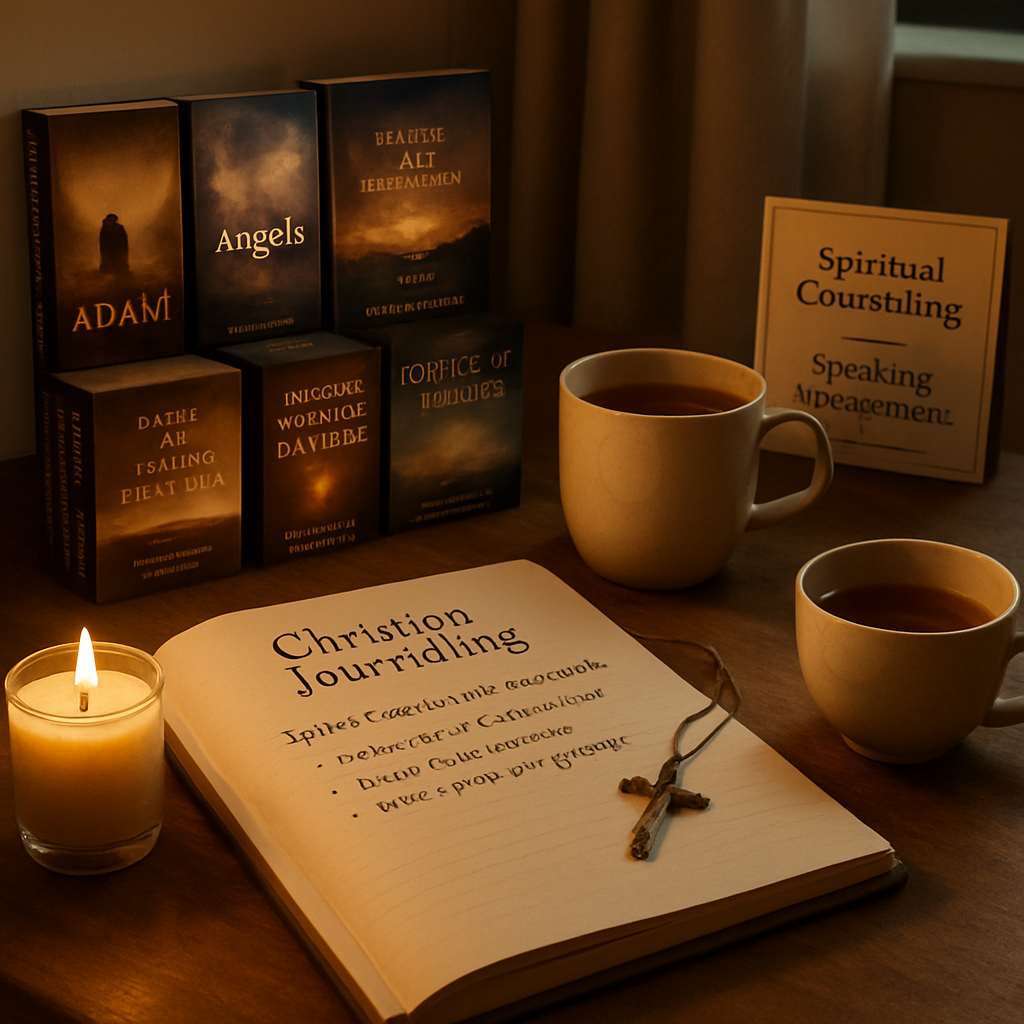
Want more ideas? Charlene Murray’s collection of gratitude journal prompts gives you dozens of ready‑made questions, plus space to reflect on Scripture. Pair those prompts with a simple “Divine Direction” e‑book for a deeper dive into how to align your daily entries with God’s purpose.
And remember, the goal isn’t perfection—it’s presence. Even a half‑filled page counts as a step toward healthier, faith‑filled self care. Keep the pen moving, trust the prompt, and let the Holy Spirit turn ordinary words into extraordinary peace.
5. Compare Spiritual Practices: Prayer vs. Fasting
Okay, let’s get real for a second. You’ve probably tried a quick morning prayer, and maybe you’ve heard about fasting but never gave it a go. Both are classic christian self care ideas, yet they feel like totally different flavors of the same spiritual diet.
So, what’s the real difference? And more importantly, how can you decide which one to sprinkle into your daily rhythm?
1. What’s the core intention?
Prayer is basically a conversation – you’re spilling thoughts, gratitude, worries, and listening for that gentle nudge from God. It’s often about connection in the moment.
Fasting, on the other hand, is a deliberate “empty‑handed” pause. By giving up food (or even a favorite app), you create space for God to speak louder in the silence.
2. How does the body get involved?
When you pray, you might sit, stand, or walk – the body is a backdrop. Some people even pair prayer with a short stretch or a walk, but the physical act isn’t the point.
Fasting turns your physiology into a spiritual signal. The hunger pangs remind you that your deepest need is not for snacks but for divine fulfillment. That bodily awareness can be a powerful reminder of dependence on God.
3. When should you practice it?
Prayer is flexible. You can whisper a quick “thank you” while brushing teeth, or sit for a ten‑minute devotions before work. It fits anywhere, anytime.
Fasting usually asks for a set window – a 24‑hour fast, a Daniel‑style fast for a week, or even a “social media fast” on Sundays. The structure helps you notice patterns you’d otherwise miss.
4. Who’s in the loop?
Prayer can be solo or communal. A quick “Lord, help me with this meeting” feels just as legit as a group prayer circle.
Fasting often thrives in community. When you announce a fast with a small group, you get encouragement, shared Scripture, and accountability – turning an individual discipline into a shared journey.
5. What’s the spiritual payoff?
Prayer usually gives you immediate peace, clarity, or a sense of being heard. It’s the “quick coffee” of spiritual refreshers.
Fasting can lead to deeper conviction, a renewed sense of gratitude for everyday blessings, and sometimes even a fresh direction for life. It’s the “slow‑cooked stew” that builds stamina.
Does any of this sound familiar? Maybe you’ve felt the calm after a prayer but also the “aha!” after a week‑long fast. Both are legit christian self care ideas, and you don’t have to choose one over the other – you can weave them together.
Here’s a quick way to blend them: pick a prayer focus for each day of a five‑day fast. Start each morning with a short prayer, then let the fast sharpen the listening ear. By the end, you’ll have both the conversation and the silence working side by side.
| Aspect | Prayer | Fasting | Quick Tip |
|---|---|---|---|
| Primary Goal | Dialogue with God | Create empty space for God | Write a one‑sentence intention before you begin |
| Physical Element | Optional movement | Hunger or abstinence | Pair a short walk with a prayer request |
| Typical Length | Minutes to an hour | Hours to days | Start with a 12‑hour fast and a 5‑minute prayer |
And remember, the goal isn’t to add another “to‑do” that feels like a chore. The Renovare article on soul‑care reminds us that true self‑care is about aligning with God’s design, not just checking boxes (the difference between selfish care and soul care).
So, which practice calls you today? Grab a notebook, jot down a prayer request, and decide if you’ll fast from something that’s pulling your focus away. Try it for three days and notice how the conversation changes when the stomach’s also speaking.
We’re in this together, and the next step is simply showing up – whether that’s with a whispered prayer or a purposeful fast. Your soul will thank you.
6. Serve Others as a Form of Self‑Care
Why serving feels like a spa day for the soul
It sounds crazy, but when you step out of your comfort zone to help someone else, you’re actually giving yourself a mental reset. Think about the last time you volunteered at a food pantry or simply listened to a friend in crisis. Your heart rate steadied, your worries shrank, and you walked away feeling lighter. That’s the same physiological shift scientists call the "helper’s high," and it’s a legit Christian self‑care idea.
In other words, serving isn’t a sacrifice; it’s a shortcut to grace.
1. Start small, make it a habit
Don’t wait for a big mission trip to feel the benefit. Pick a micro‑service you can do in five minutes: write an encouraging note for the person who always orders coffee for you, or pray silently for a coworker you’ve noticed struggling.
Action step: Set a daily reminder on your phone that says “Serve Now.” When the alarm goes off, you have two choices – scroll Instagram or send that quick text. Choose the text. You’ll be surprised how that tiny act spikes your joy for the rest of the day.
2. Turn chores into ministry
Household tasks can double as service when you invite a neighbor over to help you clean, then share a short devotion together. Or, when you’re grocery shopping, buy an extra loaf of bread and drop it at a local shelter.
Real‑world example: Maria, a busy mom of three, set a weekly “Grocery Blessing” where she buys one extra item for the church’s food bank. She says the routine reminds her that her everyday errands are part of God’s larger plan, and the gratitude she feels lasts well beyond the checkout line.
3. Use your gifts – not just your time
Maybe you’re handy with a screwdriver, good with numbers, or love to sing worship songs. Align that skill with a need. Offer to fix a broken chair at the youth group, help the church’s finance committee reconcile a budget, or lead a short worship session during a small‑group meeting.
Tip from a seasoned ministry leader: “When you serve with your natural talents, the work feels less like labor and more like worship.” The result? You’re refreshed, and the community gets exactly what it needs.
4. Serve in a “reverse‑fast”
We already know fasting creates space for God. Try the opposite – a “reverse‑fast” where you deliberately give something away for a set period. For a week, donate a portion of your income to a cause you care about, or give away a favorite snack each day to a coworker.
Specific steps: 1) Choose an amount or item; 2) Write a short prayer asking God to use that offering for His work; 3) Track each day in a journal, noting any shifts in your mood or focus. Many believers report a growing sense of freedom as they let go of “my” things.
5. Join a service circle for accountability
Serving solo can feel random, but a small group that meets weekly to share service ideas creates momentum. Each person brings one practical way they’ll serve that week, then reports back on the impact.
One church’s “Serve‑Together” circle reported a 30 % increase in volunteer hours after three months, simply because members held each other accountable. The principle is simple: community‑driven service multiplies both joy and effectiveness.
6. Reflect and recharge
After every act of service, take two minutes to journal. Write what you did, how it felt, and which Scripture whispered to you in the moment. Over time you’ll see a pattern: serving often aligns with verses like Galatians 6:2, “Carry each other’s burdens,” or Philippians 2:4, “Look not only to your own interests, but also to the interests of others.”
Even a quick “thank you, God, for this opportunity” seals the self‑care loop, turning the external act back into internal restoration.
Putting it all together
So, what should you do next? Pick one of the ideas above, set a timer for five minutes, and just start. You’ll likely notice that the more you serve, the more your spirit feels refreshed – a clear sign that serving others truly is a form of self‑care.
FAQ
What are some quick Christian self‑care ideas I can do during a busy day?
Even when your schedule feels jam‑packed, you can slip in a 5‑minute faith‑focused pause. Start by picking a short verse—maybe Psalm 5:3—read it aloud while you sip your coffee, then whisper a quick thank‑you prayer. Pair it with a physical cue, like stretching your arms overhead, so your brain links the movement with the moment of grace. Do this three times a day and you’ll notice a subtle lift in mood without adding any extra tasks.
How can I use Scripture memorization as a self‑care practice?
Treat memorizing a verse like a mini‑break for your soul. Write the line on a sticky note and place it on your bathroom mirror; every time you brush your teeth you’ll hear the promise again. Or turn the phrase into a phone‑screen wallpaper so it greets you each time you unlock. The key is pairing the verse with a daily habit, which trains both memory and heart to rest in God’s truth.
Is it okay to combine prayer with physical activity?
Absolutely—your body can become a prayer partner. Try a short “walk‑and‑talk” where you recite a Psalm or a personal petition with each step. The rhythm of your feet keeps you focused, and the fresh air clears mental clutter. If you prefer indoor movement, do a few gentle stretches while repeating a verse like Philippians 4:13; the physical stretch mirrors the spiritual lift, making prayer feel alive rather than a static task.
What role does serving others play in my spiritual health?
Serving isn’t just a good deed; it’s a shortcut to spiritual refreshment. When you help a neighbor, pray for them, or volunteer a few minutes at church, your brain releases the same “helper’s high” that scientists link to reduced stress. Keep it simple: write a quick note of encouragement for a coworker, then spend five minutes delivering it. Those tiny acts accumulate, turning ordinary days into moments where God’s love flows through you and back to your heart.
Can I create a simple worship‑video routine without tech skills?
You don’t need a fancy camera to make a worship‑video habit. Grab your phone, press play on a 3‑minute instrumental worship track, and simply sit still, eyes closed, letting the music guide your thoughts to a Scripture you’ve chosen. If you want a visual cue, place a small cross on your desk and glance at it each time the song starts. Doing this once in the morning and once before bed creates a rhythm that signals your brain: “It’s time to refocus on God.”
How do I stay consistent with journaling when motivation dips?
When motivation dips, treat journaling like a conversation you can’t miss. Set a timer for three minutes and ask yourself a specific question—‘What did God whisper to me during today’s meeting?’ Write whatever pops up, even if it feels messy. After the note, pick a short verse that matches the vibe and copy it in your own words. The act of re‑phrasing cements the insight, and the timer keeps the habit from dragging on, making it easy to return day after day.
Conclusion
Wow, you made it to the end of this deep dive into Christian self‑care ideas.
By now you’ve tried a quick prayer memo, a worship‑video pause, and even a memory‑walk.
What’s the big picture? It’s simple: tiny habits, when anchored in Scripture, reshape your day.
Think of each habit as a pebble you drop into a still lake—waves ripple outward, touching work, family, and friendships.
So, which pebble will you pick first?
If you’re craving a fresh start tomorrow, set a 3‑minute audio prayer on your phone alarm and let it be the first thing you hear.
Or, if you love music, cue a 5‑minute worship video right before your morning coffee and let the lyrics guide your focus.
Got a favorite verse? Write it on a sticky note and slap it on your bathroom mirror; each brush‑stroke becomes a reminder of God’s promise.
Remember, consistency beats intensity—doing a little every day beats a marathon once a month.
When a day feels chaotic, pause, breathe, and ask yourself, “What does God want me to notice right now?”
That question is the secret sauce behind every effective Christian self‑care idea we’ve shared.
And don’t forget to celebrate the tiny wins—a smile, a sigh of relief, a quick thank‑you prayer.
These moments add up, turning ordinary routines into a lifestyle that honors both your heart and your faith.
Ready to make the next habit stick? Grab a notebook, pick one idea, and start today—you’ve got this.