

Finding Peace: Scriptures for Anxiety and Depression and How to Apply Them
Ever had that moment when your mind feels like a stormy sea, waves of worry crashing and the weight of sadness pressing down? It’s a feeling many of us know too well—those quiet nights when anxiety whispers and depression sits heavy on the chest.
What if I told you there’s a simple, timeless toolbox you can reach for, one that’s been calming hearts for centuries? I’m talking about scriptures for anxiety and depression—verses that speak straight into the mess, offering a breath of peace when you need it most.
Imagine opening a Bible and stumbling onto a line that feels like a friend’s hand on your shoulder. You read, “Cast all your anxiety on him because he cares for you” (1 Peter 5:7), and suddenly the endless loop of “what‑if” starts to loosen. Or you find yourself in Psalm 34:18, “The LORD is close to the broken‑hearted and saves those who are crushed in spirit,” and it’s as if a light flickers in a dark room.
Those verses aren’t just poetry; they’re anchors. They remind us that we’re not alone in the struggle, that there’s a source of strength beyond our own limited coping skills. And the beauty is, they’re free, always there, ready to read aloud in a quiet moment, write in a journal, or even whisper before sleep.
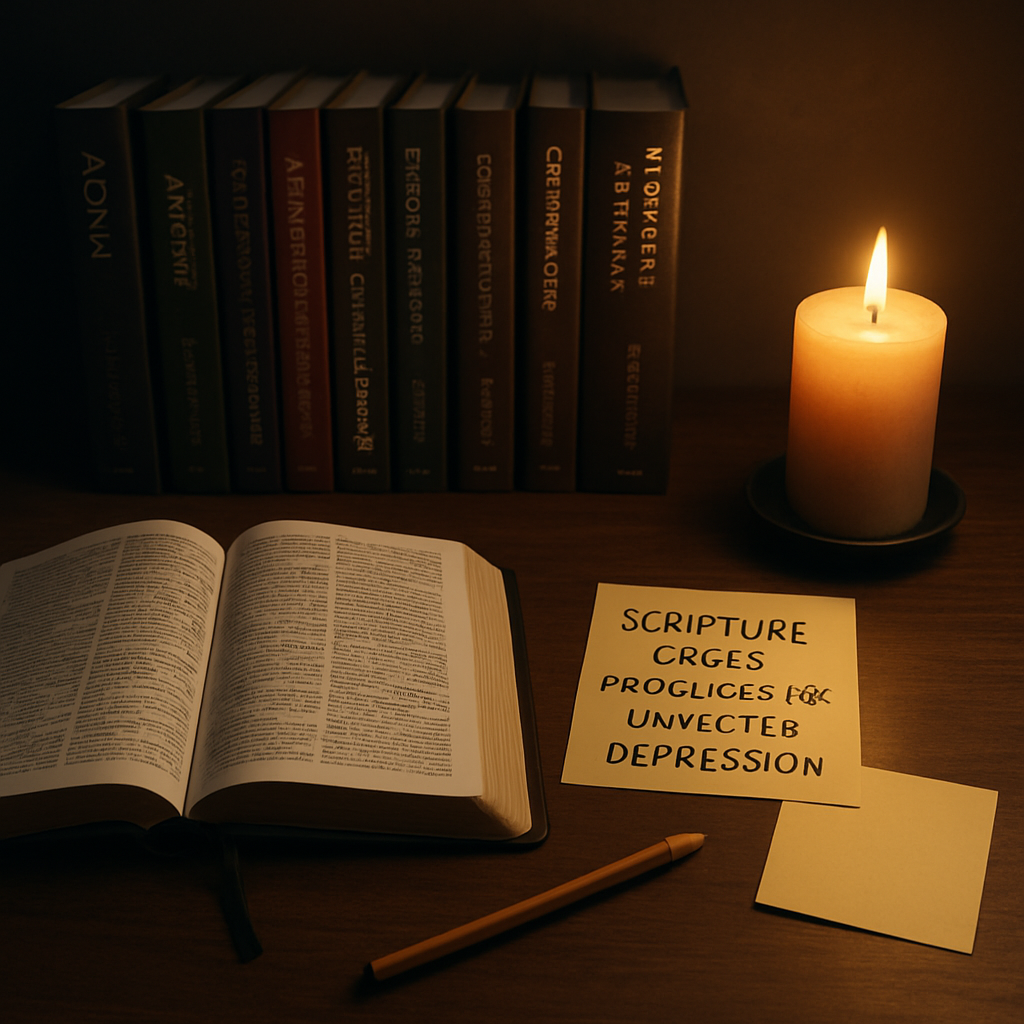
So, how do you start using these scriptures? First, pick a verse that resonates with the specific worry or sadness you’re feeling. Write it on a sticky note, set it as a phone wallpaper, or incorporate it into a daily prayer. Next, spend a minute breathing slowly, letting the words settle like a gentle tide. Finally, notice how your mind shifts—maybe the panic eases, or the heaviness lightens.
It might sound simple, but consistency turns these verses into a habit of hope. Over time, you’ll find yourself reaching for God’s promises before the anxiety spikes or the depressive thoughts creep in.
Ready to give it a try? Grab a notebook, choose a comforting verse, and let it become your daily reminder that you’re held, loved, and never truly alone.
TL;DR
Scriptures for anxiety and depression give you instant comfort—verses you can stick on a mirror, set as a phone background, or whisper before sleep to calm racing thoughts.
Try choosing one today, breathe deeply, and notice the peace replacing worry, turning spiritual truth into a habit that steadies your mind.
Understanding the Spiritual Roots of Anxiety and Depression
Ever wonder why anxiety and depression feel like they're coming from some hidden place inside you, not just the to‑do list or the news cycle? It’s because they often tap into spiritual questions we don’t always name out loud—like “Am I enough?” or “Where’s God when I’m drowning?”
And that’s where scriptures for anxiety and depression become more than pretty words. They point to the heart of why we feel unsettled, reminding us that our inner turmoil is often a symptom of a deeper spiritual disconnect.
When the Soul Cries Out
Think about that moment when you’re lying awake, heart racing, and a quiet voice inside you asks, “Why does it feel like I’m invisible to the One I love?” That question is the soul’s alarm bell, and it’s exactly the kind of signal the Bible addresses.
For instance, Psalm 42 asks, “Why are you downcast, O my soul?” The psalmist doesn’t pretend the feeling isn’t real; he names it, then flips the script by turning the question back to God. That back‑and‑forth is the spiritual root‑cause loop: we feel empty, we ask God, and God gives a promise that pulls us back.
But here’s a twist: many of us try to silence that soul‑cry with caffeine, scrolling, or even “just think positive.” Those fixes work for a minute, but the underlying spiritual ache stays. The Bible invites us to bring that ache to the throne, not to mask it.
How Scripture Re‑Roots You
When you read a verse like 1 Peter 5:7—“Cast all your anxiety on him because he cares for you”—you’re not just getting a feel‑good line. You are being given a concrete step: surrender. The act of casting is a spiritual posture that acknowledges God’s ownership of the worry.
And it’s not just about surrender; it’s also about identity. Jeremiah 17:9 reminds us that “the heart is deceitful,” which tells us our anxious thoughts are often lies. Recognizing the lie reshapes how we see ourselves: not as a broken vessel, but as someone God is actively restoring.
So, each time a verse clicks, ask yourself: “What part of my spirit is this speaking to?” Is it my sense of abandonment, my fear of failure, or maybe my guilt about past choices? Let the scripture point you to that specific root.
Notice how the video pauses the flow just enough to let the ideas settle. It’s a reminder that spiritual growth isn’t a sprint; it’s a rhythm of listening, reflecting, and then acting.
And if you’re looking for a deeper dive beyond verses, you might appreciate the perspective of Dr. Boudreau, who blends psychology with spiritual direction. His work at Rev Dr. Boudreau’s practice explores how faith‑based counseling can untangle those hidden roots.

Finally, try a simple habit tonight: write down one verse that speaks to the specific fear you’re feeling, then spend a minute breathing while you let the words sink in. Over the next week, watch how the same anxiety starts to feel less like a monster and more like a signal you can respond to.
Remember, the spiritual roots aren’t a flaw—they’re a doorway. When we name them, we give God a place to meet us, and the anxiety or depression begins to lose its grip.
Key Scriptures That Offer Comfort and Hope
When anxiety feels like a storm, the right verse can be the lighthouse that steadies your heart. Below are eight Scriptures that many readers have found especially soothing when depression and worry creep in.
1. Psalm 34:18 – “The LORD is close to the broken‑hearted”
This promise feels like a friend sitting beside you on a rainy night, reminding you that you’re not alone. In practice, try reading it aloud three times while breathing slowly; notice how the words settle into your chest. One reader told me she wrote the verse on her bathroom mirror, and each morning it nudged her away from the automatic “I’m not enough” loop.
2. Isaiah 41:10 – “Fear not, for I am with you; be not dismayed, for I am your God”
Fear often spikes when we feel abandoned. To counter that, place a sticky note with this verse on your laptop. When a deadline looms and your mind races, glance at it and remind yourself that God’s presence is a constant, not a conditional offer.
3. Romans 8:38‑39 – “Nothing … shall be able to separate us from the love of God”
Depression loves to whisper that love is fleeting. Memorize the first few words and repeat them during a panic attack. A therapist I work with suggested pairing the verse with a grounding exercise—press your feet into the floor, say the verse, and feel the connection.
4. 1 Peter 5:7 – “Cast all your anxiety on him because he cares for you”
Writing a quick “anxiety dump” in a journal, then folding the page and literally casting it into a bowl of water, can make this verse feel tangible. The act of surrender reinforces the promise that God cares.
5. John 14:27 – “Peace I leave with you; my peace I give you”
When the mind churns, pause, inhale for four counts, exhale for six, and whisper “my peace I give you.” The rhythm helps your nervous system sync with the peace the verse offers.
6. Philippians 4:6‑7 – “Do not be anxious about anything… the peace of God will guard your heart”
Turn this into a prayer mantra: “I’m not anxious, I’m guarded.” Some believers find that writing the two‑verse pair on a card they carry in their pocket keeps the promise close during a commute.
7. Matthew 11:28 – “Come to me, all who labor and are heavy‑laden, and I will give you rest”
Rest is often the first thing we lose when anxiety spikes. Schedule a 5‑minute “rest break” at work, close your eyes, and repeat this invitation. It’s a micro‑retreat that can reset your stress hormones.
8. Jeremiah 29:11 – “For I know the plans I have for you… to give you hope and a future”
Future‑focused anxiety—worry about what’s next—meets a hopeful counter‑statement here. Write it on the inside of your planner cover; each time you open your schedule, you’re reminded that there’s a hopeful roadmap.
These verses work best when they become habits, not just one‑off reads. If you need a ready‑made collection, check out Biblical affirmations for anxiety: 6 powerful scriptures to calm your mind. It bundles these promises with practical tips for daily use.
Beyond the Word, caring for the body supports the mind‑spirit connection. A quick walk, yoga stretch, or a 10‑minute cardio session can lower cortisol, making it easier for Scripture to settle. For simple fitness ideas, see the guide from Athlemove that pairs movement with mindfulness.
And if you’re a professional or a caregiver feeling burnt out, pairing scriptural comfort with a science‑backed wellbeing assessment can be a game‑changer. The team at Marisgraph offers tools to pinpoint stress triggers, so you can target both the spiritual and physiological sources of anxiety.
Take one verse today, put it somewhere you’ll see it, and pair it with a breath or a stretch. Over the next week, notice how the combination of God’s promise and a physical reset reshapes your inner dialogue. That’s the practical hope these Scriptures bring—peace that’s not just felt, but lived.
How to Meditate on Scriptures for Mental Relief
Ever caught yourself scrolling through a verse, feeling the words slide off the page like water on glass? That moment of “it’s nice, but does it really stick?” is exactly why we need a simple meditation routine that turns scripture into a mental lifeline.
1. Choose a verse that speaks to your current storm
Start with a single line from the pool of scriptures for anxiety and depression—maybe Psalm 34:18, Isaiah 41:10, or 1 Peter 5:7. The key is to pick something that names the feeling you’re wrestling with right now. If you’re battling a “can’t‑sleep” loop, “Give us rest, O Lord” (Matthew 11:28) often hits home.
Grab a sticky note, a phone wallpaper, or a small card. Write the verse in a font that feels personal, not perfect. Seeing it in your own hand makes it feel less like a textbook and more like a whispered promise.
2. Set the scene—make space for stillness
We’re not talking about a silent monastery; just a few minutes where you’re not juggling dishes or emails. Maybe it’s after your morning coffee, or right before you drift off to sleep. Dim the lights, close the blinds, and let your body relax into the chair or floor.
Take three deep breaths: inhale for four counts, hold two, exhale for six. Feel the air fill your lungs, then let it carry away the tension. This simple breathing cue tells your nervous system, “Hey, we’re shifting gears.”
3. Read, pause, repeat—let the words settle
Read the verse out loud, slowly. Notice each word’s texture—does “peace” feel soft? Does “fear not” sound like a firm hand? After the first read, close your eyes and let the phrase echo in your mind for ten seconds. Then read it again, this time a little softer.
Repeat this cycle three times. It might feel a bit odd, but the repetition anchors the promise in the same way a mantra does for meditation apps.
4. Engage your senses
While you hold the verse in your mind, bring in a sensory cue. Light a scented candle, sip warm tea, or run your fingers over a smooth stone. Pairing a tangible sensation with the scripture creates a neural shortcut: your brain learns to link the calm feeling with the verse.
If you’re at a desk, place your hand on the edge and feel the solid wood as you whisper, “You are with me.” The physical contact reinforces the spiritual truth.
5. Journal the shift
Open a notebook right after your meditation. Jot down what emotions rose, what thoughts faded, and any subtle changes in your body—tight shoulders loosening, a breath that feels lighter. Writing makes the experience concrete and gives you a record to look back on.
Over a week, you’ll start to notice patterns: maybe the verse calms your panic attacks, or it steadies you before a big meeting. Those notes become proof that the practice works for you.
6. Turn it into a habit
Pick a consistent trigger—your morning shower, the moment you sit down at lunch, or the instant you set your alarm. Pair the trigger with the verse meditation, even if it’s just a 30‑second pause. Consistency is the secret sauce that transforms a one‑off read into lasting mental relief.
And if you ever feel the routine slipping, revisit your “why.” Remember that the goal isn’t to check a box; it’s to give your mind a refuge built on God’s promises, especially when anxiety and depression try to hijack your thoughts.
Quick checklist
- Pick a specific verse for today’s feeling.
- Create a quiet spot and breathe three times.
- Read, pause, repeat three cycles.
- Add a sensory cue—candle, tea, stone.
- Journal the immediate impact.
- Link the practice to a daily trigger.
Give it a go right now. Choose a verse, set a timer for two minutes, and watch how the simple act of meditating on God’s word can quiet the mental noise. You might be surprised at how quickly “scriptures for anxiety and depression” become more than words on a page—they become a living, breathing part of your daily peace plan.
Integrating Scripture Reading into Your Daily Routine
Ever notice how the best habit feels like a quiet conversation you have with yourself, not a chore you force yourself to do? That’s the sweet spot we’re aiming for when we weave scriptures for anxiety and depression into the rhythm of your day.
First, pick a “anchor moment.” It could be the first sip of coffee, the pause before you open your laptop, or the quiet tick of the night‑time clock. The key is consistency – the same cue each day helps your brain associate that moment with God’s word.
1. Choose a bite‑size verse that matches your mood
Instead of tackling a whole chapter, grab a single line that names what you’re feeling. Maybe it’s Psalm 34:18 when you’re heavy‑hearted, or Isaiah 41:10 when fear spikes. Write it on a sticky note, set it as your phone wallpaper, or even tape it to your bathroom mirror. The visual cue turns a random thought into a purposeful pause.
Does it feel a bit too “quick‑fixy”? Not really – research on campus ministries shows that daily Scripture memory paired with a simple trigger builds spiritual resilience over timeaccording to connection‑skill strategies for students. It’s the same principle, just applied to your own schedule.
2. Create a micro‑environment
You don’t need a monastery. Just a minute of stillness works. Light a candle, pour a cup of tea, or place a smooth stone in your hand. Those sensory details tell your nervous system, “We’re shifting gears.”
Take three breaths: inhale for four counts, hold two, exhale for six. As you breathe, let the verse settle like a pebble dropping into water. You’ll notice the words rippling through your thoughts.
3. Speak, pause, repeat
Read the verse aloud, then close your eyes and let it echo for ten seconds. Speak it again, a little softer. Do this three times. It feels a little odd at first, but repetition works like a mantra, anchoring the promise in your mind.
And what if your mind wanders? That’s okay. Gently bring it back, like you’d guide a stray cat back onto a lap. The act of returning is part of the practice.
4. Pair with a quick journal note
After the pause, jot a single sentence about how you feel. “My shoulders feel lighter,” or “Anxiety nudged, but peace lingered.” Over weeks, those notes become a personal testimony of how scriptures are reshaping your mood.
Seeing the pattern on paper is powerful – it turns abstract comfort into concrete evidence.
5. Lock it in with a daily trigger
Now, tie the whole thing to that anchor moment you chose. Every morning, after you brew coffee, you’ll read, breathe, repeat, and note. When the habit sticks, you’ll notice the verse popping up in unexpected places – a meeting, a traffic jam, a quiet night.
So, what does success look like? Not a perfect 10‑minute meditation every day, but a reliable “stop‑and‑scripture” that feels as natural as brushing your teeth.
6. Troubleshoot the slip-ups
Missed a day? No biggie. Acknowledge it, remind yourself why you started, and jump back in tomorrow. The goal isn’t perfection; it’s a steady thread of connection with God that steadies your mind.
Think about it this way: each tiny repeat is a stitch in a larger tapestry of peace. Over time, those stitches form a blanket you can wrap around yourself whenever anxiety or depression tries to creep in.
Ready to give it a go? Grab that verse, set your trigger, and let the rhythm of Scripture become the backdrop of your everyday life.
Comparing Different Scripture‑Based Practices
We’ve talked about how a single verse can calm a racing mind. But what if you want more than a one‑off lift? Different people treat the same scriptures in slightly different ways, and each method has its own flavor.
So, which practice feels like a natural fit for you? Let’s walk through the most common approaches and see how they stack up against each other.
Memorization & Quick Recall
Here you commit a verse to memory and pull it out like a mental first‑aid kit. The idea is simple: when anxiety spikes, you don’t have to open a book—you already have the promise sitting in your head.
This works especially well during sudden panic attacks, because the brain can retrieve short, familiar phrases faster than it can locate a sticky note. The downside? Memorizing takes repetition, and if you’re not used to rote learning it can feel like a chore.
Breath‑Verse Pairing
Take a verse, read it aloud, and sync each phrase with a breath. Inhale on “Fear not,” exhale on “I am with you.” The rhythm turns the words into a mini‑meditation, calming the nervous system while reinforcing the scriptural truth.
People love this when they have a regular “anchor moment” – like waiting for the coffee to brew. If you skip a day, the habit can wobble, but the breathing anchor usually pulls you back in.
Journaling & Reflection
Write the verse, then jot down what emotion it nudges in you. Over weeks you’ll see a pattern: maybe Psalm 34:18 eases grief, while Isaiah 41:10 steadies fear of the unknown. The journal becomes evidence that the practice works, which fuels motivation.
The flip side is that journaling demands extra time and a quiet spot. If you’re always on the go, you might end up with half‑filled pages that feel more like a task than a relief.
Creative Expression
Some folks turn verses into art – sketching the words, setting them to a simple melody, or even baking a “faith‑bread” while whispering the promise. The creative act engages different parts of the brain, making the scripture stick in a sensory way.
This can be especially powerful for visual or auditory learners, but it does require a bit of supplies or talent. You don’t need to be Picasso; a doodle on a napkin works just fine.
Below is a quick snapshot of how each method lines up on key factors:
| Practice | Speed of Relief | Time Investment | Best For |
|---|---|---|---|
| Memorization & Quick Recall | Immediate | Moderate (daily repeats) | High‑stress moments |
| Breath‑Verse Pairing | Fast | Low (2‑3 minutes) | Routine anchor moments |
| Journaling & Reflection | Gradual | Higher (5‑10 minutes) | Long‑term pattern tracking |
| Creative Expression | Varies | Variable (depends on art) | Visual/auditory learners |
Notice how each column highlights a trade‑off. If you crave instant calm, memorization might be your go‑to. If you enjoy a gentle rhythm, the breath‑verse combo fits. Want to see growth over weeks? Journaling gives you that proof page. And if you love to get messy with colors or chords, creative expression turns scripture into a lived experience.
Pick one method to start, or blend two that feel right. Maybe you memorize a single line for emergencies, and on calmer evenings you journal about how that line settled you. The key is to keep it flexible – the practice should serve you, not the other way around.
Ready to experiment? Choose a verse you love, try the breath‑verse technique for a week, and jot a quick note about any shift you notice. If it clicks, add a memory drill on weekends. You’ll end up with a toolbox that feels as personal as a favorite coffee mug.
FAQ
What are the most effective scriptures for anxiety and depression?
People often gravitate toward verses that name the feeling they’re wrestling with. Psalm 34:18 (“The LORD is close to the broken‑hearted”) feels like a gentle hand on a sore spot, while Isaiah 41:10 (“Fear not, for I am with you”) offers an instant confidence boost. 1 Peter 5:7 (“Cast all your anxiety on him”) works well when you’re overwhelmed, and John 14:27 (“My peace I give you”) is a quick reminder that calm is a promise, not a feeling.
How can I memorize a verse so it’s ready for a panic attack?
Start with a tiny chunk—just the first phrase. Say it out loud three times while you’re brushing your teeth, then attach a visual cue like a sticky note on your bathroom mirror. Repeating the same short phrase at the same daily moment creates a mental shortcut. After a week, add the next phrase and keep building. The key is consistency, not speed; a well‑rehearsed line will surface even when your brain feels foggy.
Can I pair breathing techniques with a scripture, and how?
Absolutely. Choose a verse, then inhale on the first half of the sentence and exhale on the second half. For example, breathe in on “Fear not,” and breathe out on “I am with you.” The rhythm grounds your nervous system while the words embed the promise. Do this for three cycles, and you’ll notice the breath calming your body as the verse settles in your mind.
How often should I read or meditate on these verses?
Treat the practice like a daily vitamin—short, consistent, and tied to a regular cue. A two‑minute pause each morning, after lunch, or before bed works well. If you miss a day, don’t stress; simply resume at the next cue. Over weeks, the repetition builds a mental library that you can draw from whenever anxiety or depression tries to hijack your thoughts.
Are there specific verses for different emotions, like fear versus sadness?
Yes. Fear often responds to promises of presence, so Isaiah 41:10 or Psalm 27:1 (“The LORD is my light and my salvation”) are strong choices. Sadness or loneliness finds comfort in verses that speak of closeness, such as Psalm 34:18 or Matthew 11:28 (“Come to me, all who labor… I will give you rest”). Matching the emotional tone to the verse makes the scripture feel like a personal reply rather than a generic quote.
How can I tell if a scripture is actually helping me?
Keep a tiny journal next to your coffee mug and jot a sentence after each practice. Note physical sensations (“shoulders relaxed”), mood shifts (“anxiety faded”), or thoughts that changed. After a week, review the entries; patterns of improvement indicate the verse is doing work. If you see no shift, try a different verse or pair it with a new sensory cue—sometimes a fresh approach unlocks the impact.
What should I do if I don’t feel any change after using scriptures?
First, give it a fair trial—at least ten days of consistent use. If the feeling still stalls, consider swapping the verse for one that speaks a different aspect of your struggle, or add another practice like journaling or gentle movement. Remember, scripture works best alongside other healthy habits. Pairing the promise with prayer, breathing, or a short walk often creates the momentum needed for real relief.
Conclusion
We've walked through how a handful of scriptures for anxiety and depression can become daily companions, not just pretty words on a page.
So, what does that look like when the panic spikes? You grab your sticky note, breathe on Isaiah 41:10, and feel the promise settle like a warm blanket.
Remember the journal habit we mentioned earlier—those tiny notes become proof that the verses are actually moving your mood.
If you’ve tried a verse and nothing shifts, it’s okay to switch it up. The Bible is full of promises; the right one for you today might be different tomorrow.
One simple step you can take right now is to choose one verse, set a reminder on your phone, and pair it with a three‑minute breath‑verse session. Do it for ten days and watch how the peace builds.
Feeling hopeful? Good. Keep the practice loose, let it breathe, and let God’s word do the heavy lifting for your mind.
When you’re ready for deeper guidance, Charlene Murray’s scripture‑writing plan offers a step‑by‑step guide that blends journaling, prayer, and these verses into a calm‑making routine.
Take the first step today; your future self will thank you for the calm.