

Understanding why does god discipline us: A Spiritual Guide
Ever felt that sting of a setback and wondered if it's just life being hard, or maybe something deeper?
Maybe you’ve prayed, asked, “Why does God discipline us?” and got silence or a confusing answer.
You’re not alone. In our experience, many believers wrestle with this question when a relationship cracks, a job falls through, or a health issue hits out of the blue.
Think about a time you missed a deadline and your boss gave you a stern talk. At first it feels like punishment, but later you notice you’re more organized, sharper, and actually avoid that mistake again.
That same pattern shows up in the spiritual arena. God’s discipline isn’t about hurting us for the sake of hurt; it’s a loving correction, a way to steer us back toward the heart He designed for us.
But why does God choose discipline over simply letting us drift? The answer lives in two biblical truths: He loves us enough to shape us, and He knows the long‑term good that short‑term pain can produce.
When you’re feeling the weight of a trial, consider this practical step: pause, write down what the situation is teaching you, and ask God to reveal the purpose behind the pressure.
We’ve seen readers use a simple journaling habit alongside our e‑book “Why God Disciplines Us” to track patterns. Over weeks, the chaos starts to look like a map, pointing to areas that need growth—patience, humility, or deeper trust.
So, as you sit with that uneasy feeling, remember it’s not a sign that you’ve failed. It’s a sign that God is investing in your character, much like a coach pushes an athlete to break personal records.
Ready to turn discipline into a stepping stone rather than a stumbling block? Let’s explore how that transformation works, and discover tools that can help you walk through the fire with confidence.
TL;DR
If you’re wrestling with why does god discipline us, know that divine correction is a loving guide shaping character, not a punishment. Start a simple journaling habit, reflect on each trial’s lesson, and let our e‑book “Why God Disciplines Us” point you toward deeper trust and growth in life today.
Understanding the Biblical Basis for Divine Discipline
Ever wonder why the Bible talks about God’s discipline like a loving parent? You’re not alone. The phrase "why does God discipline us" pops up in prayer journals, late‑night Bible studies, and even coffee‑shop conversations. The answer lives in a handful of key scriptures that paint discipline not as punishment, but as purposeful shaping.
First, think about Hebrews 12:6: "For the Lord disciplines the one He loves, and He punishes every son whom He receives." Notice the word "love" right up front. God isn’t whipping us for the sake of pain; He’s gently nudging us back onto the path that leads to growth.
Then there’s Proverbs 3:11‑12, where the writer says, "My son, do not despise the Lord’s discipline…" It’s a reminder that discipline is an invitation to humility, not a sign of failure. When you feel the sting of a setback, ask yourself: is this a divine tap on the shoulder, urging me to lean in?
What the Old Testament Shows
Look at the story of King David. After his sin with Bathsheba, Nathan the prophet delivers a harsh rebuke (2 Sam 12). The discipline doesn’t erase David’s love for God, but it redirects his heart toward repentance. The result? A deeper, more resilient relationship. That pattern repeats with Job—an innocent man crushed by suffering, yet ultimately blessed because his faith endured.
These narratives illustrate a principle: God’s corrective actions are rooted in a long‑term vision. He knows the character we’re meant to become, even when the present feels chaotic.
New Testament Clarity
Jesus Himself says in John 15:2, "Every branch in me that does not bear fruit He takes away, and He prunes it so that it may bear more fruit." The pruning analogy is vivid—think of a gardener trimming a rose bush. The cuts might look harsh, but they’re essential for the bloom.
And Paul? He writes in Romans 5:3‑4, "suffering produces perseverance; perseverance, character; and character, hope." Here, discipline is a chain reaction that starts with pain but ends in hope.
In practice, when you feel God’s discipline, try this simple habit: pause, write down what the situation is teaching you, and pray for the specific character trait God might be shaping—patience, humility, or trust. Over time, those notes become a map of spiritual growth.
For a deeper dive into how these biblical truths translate into daily life, check out Why God Disciplines Us eBook. It walks you through the verses we just mentioned and offers practical journaling prompts.
Now, let’s bring the conversation into the real world. When discipline triggers anxiety, many people turn to natural coping tools. Exploring natural remedies can provide gentle relief while you process what God might be teaching you. Likewise, some readers find CBD products helpful for calming nervous tension, creating a peaceful space for prayer and reflection.
That video breaks down the same verses we’ve been talking about, showing how each passage connects to everyday moments of discipline.
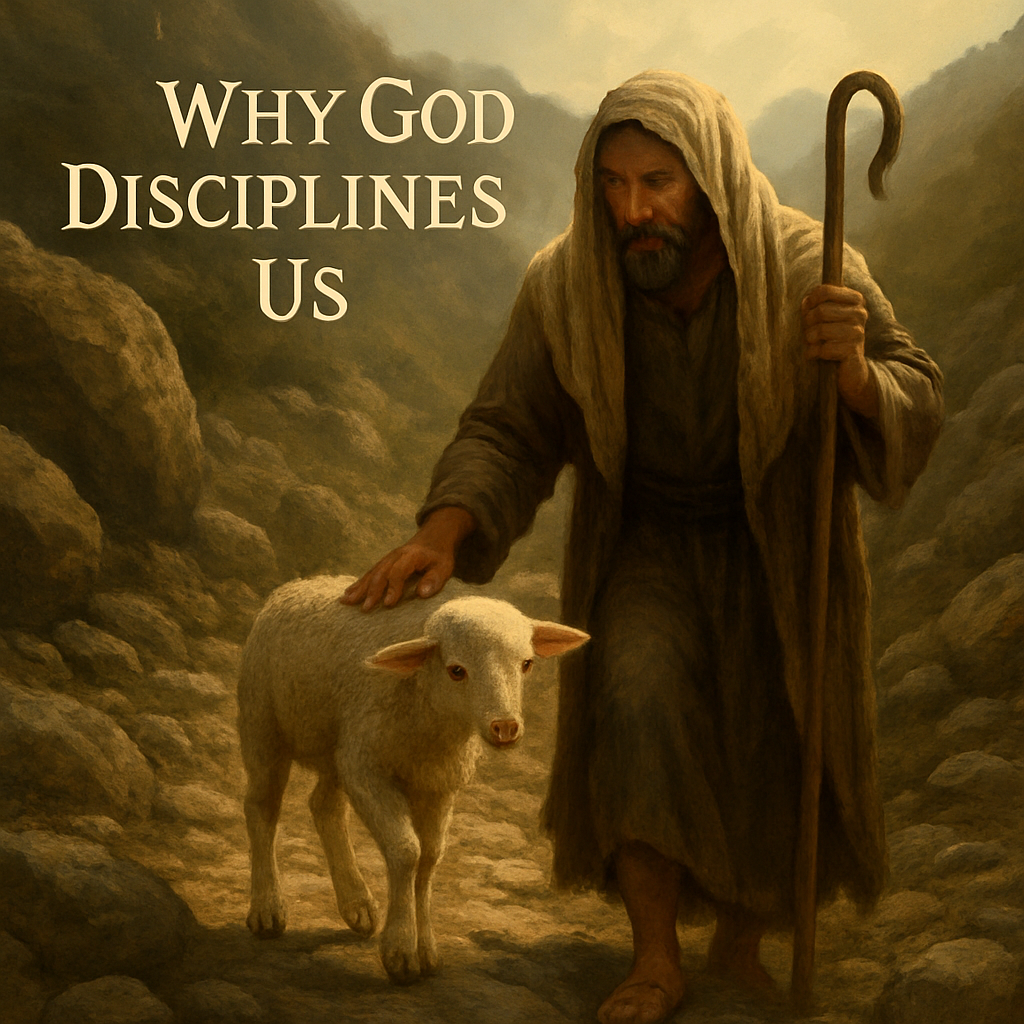
So, what’s the next step? Take a moment tonight, open your journal, and jot down one recent trial. Ask, "What character is God shaping in me right now?" Then, breathe. Remember, divine discipline is a love story—God’s way of crafting a masterpiece out of the mess.
Common Reasons God Disciplines Humanity
Ever feel like life is handing you the same kind of “test” over and over, and you start asking, “why does God discipline us?” You’re not alone—those repeated moments are often the Father’s way of drawing a line in the sand, urging us to step back and look.
One common reason is that discipline reveals our true character. When a relationship ends or a job falls through, the pain forces us to ask, “Who am I without that role?” The answer usually shows whether our identity is rooted in something shallow or in God’s love.
It shapes our spiritual muscles
Think of discipline as a workout for the soul. Just like a weight‑lifting session hurts at first but builds strength later, God’s corrective moments stretch our faith muscles. As the article on God’s discipline being good news notes, the short‑term pain yields the “peaceful fruit of righteousness” after we endure.
So, why does that matter to you right now? If you’re juggling a busy schedule, a sudden health scare might be the universe’s reminder to slow down, prioritize prayer, and let go of the “do it all” mindset. That pause isn’t punishment; it’s a chance to re‑align with the rhythm God intended.
It protects us from future heartbreak
Another reason God steps in is protection. Remember the teen who ignored a parent’s warning about staying out late? The fallout later felt like a harsh lecture, but the original caution was meant to keep a heart safe. In the same way, divine discipline often guards us from choices that would damage our relationship with Him.
When you’re tempted to dismiss a conviction as “just a feeling,” ask yourself, “What might I be missing?” The answer could be a deeper trust that shields you from a far bigger stumble down the road.
It cultivates humility and dependence
Humility isn’t something we can manufacture on our own; it grows when we’re forced to admit we need help. A painful financial setback, for instance, can strip away pride and open the door to asking God for wisdom. The purpose of God’s discipline article reminds us that true discipline “seeks to enact change within a person,” not merely to punish.
In those moments of “I’ve hit rock bottom,” you might feel isolated, but that very isolation pushes you toward community—small groups, counseling, or even a simple prayer partner. That reliance on others is exactly what God wants to cultivate.
It points us to a greater purpose
Finally, discipline often serves as a signpost toward a larger mission. When you’re forced to leave a comfortable job, the vacancy might be God’s invitation to explore a calling you’ve ignored. It’s like a GPS recalculating after a wrong turn; the new route may look unfamiliar, but it leads to a destination He’s prepared for you.
Take a breath, write down the “pain point,” and ask, “What is God trying to show me here?” That simple journal habit—something we’ve seen work for many readers—turns confusion into clarity, and confusion into a stepping stone.
Remember, discipline isn’t a sign that God is angry; it’s a sign that He cares enough to invest time in shaping you. The next time you feel the heat, lean into it, trust the process, and watch how those sparks become a refined fire for your life.
How Discipline Shapes Spiritual Growth
Ever notice how a tough season feels like a workout for your soul? When you’re asking, "why does god discipline us," the answer often lies in the way that pressure stretches something inside you that you didn’t even know was there.
Think about the last time you missed a deadline and your boss gave you that sharp, but ultimately helpful, correction. At first you probably felt embarrassed, then you reorganized your calendar, set reminders, and suddenly you’re running smoother. Spiritual discipline works the same way – it’s a gentle (or sometimes sharp) nudge that forces you to reorganize the heart.
Discipline as a Spiritual Muscle Builder
Imagine your faith as a muscle. If you never lift anything, it stays soft and untested. When God lets a storm roll through – a broken relationship, an unexpected job loss, a health scare – it’s like adding weight to the bar. The strain hurts, but each rep makes the muscle denser. In our experience, believers who keep a simple journal of these moments can actually see the “muscle growth” on paper: patience, humility, deeper dependence.
So, what does that look like day‑to‑day? One practical tip: pick one “pain point” each week, write a two‑sentence description, then ask yourself, “What spiritual quality is this trying to develop?” Over time you’ll notice a pattern – maybe it’s patience, maybe it’s surrender. That pattern is the shape of your growth.
Refining Fire, Not Burning Out
We often picture fire as destructive, but the Bible uses fire as a refining agent. The heat of discipline removes impurities, leaving behind a clearer character. It’s not that God wants you to be scorched; He wants the gold of your spirit to shine brighter.
Here’s a quick exercise: sit with a cup of coffee, close your eyes, and recall a recent disappointment. Visualize that moment as a furnace, then imagine the raw edges of your character being smoothed out. Write down one concrete change you feel called to make – perhaps reaching out for accountability, or letting go of a perfectionist mindset.
Community as the Anvil
Discipline rarely happens in isolation. The feeling of “rock bottom” often pushes us toward a prayer partner, a small group, or even a professional counselor. That community acts like an anvil, giving you something solid to lean on while the fire does its work.
If you’re part of a small group, try sharing a short testimony about a recent discipline moment. You’ll be surprised how many others have walked a similar path, and the collective insight can turn a lonely ache into a shared lesson.
From Discipline to Destiny
One of the most rewarding shifts is seeing discipline as a signpost toward purpose. When a job ends, it’s not just a loss – it’s an invitation to explore a calling you’ve been ignoring. The same principle applies to spiritual habits: a period of silence might be God’s way of clearing space for a new ministry or deeper prayer life.
Ask yourself, "What door might this discipline be opening?" Write that question beside your journal entry and revisit it in a month. Often the answer becomes clearer as you trust the process.
Bottom line? Discipline shapes spiritual growth by stretching, refining, and redirecting you. It’s uncomfortable, but it’s also the most reliable way God turns ordinary believers into resilient, purpose‑driven followers.
Ready to put these ideas into practice? Grab a notebook tonight, note one recent discipline moment, and ask God what muscle He’s asking you to strengthen. Keep that note visible; let it be a daily reminder that the very heat you feel is shaping a stronger, more Christ‑like you.
Comparing God’s Discipline with Human Parenting: Key Similarities and Differences
Ever watched a toddler stumble off a bike and felt that quick sting of worry? That moment is a tiny echo of what God does when He lets us fall.
We instinctively rush to protect, to fix, to comfort. In the same way, divine discipline isn’t about punishment for its own sake—it’s a loving correction that points us back to the path we were meant to walk.
So, why does god discipline us? Think of a parent who sets bedtime. The rule feels restrictive, but the underlying goal is rest, growth, and safety. God’s “rules” work the same way.
Shared Motivations
Both human parents and the Heavenly Father want what’s best for us. They watch us make choices, step back when we’re ready, and intervene when the stakes get high.
One similarity is the desire to build character. A coach pushes an athlete through grueling drills; a parent enforces chores; God uses trials to stretch our spiritual muscles.
Another shared motive is protection. Remember that teen who ignored curfew and ended up in trouble? The parent’s discipline was a safeguard. Scripture says, “the Lord disciplines those He loves” (Hebrews 12:6), echoing that protective instinct.
Key Differences
First, the source of authority differs. Earthly parents rely on experience and limited perspective; God operates with infinite wisdom and perfect knowledge of every heart.
Second, the scope of discipline varies. A parent’s correction usually ends when the child learns the lesson. Divine discipline can span a lifetime, shaping not just behavior but identity.
Third, the outcomes are distinct. Human discipline often aims at immediate compliance—clean your room, finish your homework. God’s discipline seeks eternal transformation: holiness, deeper trust, and a share in His holiness.
Lastly, the method of delivery diverges. Parents can use clear consequences (loss of TV time, grounding). God may employ subtle nudges—lost jobs, broken relationships, or quiet seasons that feel like empty rooms.
Practical Takeaway
If you feel the sting of a “spiritual grounding,” ask yourself: what character is God shaping right now? Grab a notebook, write the situation, and note the quality He might be forging—patience, humility, or reliance on prayer.
That simple habit mirrors the journaling exercise we recommend in our “Why God Disciplines Us” e‑book, helping you track patterns and see the bigger picture.
Quick Comparison Table
| Aspect | Human Parenting | Divine Discipline |
|---|---|---|
| Authority Source | Limited, experiential | Infinite, omniscient |
| Scope | Short‑term, situational | Lifetime, eternal |
| Goal | Obedience & safety | Holiness & character formation |
| Delivery | Clear, immediate consequences | Subtle, often through circumstances |
Notice how the table strips the ideas down to their core—makes it easier to see where you might be misreading a divine prompt as merely “bad luck.”
Want a deeper dive? The article on how God balances forgiveness and discipline walks through real‑life questions that many of us wrestle with.
And for a more theological perspective, check out this guide on thinking about divine discipline. It unpacks Hebrews 12 in a way that feels like a friendly coach rather than a stern judge.
Bottom line? Parenting and divine discipline share the heartbeat of love, but they differ in scale, wisdom, and ultimate purpose. When you recognize the pattern, the “pain” stops feeling random and starts feeling purposeful.
Take a moment now: breathe, journal that current trial, and ask, “What is God training me to become?” You’ll find the answer surfaces as you keep walking the path He’s lovingly laid out.
Practical Ways to Respond to God’s Discipline
First, notice the feeling you get when something “just doesn’t feel right.” That knot in your stomach is often the first whisper that God is trying to shape you.
Pause and Identify the Prompt
We recommend hitting the brakes for a minute. Ask yourself, “What is the circumstance trying to tell me?” Write the scene down in a notebook – date, people involved, emotions. The act of recording turns a vague ache into a concrete clue.
When you capture the detail, you’re already doing what the Transforming Center suggests for discernment: you create space for God’s voice to rise above the noise.
Ask the Right Question
Instead of “Why is this happening to me?” try “What character is God inviting me to develop right now?” That subtle shift turns the conversation from victimhood to partnership.
It might feel odd at first, but keep the question simple. If you’re wrestling with a job loss, you could ask, “What patience am I being called to practice?” Write the answer beside your original note.
Turn the Prompt into a Small Habit
Pick one tiny action that aligns with the lesson. If humility is the theme, maybe you’ll deliberately serve someone in a way that makes you feel uncomfortable – like washing dishes for a neighbor.
Do the habit for seven days straight. The Bible talks about a week‑long cycle for forming new spiritual rhythms, and a short, repeatable practice keeps the discipline from feeling like a punishment.
Lean on Community
Share your note with a trusted friend or a small‑group leader. Speaking the struggle out loud often brings clarity you didn’t notice alone.
Our own experience shows that when believers discuss their “pain points” in a safe circle, the collective insight can point out a missing piece – perhaps a prayer partner or a relevant sermon you missed.
Pray with Intent
Prayer isn’t just a checklist; it’s a conversation that mirrors the discipline process. Try a “quiet trust” prayer like Psalm 131: “Lord, I’m small and unassuming; help me rest in Your purpose.” Then sit in silence for a minute, listening for a gentle nudge.
If thoughts swirl, repeat a short phrase: “Your will, not my comfort.” Over time that phrase becomes a mental anchor when the next trial shows up.
John Stange notes that discipline is proof of God’s love, reinforcing the idea that the discomfort is a caring nudge in the DesireJesus article.
Reflect and Adjust
After a week, revisit your notebook. Ask: “Did the habit produce any change? Did my heart feel lighter?” If the answer is no, tweak the question or the action. Discipline is a feedback loop, not a one‑off event.
Sometimes the lesson isn’t obvious until months later. That’s why keeping a running log helps you see the larger pattern – patience today, humility tomorrow, reliance on prayer the next season.

Quick Checklist for Responding
- Pause. Write the situation.
- Ask, “What character is being forged?”
- Choose one concrete habit.
- Share with a trusted person.
- Pray for quiet trust and indifference to your own agenda.
- Review after seven days and adjust.
Remember, the goal isn’t to eliminate pain but to let that pain become a guidepost. As you practice these steps, you’ll notice the “sting” turning into a steady compass pointing toward the person God wants you to become.
Resources and Further Reading on Divine Discipline
When the sting of discipline feels like a mystery, the right resource can turn confusion into clarity.
One of the first places I turn is the e‑book “Why God Disciplines Us.” It breaks down the biblical foundation, then offers journal prompts that match the quick‑checklist we just practiced. Readers tell me it’s like having a small study group in their pocket.
But you might wonder, “why does god discipline us when the pain feels so random?” A thoughtful article from Insight for Living tackles that exact question, reminding us that discipline isn’t punishment but a loving instruction. That perspective can shift the whole conversation in your notebook.
Books that deepen the conversation
For anyone craving a deeper dive, the “God’s Forbearance” e‑book explores patience as a form of divine discipline. It’s packed with real‑life stories that illustrate how waiting periods become training grounds for trust.
The “Judgments During Our Life Span” guide flips the usual fear of judgment on its head, showing how each evaluation is a checkpoint for growth. It’s especially helpful when you’re tracking patterns over months.
Audio and video helpers
Our YouTube channel features a short video titled “Refining Fire: The Heart of Divine Discipline.” In less than five minutes it visualizes the furnace metaphor we mentioned earlier, making it easy to replay during a quiet moment.
If you prefer listening, the “Spiritual Food” audio series includes an episode on discipline that blends Scripture with practical steps. You can slip it into a morning commute or a walk with the dog.
Guided counseling and community
Sometimes the written word isn’t enough. Our spiritual counseling sessions provide a safe space to unpack a specific trial and map out a habit that aligns with the character God is shaping. Think of it as a personal trainer for the soul.
Joining a small group or a prayer partnership can also act as an anvil, giving you solid feedback while the “heat” of discipline does its work. We’ve seen dozens of members report breakthroughs after just three weeks of sharing their journal entries.
Practical next steps
Pick one resource from this list today—whether it’s the e‑book, the Insight article, or the audio episode.
Set a timer for ten minutes, read or listen, then write a single sentence about how that insight reshapes your current “pain point.”
Finally, schedule a quick check‑in with a trusted friend or counselor to discuss that sentence. The conversation will often reveal the next habit to try.
Remember, the journey of divine discipline isn’t meant to be walked alone. With the right tools, each setback becomes a stepping stone toward the person God is gently crafting.
If you’re looking for a roadmap that ties discipline to your life’s bigger mission, the “Divine Direction” e‑book maps out how each trial points to a purpose God has already set. It includes a step‑by‑step worksheet that syncs with the journal habit you’ve already started.
And don’t forget the “Patience” e‑book, which drills down on waiting as a form of discipline. The short devotionals and reflection questions make it easy to turn a restless evening into a moment of spiritual muscle‑building.
Conclusion
So, after all the stories, scriptures, and practical tips, you might be wondering—does it really matter why God disciplines us? The short answer: absolutely.
When discipline shows up, it’s not a random sting; it is a signal that God’s love is at work, shaping the very character He dreamed you’d become. Think of it like a coach calling a timeout: uncomfortable in the moment, but it gives you a chance to regroup and get stronger.
Here’s what we’ve learned together:
- Divine discipline reveals the parts of us that need growth—patience, humility, trust.
- It often arrives through everyday setbacks, turning a job loss or a broken relationship into a training ground.
- Journaling the experience turns vague pain into a concrete lesson you can track over weeks.
What’s the next step? Grab a notebook tonight, write down the most recent “pain point,” and ask yourself, “What character is God shaping right now?” Then pick one tiny habit that reflects that answer—maybe a short prayer, a quick act of service, or simply listening in silence.
If you crave deeper guidance, our “Why God Disciplines Us” e‑book walks you through reflection prompts that turn every trial into a stepping stone. It’s a low‑key tool that many of our readers swear by.
Remember, the heat of discipline is temporary, but the growth it produces lasts a lifetime. Keep the conversation going with a trusted friend or counselor, and watch how each challenge reshapes you into the person God is gently crafting.
FAQ
Why does God discipline us when it feels like punishment?
It’s easy to read the sting of a setback as a smack, but the biblical picture frames discipline as a loving correction, not a revenge move. Think of a coach who pushes you harder after a loss; the goal isn’t to humiliate you but to sharpen the skill you need to win. In the same way, God’s discipline is meant to shape character, building patience, humility, and deeper trust.
So when the pain feels sharp, ask yourself, “What part of me is being stretched?” The answer often points to a growth area God wants you to own, turning what feels like a curse into a stepping‑stone.
How can I tell if a hardship is God’s discipline or just life’s random trouble?
First, pause and write down the facts: the event, your emotions, and any recurring theme you’ve noticed. If the same “lesson” keeps popping up—say, a pattern of impatience or reliance on control—it’s a clue that God is using the situation as a teaching moment.
Second, bring it to prayer. Ask God to reveal the purpose behind the pressure. If you sense a gentle nudge rather than a harsh verdict, that’s often the hallmark of divine discipline, which aims to guide, not to condemn.
What biblical examples show God’s discipline and what can I learn from them?
Look at King David after his sin with Bathsheba. God let him feel the fallout—family strife, loss of a child—yet those trials drove David to deeper repentance and a heart aligned with God’s will. Another example is Peter, who was rebuked for denying Jesus; that correction forged a bold, faithful leader in the early church.
Both stories show that discipline isn’t a dead‑end; it redirects us toward a higher purpose. The takeaway? Even when the pain is uncomfortable, it’s often the catalyst that moves us from “I’m broken” to “I’m being shaped.”
What practical steps can I take when I sense I’m being disciplined?
Start with a “discipline pause.” Write the situation, the feeling, and a possible character trait being forged. Next, pick a tiny habit that reflects that trait—maybe a five‑minute gratitude journal for patience, or a quick act of service for humility.
Do the habit for a week, then review. Notice any shift in how you respond to the original trigger. This loop turns abstract pain into concrete action, making the discipline feel purposeful rather than punitive.
How does journaling help me understand God’s discipline?
Journaling externalizes the internal mess, turning vague ache into a trackable line of growth. When you write the “what” and then ask, “what is God teaching me here?” you create a dialogue that reveals patterns you might miss in the moment.
Over weeks, those entries become a map—a visual of where God has been shaping you. That map can point out recurring themes like “trust” or “dependence,” giving you confidence that the discipline is part of a larger design.
Can God’s discipline change as I grow spiritually?
Absolutely. Early in the journey, discipline might come through obvious life events—job loss, relationship break‑up—because the basics need fixing. As you mature, the nudges become subtler: a lingering conviction during prayer, or an unexpected invitation that stretches your comfort zone.
That shift signals progress. It means you’ve internalized earlier lessons, and God is now refining finer details of your character, like generosity in the mundane or humility in success.
Is there a way to seek help or counseling to process discipline?
Yes, reaching out to a trusted mentor, small‑group leader, or a professional spiritual counselor can bring fresh perspective. Talking it out often uncovers blind spots and gives you accountability for the habit you’ve chosen.
Many believers find that a short, focused counseling session helps translate the “heat” of discipline into a clear action plan, keeping the process moving forward instead of getting stuck in frustration.