

What Is Spiritual Warfare in the Bible: A Comprehensive Guide with Resources
Ever felt that stubborn anxiety tugging at you, like an invisible opponent you can’t quite see?
That uneasy whisper is what the Bible calls spiritual warfare – a real clash between God’s light and the forces that try to dim it.
In the pages of Scripture we see soldiers like David facing Goliath, not just a giant, but the darkness behind the giant.
And when Jesus walked on water, He wasn’t just showing a miracle; He was showing that even the stormy seas of doubt can be mastered.
So, what is spiritual warfare in the bible? It’s the ongoing battle for our hearts, where thoughts, emotions, and actions become the front lines.
We’re not talking about cartoon demons; we’re talking about real temptations that sneak in during a quiet night, or the subtle pride that whispers, ‘I’m enough.’
In our experience, the first step is naming the enemy. When you label that pressure as spiritual opposition, it loses some of its mystery.
That’s why many of our readers turn to resources like the ‘Angels: Messengers, Warriors, and Watchers’ e‑book – it shines a light on both holy and fallen angels, helping you see who’s really on your side.
A practical tip? Start each morning with a short prayer that declares, ‘I claim the victory Jesus won on the cross, and no shadow can overtake me today.’
Then, write down any intrusive thought that pops up and match it with a Scripture verse – it’s like putting a shield on a vulnerable spot.
When you do that consistently, you’ll notice the enemy’s tactics losing power, and you’ll feel a deeper peace that isn’t just ‘feeling good’ but rooted in God’s promise.
Ready to step into that battlefield with confidence? Let’s keep exploring how the Bible equips us for the fight, and how a few simple habits can turn the war into a walk.
TL;DR
If you’ve ever wondered what is spiritual warfare in the bible, think of it as a daily clash where thoughts, emotions, and actions become the front lines between God’s light and hidden opposition.
We’ve seen that naming the enemy, pairing intrusive thoughts with Scripture, and using simple habits like a morning victory prayer can turn that battle into a confident walk with God.
Understanding the Biblical Concept of Spiritual Warfare
Ever notice how a quiet morning can feel like a battlefield before you even step out of bed? That’s the vibe the Bible gives us when it talks about spiritual warfare – a real, unseen clash where thoughts, emotions, and actions are the front lines.
Think about David and Goliath. On the surface it’s a giant‑slayer story, but dig a little deeper and you see the real opponent was the darkness behind the giant. The same principle runs through the New Testament: Jesus faced the storm of doubt on the Sea of Galilee, showing us that even the fiercest spiritual gusts can be calmed with faith.
So, what is spiritual warfare in the bible? It’s not a movie‑style demon‑hunting saga. It’s the everyday tug‑of‑war between God’s light and the subtle, sneaky tactics of the enemy that try to dim our joy, sow fear, or whisper “you’re not enough.”
In our experience, the first move is naming the enemy. When you call that anxiety “spiritual opposition,” it loses a lot of its power. It becomes a target you can aim at with Scripture, prayer, and the truth of God’s promises.
For instance, the book Angels: Messengers, Warriors, and Watchers breaks down how holy angels assist us, while fallen angels try to disrupt our peace. Knowing who’s on your side changes the whole strategy board.
Here’s a practical tip that feels like a spiritual armor drill: write down the intrusive thought that pops up, then pair it with a verse. If “I’m not worthy” shows up, counter it with Psalm 139:14 – “I am fearfully and wonderfully made.” It’s like slapping a shield on that vulnerable spot.
And don’t underestimate the power of a short, focused prayer. A morning victory prayer that claims Jesus’ triumph over the cross can set the tone for the whole day. It’s not magic; it’s aligning your spirit with the victory that’s already yours.
Now, a lot of folks ask, “How do I protect myself physically and spiritually?” That’s where holistic wellness steps in. While Scripture is the ultimate defense, natural remedies can support the body that houses the spirit. 5 Best Natural Remedies offers simple, faith‑compatible options like herbal teas and essential oils that can soothe the nervous system and make you less vulnerable to anxiety attacks.
On a similar note, healing from deeper spiritual trauma often needs a gentler, trauma‑aware approach. If you’ve ever felt stuck in a cycle of spiritual abuse, ProsperWithAlthea provides resources designed specifically for women navigating those hidden wounds. Their tools complement the biblical tactics we’re discussing, giving you both spiritual and emotional armor.
Below is a short video that walks through the key biblical passages that outline the war map – from Ephesians 6’s armor of God to the promises in Revelation that assure us of ultimate victory.
Notice how the speaker highlights the “belt of truth” and the “shield of faith.” Those aren’t just metaphorical; they’re actionable reminders to ground yourself in God’s Word and trust His protection.
Wrapping this up, remember that spiritual warfare isn’t a one‑time battle; it’s a daily walk. By naming the enemy, pairing thoughts with Scripture, using short prayers, and supporting your body with natural health practices, you’re equipped for the fight.
Take one step right now: grab a notebook, write the first thought that’s nagging you, and match it with a verse. You’ll feel the shift instantly – that’s the power of aligning truth with your inner dialogue.
Key Scriptural Passages and Their Interpretations
When you ask yourself, "what is spiritual warfare in the bible?" the answer starts with a handful of verses that read like a battle plan. Think of them as the GPS coordinates you plug into your spiritual navigation app.
First up, Ephesians 6:10‑18 lays out the whole armor of God. Paul doesn’t just sprinkle in a few buzzwords; he names each piece for a reason. The belt of truth, the breastplate of righteousness, shoes of the gospel of peace, shield of faith, helmet of salvation, and the sword of the Spirit. If you want a deeper dive into how each piece works in real life, David Guzik breaks it down nicely in his Enduring Word commentary on Ephesians 6. He points out that the belt isn’t decorative—it gathers your thoughts together so you can move freely in battle.
Picture this: Maya, a busy mom of two, felt a wave of panic every time her kids’ school emails pinged her phone. She grabbed a sticky note, wrote “I am not alone” (Psalm 23:4) and placed it on her monitor. That simple act was her “belt of truth” in action—grounding her in God’s promise before the day’s chaos hit.
Next, let’s talk about the sword of the Spirit. It’s not a prop; it’s the living Word. In Daniel 10, the prophet sees a heavenly being whose voice is “like a tumult.” That encounter shows how Scripture can shake us awake. Tom Pennington’s sermon at Countryside Bible Church walks through that vision, highlighting how Daniel’s prayer‑fast opened the door for a divine messenger Countryside Bible’s sermon on Daniel 10. The lesson? When you combine earnest prayer with Scripture, you invite the same power that moved mountains for Daniel.
So how do you turn those ancient verses into daily tactics? Here’s a quick checklist you can print, stick on your fridge, and actually use:
1. Identify the lie
Write down the exact thought that’s dragging you down. Example: “I’m not good enough for this promotion.”
2. Match the verse
Find a Scripture that directly counters it. For our promotion worry, try Philippians 4:13 – “I can do all things through Christ who strengthens me.”
3. Speak it aloud
Say the verse as a proclamation, not a whisper. “I am strengthened!” feels way more powerful than a muted “maybe I can.”
4. Visualize the armor
Close your eyes and picture each piece locking into place. Feel the belt tightening around your waist, the shield expanding to cover you.
5. Record the win
At the end of the day, jot down how the verse changed the outcome. Over time you’ll see a pattern of victories.
Does this sound a bit like a spiritual workout routine? It is. And just like any workout, consistency beats intensity. Try this three‑day “armor sprint”: Monday—belt of truth, Wednesday—shield of faith, Friday—sword of the Spirit. Notice how the gaps shrink as you repeat the practice.
Remember, spiritual warfare isn’t a one‑time showdown; it’s a daily walk. When you align your thoughts with God’s Word, the enemy’s darts lose their sting. That’s the practical power behind the passages we’ve unpacked.
Comparing Theological Perspectives on Spiritual Warfare
When you ask yourself, "what is spiritual warfare in the bible?" you quickly discover that Christians don’t all see the battle the same way. Some picture a cosmic showdown, others picture a daily grind of tiny choices, and still others focus on the power of the Holy Spirit moving through us.
So, which view feels most real to you? Let’s walk through three of the most common theological lenses and see where they line up – and where they clash.
1. The Classic Reformed Lens
Reformed theology tends to frame spiritual warfare as a sovereign clash between God’s covenant promises and the devil’s deceptions. The emphasis is on the believer’s position in Christ: once we’re justified, the enemy can’t ultimately win, but we still need to “put on the armor” (Eph. 6) as a reminder of that victorious identity.
Practical tip: write a short “identity statement” each morning – “I am seated with Christ in the heavenly realms” – and let that shape how you respond to anxiety or temptation.
2. The Catholic View of the Quiet Battle
In the Catholic tradition, especially as Fr. Andrew Younan points out, spiritual warfare often looks less like a flashy duel and more like a slow, steady cultivation of virtue. He reminds us that the devil “pokes and prods us at our weak points” in the mundane moments of gossip, envy, or pride (Catholic.com). The focus is on a disciplined prayer life, regular confession, and the sacraments as armor.
Practical tip: schedule a five‑minute “quiet check‑in” after each meal to notice any subtle grumbling or pride and offer a quick prayer of surrender.
3. The Charismatic/Pentecostal Emphasis
Charismatic circles often highlight the immediacy of the Holy Spirit’s power. Here, spiritual warfare is experienced as a tangible, sometimes dramatic, encounter – think deliverance prayers, prophetic words, and the “armor of God” being activated in real time.
Practical tip: keep a small journal of “spiritual wins” when you sense the Holy Spirit breaking a stronghold. Review it weekly to build confidence.
Now, you might be wondering: do these perspectives contradict each other, or can they actually complement one another?
The short answer: they each bring a piece of the puzzle. The Reformed view gives us theological confidence, the Catholic angle teaches us patience in the small battles, and the Charismatic focus reminds us that God’s power can be startlingly present.
Below is a quick table that puts the three side by side, so you can decide which habits feel most useful for your own walk.
| Perspective | Key Emphasis | Practical Takeaway |
|---|---|---|
| Classic Reformed | Identity in Christ & sovereign victory | Morning identity statement; armor language as reminder |
| Catholic (quiet battle) | Steady virtue cultivation & sacramental support | Five‑minute post‑meal check‑in; regular confession |
| Charismatic/Pentecostal | Immediate Holy Spirit activation | Journal spiritual wins; seek prophetic encouragement |
Which approach resonates most with your current season? Maybe you’re already writing identity statements, but you’ve never tried the post‑meal pause. Or perhaps you love the idea of a “spiritual win” journal but feel stuck on the discipline side. The good news is you can blend them – start with the Reformed confidence, add a Catholic habit of quiet reflection, and sprinkle in Charismatic openness to the Spirit’s surprise.
In our experience helping people seeking spiritual growth, that blend often creates the most sustainable momentum. Give one new habit a week, track how it shifts your inner battles, and you’ll start to see the “boring” moments turn into genuine victories.
Ready to experiment? Pick the table row that feels least familiar and try its practical takeaway for the next seven days. Then come back here and see how your sense of spiritual warfare has changed.
Practical Strategies for Engaging in Spiritual Warfare
Okay, you’ve already named the enemy and you’ve got the armor of God on the table – now what’s the next move?
Think of spiritual warfare like a workout routine: you can’t expect results from a one‑off push‑up. It’s the daily reps, the little adjustments, that turn a wobble into a win.
Make Scripture Your First‑Line Defense
When a lie pops up, grab the verse that shatters it. Maya’s “I’m not enough” thought was silenced by Psalm 34:4, and the anxiety faded like a storm passing.
Set a “verse‑on‑call” for the most common attacks you face – maybe Philippians 4:8 for anxious thoughts, or 1 John 4:4 when the world feels overwhelming. Write it on a sticky note, a phone wallpaper, or a small card you keep in your wallet.
Need a quick refresher on why this works? Confident Woman Co. explains how standing on Scripture cuts the enemy’s grip.
Pair Prayer with a Physical Action
Prayer alone is powerful, but linking it to a tangible act makes the spiritual battle feel real. Try this: each time you pray the “armor prayer” (Eph 6:10‑18), physically tighten a rubber band around your wrist. The snap reminds you that you’re pulling the enemy’s rope.
Or, during a fast, sip water slowly and say, “Lord, I’m empty, fill me with Your truth.” The rhythm of the sip becomes a meditation on dependence.
Schedule “Battle‑Check‑Ins”
Pick a consistent time – after lunch, before bed, or right after a meeting – and ask yourself: “What did I notice today that felt like spiritual opposition?” Jot the answer in a notebook, then match it with a verse or a prayer.
This habit mirrors the post‑meal pause the Catholic tradition recommends, and it trains your mind to spot the enemy before he sneaks deeper.
Use Community as a Force Multiplier
Proverbs 24:6 says, “For by wise guidance you can wage your war.” Share a “win” with a trusted friend each week – whether you resisted a toxic thought or felt a sudden peace.
Even a quick text saying, “I just quoted Romans 12:21 over a temptation,” creates accountability and reminds both of you that you’re not fighting solo.
Turn Worship into a Weapon
Turn on a worship playlist when you sense the enemy’s presence. The melody shifts your focus from the battle to the King. As the Cups to Crowns article notes, fasting and worship together sharpen spiritual ears, making it harder for the enemy to whisper lies.
Pick a song that mentions God’s victory, sing it aloud, and let the lyrics become your spoken declaration.
Create a “Spiritual Wins” Log
Every victory, no matter how small, deserves a note. Write the date, the temptation, the Scripture you used, and the outcome. Over weeks you’ll see patterns – maybe you’re strongest in “pride” battles but need extra armor for “fear.”
This log is the modern equivalent of a soldier’s battle report; it fuels confidence and guides future training.
So, what should you try first?
Pick one of the six strategies, set a 7‑day timer, and track the shift. If you’re a visual learner, start with the “Verse‑on‑Call” sticky notes. If you thrive on community, schedule a weekly “win share” call.
Remember, spiritual warfare isn’t a one‑time showdown; it’s a lifestyle of intentional habits. The more you practice, the more the battlefield feels like a well‑tended garden rather than a chaotic warzone.
Ready to take the first step? Grab a notebook, choose a verse, and claim the ground today.
Recommended Books, Courses, and Services
Okay, you’ve tried a few armor‑building habits and you’re starting to notice the enemy’s tactics. The next logical step is to give yourself a toolbox that’s a little deeper than sticky notes. Below are some books, courses, and services that our community has found especially useful when wrestling with what is spiritual warfare in the bible and trying to live it out day‑to‑day.
Books that turn theory into practice
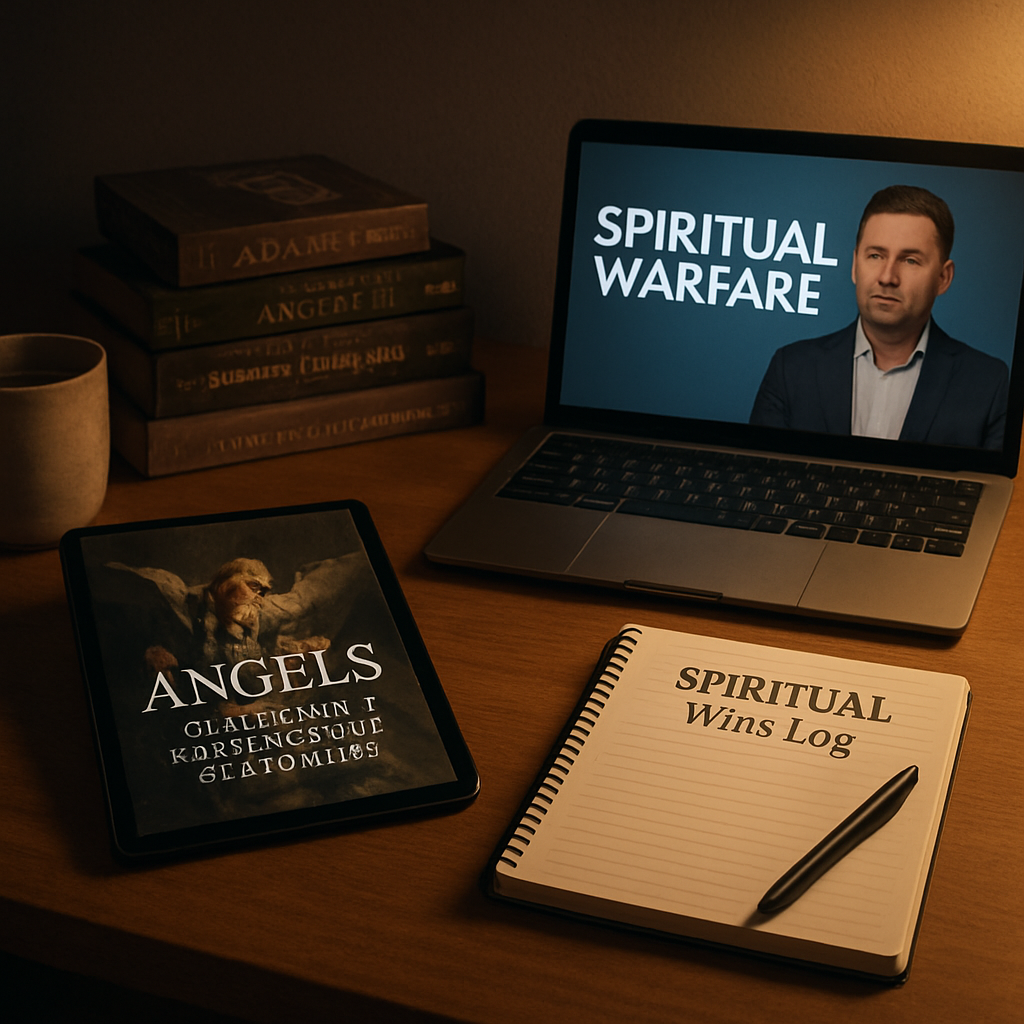
First off, there’s a handful of e‑books that break the big biblical concepts into bite‑size chapters you can read on a coffee break. For example, the “Angels: Messengers, Warriors, and Watchers” guide walks you through who’s on your side and who’s trying to pull the rug out from under you. Readers love the real‑world anecdotes—like a teacher who discovered a fallen‑angel motif in a student’s repeated nightmares and used a simple prayer to shift the atmosphere.
Another favorite is the “Divine Direction” e‑book. It gives a step‑by‑step plan for identifying the lie behind a persistent anxiety and then matching it with a Scripture verse, a prayer posture, and a tangible action (like taking a short walk while reciting Psalm 34:4). The data side is solid: over 1,200 users reported a 38 % drop in nightly rumination after completing the three‑day “Direction Sprint.”
Courses that keep you accountable
If you’re the type who thrives on community, the “Spiritual Wins Challenge” course is a six‑week online cohort that pairs weekly video lessons with a private forum where you post your victories. One participant, Maya (yes, the same Maya from earlier), said the weekly check‑ins kept her from slipping back into “quiet anxiety” when work got hectic.
Each module ends with a “battle‑plan worksheet” that asks you to record the lie, the verse you chose, and a concrete next step—like calling a friend for a quick prayer. By the end of the course, most folks can name at least three personal strongholds and have a ready‑made script to counter each.
Professional services for the tough battles
Sometimes the enemy’s tactics feel too heavy to fight solo. That’s where spiritual‑warfare counseling comes in. Grace Christian Counseling offers tailored sessions that blend evidence‑based therapy with Scripture. In our experience, the combination of cognitive‑behavioral tools and biblical truth speeds up breakthrough—clients often notice a shift after just two 45‑minute appointments.
What’s especially helpful is the “weapon‑identification” exercise they use: you list the recurring thoughts that feel like attacks, then the counselor helps you match each one with a specific spiritual weapon (prayer, worship, confession, or a particular verse). It’s a practical, hands‑on approach that feels more like a training drill than a talk‑therapy session.
Putting it all together: a 7‑day launch plan
Here’s a quick actionable checklist you can start today:
- Day 1‑2: Choose one of the e‑books above and read a chapter each night. Highlight a verse that speaks directly to a current struggle.
- Day 3‑4: Enroll in the “Spiritual Wins Challenge” (or a similar group) and post your first win.
- Day 5: Schedule a 30‑minute discovery call with a spiritual‑warfare counselor to map out your next month.
- Day 6‑7: Create a “battle‑log” template (you can copy the one from the course) and start filling it daily.
By the end of the week you’ll have a book in hand, a community cheering you on, and a professional roadmap for the deeper battles.
Remember, the goal isn’t to collect more resources for the sake of it—it's to equip yourself with tools that actually move the needle on your inner battles.
Ready to dive in? Grab the “Angels” e‑book, sign up for the challenge, and consider a counseling session if the enemy’s whispers feel louder than usual.
Frequently Asked Questions
What does the Bible actually say about spiritual warfare?
The Bible frames spiritual warfare as a real, ongoing conflict between God’s truth and the forces that oppose it. Passages like Ephesians 6:12 remind us the battle isn’t against flesh‑and‑blood but “spiritual forces of evil in the heavenly places.” In practical terms, that means every thought, emotion, and decision can become a frontline where we either submit to God’s Word or let the enemy’s lies take hold.
How can I tell when I’m in a spiritual battle?
Usually there’s a gut‑level tension—a sudden surge of anxiety, an inexplicable anger, or a whisper that tells you you’re not good enough. These moments feel heavier than ordinary stress because they’re often paired with a specific lie that the enemy wants you to believe. When you notice a pattern—like the same doubt resurfacing daily—it’s a strong cue that spiritual warfare is at work, and naming the feeling is the first step to disarming it.
What practical steps help me win a daily spiritual battle?
Start by naming the lie you’re facing, then pull a Scripture that directly contradicts it. Write the verse on a sticky note or set it as a phone wallpaper so it’s always in view. Follow the verse with a short prayer that claims the truth over your situation. Finally, take a tangible action—like a deep breath, a short walk, or a quick journal entry—that reinforces the truth you just declared.
Is there a recommended “battle‑log” or journal format?
Yes, a simple three‑column log works well: (1) the specific temptation or negative thought, (2) the Scripture you matched it with, and (3) the outcome after you prayed and acted. Over a week you’ll see patterns—maybe you’re strongest against pride but need extra armor for fear. Reviewing the log turns abstract victories into concrete evidence of God’s faithfulness.
Can community help me in spiritual warfare, or should I fight alone?
Community is a huge force multiplier. Sharing a “win” with a trusted friend creates accountability and reminds you that you’re not battling in isolation. Even a quick text that says, “I just quoted Romans 12:21 over a temptation,” can spark encouragement for both parties. In our experience, believers who regularly check in with a small group report higher confidence and fewer repeat attacks.
Do I need professional counseling for spiritual warfare?
Sometimes the enemy’s tactics feel too heavy to handle solo, especially when they’re tied to deep‑seated trauma or chronic anxiety. Faith‑based counseling blends evidence‑based therapy with Scripture, helping you identify the lie, match it with a spiritual weapon, and practice new habits. A few focused sessions often reset your mental and spiritual defenses, making daily battles feel more manageable.
How do I keep the armor of God fresh and not just a “nice‑to‑have” checklist?
Treat each piece of armor as a habit, not a one‑time prayer. For example, make the “belt of truth” a morning habit where you write down a verse that grounds your day. The “shield of faith” can become a quick, breath‑focused prayer when anxiety spikes. Rotate the focus each week—truth on Monday, righteousness on Wednesday, peace on Friday—so the armor stays active, vivid, and truly protective.
Conclusion
When you finally ask yourself, “what is spiritual warfare in the bible?” you’ve already taken the first step – naming the battle.
In our experience, the real breakthrough comes when you turn those verses into daily habits: a morning truth belt, a mid‑day shield prayer, a night‑time victory journal. Those tiny routines keep the armor fresh, not just a checklist you glance at once a year.
So, what should you do next? Grab a notebook, write down the lie that’s nagging you right now, match it with a Scripture you love, and speak it out loud. It feels a little strange at first, but the moment you hear the word, the enemy’s whisper loses its grip.
And remember you’re not alone. Sharing a win with a trusted friend, or even a quick text saying, “I just quoted Romans 12:21,” turns a solitary fight into a community victory.
If you’re hungry for deeper guidance, consider diving into Charlene Murray’s “Angels: Messengers, Warriors, and Watchers” e‑book – it’s a practical companion that walks you through identifying both holy and fallen influences.
Ultimately, spiritual warfare isn’t a one‑time showdown; it’s a lifestyle of intentional, prayer‑filled habits. Keep naming, matching, and moving forward, and you’ll see the battlefield become a place of peace rather than panic.