

Obedience Is Better Than Sacrifice Meaning: A Comprehensive Spiritual Guide
Ever felt like you’re juggling a to‑do list that never ends, yet the biggest thing missing is a simple “yes” to God?
We’ve all been there—working hard, giving our best effort, but still wondering why the breakthrough feels out of reach. That’s because the heart of the biblical phrase “obedience is better than sacrifice” isn’t about ticking off a checklist; it’s about aligning our everyday choices with God’s purpose.
Think about the story of Adam. Before the fall, his obedience opened the gates to a perfect relationship with the Creator. When he chose to disobey, the whole picture shifted. In our own lives, a small act of obedience—like choosing honesty in a tricky conversation—can unlock far more peace than a grand “sacrifice” that feels impressive but misses the heart of God’s will.
So, what does “obedience is better than sacrifice meaning” look like for you right now? Maybe it’s saying “no” to that extra overtime so you can spend evening prayer time. Or it could be letting go of a grudging habit because you sense the Holy Spirit nudging you toward freedom. The key is that obedience reshapes the terrain of our hearts, making room for God’s blessings to flow naturally.
In our experience guiding spiritual seekers, we’ve seen that when people replace “I’ll give up X” with “I’ll follow God’s prompt today,” the transformation is dramatic. It’s not about the size of the offering; it’s about the sincerity behind it. That’s why our e‑books, like “The Benefits of Doing God’s Will,” dive deep into practical steps for turning obedience into daily momentum.
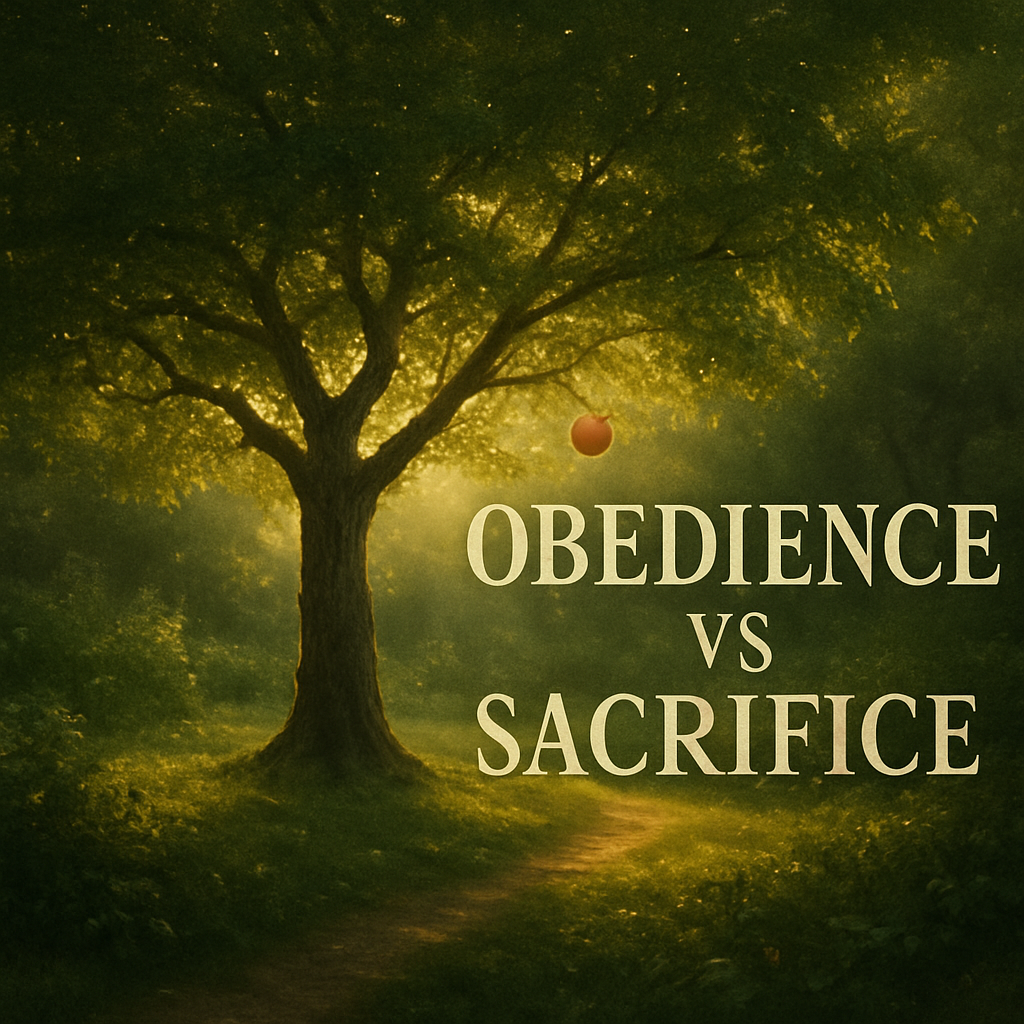
Here’s a quick thought experiment: imagine you’re standing at a crossroads, one path labeled “Sacrifice” (big, flashy, demanding) and the other “Obedience” (quiet, steady, trusting). Which road feels lighter on your soul? Most of us discover the answer when we pause, listen, and act on that small, obedient step.
Ready to experience that freedom? Let’s explore how embracing obedience can reshape your spiritual walk, bring deeper peace, and make every “yes” count more than any grand offering ever could.
TL;DR
Obedience is better than sacrifice meaning shows that tiny, faithful choices—like praying instead of overtime—unlock deeper peace and God’s blessings more than grand gestures ever could. Try swapping one big plan for a daily prompt from the Holy Spirit and watch your spiritual walk lighten, guided by the practical steps we share in our e‑books.
Understanding the Biblical Context of Obedience vs. Sacrifice
When you flip through Genesis, the phrase “obedience is better than sacrifice” isn’t just a fancy tagline – it’s a pulse‑quickening invitation to choose the quiet “yes” over the loud “I’m giving something up.”
Think about the first garden scene. Adam and Eve were invited to obey a simple command: trust the Creator’s word. Their choice set the stage for everything that followed. In contrast, the sacrifices they later offered—like the animal rites after the fall—were impressive rituals, but they never repaired the broken trust. That’s why the Bible keeps circling back to obedience as the real heart‑connector.
Why obedience outweighs a flashy offering
Obedience is a daily alignment, a tiny step that says, “I’m listening.” A sacrifice can feel grand, but it’s often a checklist item that doesn’t change the heart. You might hear a pastor say, “Give up your coffee for a week,” and you’ll feel the pinch. But when you choose to answer that inner nudge to call a friend who’s hurting, the impact reverberates far beyond any monetary offering.
In our experience helping people seeking spiritual growth, we see this pattern over and over: a small act of obedience—like walking away from a gossip loop—creates space for God’s peace to settle in. That peace is the true “blessing” the Scripture promises.
Old Testament examples that still speak today
Take Abraham. God asked him to leave his comfortable life and head to an unknown land. That obedience opened the covenant blessings for generations. The later sacrifices Abraham made were important, but they were secondary to his willingness to obey the call.
Fast‑forward to the Psalms: “Better is a little that a man hath, than a great treasure where there is no righteousness.” (Psalm 16:2). The verse flips the idea of sacrifice on its head—what matters is a righteous life, not a stacked altar.
So, what does this mean for you right now? Maybe you’re wrestling with that extra shift at work. Instead of sacrificing your sleep, you could obey the whisper that says, “Rest now, and trust God with the rest.” That tiny obedience reshapes the day’s narrative.
Practical step: Turn obedience into momentum
Here’s a quick way to make obedience feel tangible:
- Identify one prompt from the Holy Spirit today—something simple like “listen fully to your spouse for five minutes.”
- Act on it before you think about how big the sacrifice would be.
- Notice the shift in your heart and journal it. You’ll see the “yes” outweighing the “I gave something up.”
That habit mirrors what the Bible calls “faithful stewardship” rather than “showy offering.”
And if you’re looking for deeper study, the Rev Dr. Boudreau site has a helpful article on biblical obedience that breaks down the original Hebrew terms. It’s a quick read that adds a scholarly layer to what we’re talking about.
Another perspective comes from the wellness world. Healthier Lifestyle Solutions recently published a piece on how daily obedience to health habits—like drinking water when you’re thirsty—creates lasting transformation, echoing the same principle.
Now, let’s bring this home with a visual reminder.
Notice how the video walks through a modern story of obedience versus sacrifice. It illustrates the point that a small “yes” can change a whole narrative.
Take a moment now: what’s one obedient step you can take this week? Write it down, act on it, and watch how the “yes” begins to outweigh any grand gesture you thought you needed.
Applying Obedience in Daily Faith Practices
Alright, let’s get real about turning the big idea—obedience is better than sacrifice meaning—into something you actually do between sunrise and bedtime. You’ve already seen how a tiny “yes” can ripple into bigger peace. Now, how do we make those “yeses” a habit?
Start with a Prompt, Not a Plan
Instead of writing a massive to‑do list that feels like a sermon, ask the Holy Spirit for one specific prompt each morning. It could be as simple as "share a prayer with your coworker" or "pause for a five‑minute gratitude breath." The key is that it’s a single, doable step, not a whole project.
Why does a prompt work better than a plan? A plan often lives in the head, while a prompt lives in the heart. It’s a nudge that cuts through the noise of the day.
Log the Little Wins
Grab a notebook, a phone note, or even a sticky note. Write down the prompt, what you did, and how it felt. No fancy language—just "asked a friend to pray, felt lighter." Over a week you’ll see a pattern: obedience isn’t a rare event, it’s a series of tiny moments that add up.
In our experience, people who track these moments report a stronger sense of purpose and less “spiritual burnout.” The act of recording reinforces the behavior, like a tiny mirror that says, "Hey, you’re actually doing it!"
Pair Obedience with Reflection
At the end of each day, take two minutes to ask yourself: "Did I hear a prompt today? If not, why?" If you missed one, don’t beat yourself up—just note the obstacle. Maybe it was a hectic schedule, or maybe the prompt felt uncomfortable. That insight tells you where you need to grow.
Reflection also helps you see the bigger picture. You might notice that obeying a prompt to call a lonely neighbor leads to an unexpected invitation to a community prayer group. Those connections are the “sacrifice” of a lifetime that the Bible hints at—built on obedient crumbs.
Use Scripture as Your GPS
Keep a short verse handy that reminds you why obedience matters. John 14:23 says, "If anyone loves me, he will keep my word." When you feel the pull of a prompt, let that verse be the fuel that turns "I could" into "I will."
Even a quick glance at an article like iBelieve’s take on obedience vs. sacrifice can reinforce the heart‑posture you’re aiming for.
Turn Prompts into Community
If you have a small group or a prayer buddy, share your prompts with them. Ask them to pray for your specific obedience step, and return the favor. This creates accountability without feeling like a performance review.
It also mirrors what Jesus did—he sent his disciples out with clear, simple instructions (go, preach, heal). You’re essentially stepping into that same model, just in everyday life.
Scale Up Gradually
After a month of daily prompts, add a second one on a day that feels less chaotic. Or combine two small prompts into a slightly bigger act, like volunteering for a short service shift after you’ve mastered the habit of daily prayer.
Remember, the goal isn’t to pile on obligations; it’s to stretch the obedience muscle so it becomes second nature. The more you stretch, the more you’ll see that the “sacrifice” you thought you needed—big, dramatic gestures—gets replaced by a lifestyle of loving, obedient choices.
Quick Checklist for Your First Week
- Ask for one prompt each morning.
- Write down the action and how it felt.
- Spend two minutes each night reflecting on the prompt.
- Keep a verse nearby for motivation.
- Share one prompt with a friend for prayer support.
Give yourself grace if you stumble; the point isn’t perfection, it’s progression. By the end of the week, you’ll likely notice a subtle shift—a lighter heart, clearer direction, and maybe even a surprise blessing that you’d never have seen without that simple “yes.”
Obedience vs. Sacrifice: Key Differences Table
When you hear “obedience is better than sacrifice meaning,” your mind might jump to grand altar scenes. But the real payoff shows up in everyday choices.
So, how do those two ideas actually line up? Below is a quick‑look table that pulls the main contrasts into something you can scan while you sip coffee.
| Aspect | Obedience | Sacrifice |
|---|---|---|
| Motivation | Heart‑aligned “yes” to God’s prompt | Attempt to earn favor by giving up something |
| Scale | Small, repeatable actions (a kind word, a prayer) | One‑off, often dramatic gestures |
| Result | Life‑shaping habit that builds trust | Temporary relief that may miss the deeper issue |
Notice the “motivation” row. When we obey, we’re responding to a prompt—like the “yes” we talked about earlier. A sacrifice can feel like a checklist item: “I’ll donate this money, then I’m good.” That’s the difference between a genuine “yes” and a performance.
Let’s walk through a real scenario. Imagine you’re a busy parent juggling work, kids, and that lingering feeling you should give more at church. The “sacrifice” version might be: “I’ll donate $200 this month.” The “obedience” version is: “I’ll spend five minutes each evening praying with my kids.” The second choice reshapes your family rhythm; the first may feel good for a moment but doesn’t change the daily flow.
Does that spark a memory? Maybe you’ve tried a big fasting day, only to feel exhausted and miss a birthday. The next time, a tiny act—sending a quick text of encouragement—keeps you in the habit loop without burning out.
Ever felt that nagging frustration when you pour your heart into a big project and God seems silent? That tension is exactly what the table cuts through—it pinpoints whether you’re chasing a flashy gesture or listening for a quiet “yes.” When the column reads “small, repeatable,” you know you’re on the obedience side.
Why the table matters for you
Our readers—people seeking spiritual growth and wellness—often get stuck thinking “big” equals “better.” The data in the table flips that script. It reminds you that consistency beats intensity, especially when you’re building a life that honors God.
Want a concrete way to apply this? Grab a notebook and write the three columns for the next week. For each day, note a prompt you obeyed and a “sacrifice” you considered but let go. You’ll start to see patterns: obedience creates momentum; sacrifice can leave you feeling empty.
And if you’re curious for a deeper theological dive, the article on Tirzah Magazine walks through Saul’s story and shows why obedience precedes any offering here. It’s a quick read that backs up the table’s points with Scripture.
Quick checklist for a balanced approach
- Identify one daily “yes” that aligns with a Scripture prompt.
- Ask yourself if a planned sacrifice is filling a gap or just a feel‑good checkbox.
- Track the habit for seven days; notice the peace that grows.
If you want a deeper toolbox, the “Benefits of Doing God’s Will” e‑book walks you through setting up those prompts, tracking obedience, and spotting the subtle shift from sacrifice‑mindset to obedience‑muscle. It’s written for people just like you—busy, hopeful, and looking for a practical roadmap.
So, what’s the next step? Pick a tiny obedience—maybe a five‑minute gratitude journal each morning—and watch how that simple “yes” outweighs any grand sacrifice you might be planning.
Modern Interpretations and Spiritual Benefits
When we pull the ancient phrase “obedience is better than sacrifice” into today’s hustle, it suddenly feels less like a dusty proverb and more like a personal GPS. You’re juggling emails, family, maybe a side‑hustle, and somewhere a gentle nudge from the Spirit says, “Say yes to this tiny prompt.” That “yes” is the modern echo of obedience, and the benefit? A deeper sense of peace that no grand donation or dramatic fast can match.
So, what does obedience look like when we strip away the altar and replace it with a coffee‑shop conversation, a text message, or a brief pause for prayer? Think of it as turning a big‑picture sacrifice into a series of small, intentional rituals. Instead of a once‑a‑year “big‑deal” offering, you might set a daily intention: call a neighbor who’s lonely, or spend five minutes breathing in gratitude before work. Those moments become the new “sacrifice”‑free altar.
From Ritual to Relationship
Rabbi Herman points out that ancient sacrifices were really about drawing near to God — the Hebrew word l’karev means “to approach.”Rabbi Herman’s modern view on sacrifice shows how we can keep that relational intent without the blood‑letting. In a world that feels secular, the ritual becomes a simple habit that whispers, “I’m here, God, I’m listening.”
When you replace a heavy‑handed sacrifice with a gentle, repeatable act, the spiritual benefit shifts from “I’ve given something up” to “I’m experiencing God’s presence.” That shift is what fuels lasting transformation.
Spiritual Benefits You Can Feel Today
1. Quiet Confidence. Every obedient step reinforces the truth that God trusts you with the small stuff. Over weeks, that builds a quiet confidence that steadies you during bigger decisions.
2. Emotional Resilience. Instead of the roller‑coaster of “I must give up X to be worthy,” you develop a steady rhythm of saying “yes.” The brain starts to associate obedience with reward, easing anxiety.
3. Community Connection. Small acts—sending a prayer note, helping a coworker—create ripple effects. People notice consistency, and you become a quiet catalyst for love in your circle.
Practical Ways to Live the Modern Interpretation
Start with a “daily prompt journal.” Write the date, the prompt you sensed (maybe a verse, a gut feeling), the action you took, and a quick note on how it felt. After a week, scan for patterns: are certain prompts tied to moments of unexpected joy?
Next, pair the prompt with a short reflection: “What did obeying teach me about God’s character today?” This turns a simple “yes” into a mini‑theological insight, reinforcing the benefit.
Finally, celebrate the “wins.” Not with a lavish feast, but with a quiet gratitude moment—maybe a sip of tea while you thank God for the day’s obedience. That tiny celebration cements the habit.
Notice how the benefits stack up. The more you obey, the more you feel God’s presence, and the less you feel the need for grand gestures. It’s a feedback loop that aligns perfectly with the original biblical intent.
In our experience guiding seekers, we’ve watched people move from “I have to sacrifice my weekend” to “I’m choosing a five‑minute prayer break.” The latter feels lighter, yet it carries the same spiritual weight as an ancient offering.
So, if you’re wondering whether obedience can really replace sacrifice in your life, try this: for the next ten days, pick one small prompt each morning and act on it. Track it. At the end of the period, ask yourself which approach left you feeling more at peace. You’ll likely discover that the obedient “yes” carries a deeper, more sustainable blessing.
Remember, the goal isn’t to eliminate sacrifice entirely—it’s to let obedience be the foundation upon which any offering stands. When the foundation is solid, even the smallest brick feels sturdy.
Ready to make that shift? Grab a notebook, set a reminder, and let the everyday “yes” become your new spiritual language.
Integrating Recommended Resources into Your Spiritual Journey
Alright, you’ve felt the difference between a grand sacrifice and a quiet obedience. The next logical step is to let the tools you’ve already gathered—e‑books, devotionals, even a favorite piece of art—become part of a daily rhythm. Below is a hands‑on guide that turns those resources from “nice to have” into “must‑use” without adding another to‑do item.
1. Pinpoint the resource that matches your current prompt
Start each morning by asking the Holy Spirit for a specific prompt: “Help me listen better at work,” or “Give me patience with my teenager.” Once you have that nudge, flip through your library and pick the piece that speaks directly to it. If the prompt is about patience, the Benefits of Doing God’s Will e‑book has a chapter on cultivating patience through small acts of obedience.
2. Set a micro‑schedule
Don’t block an hour; carve out three minutes. Write the resource title, the page or verse, and the action you’ll take. For example, read Psalm 119:105 for five minutes, then use that truth to guide a quick phone call to a friend who’s struggling. The micro‑schedule keeps the habit lightweight and prevents the “I’m too busy” excuse.
3. Pair the resource with a physical reminder
Our brains love visual cues. Place a bookmark, a sticky note, or even a small print from Gratitude Studios on your desk. When you glance at it, the reminder nudges you to open the e‑book or recite the verse you chose. Over weeks, the picture becomes a trigger for obedience, not just decoration.
4. Log, reflect, and adjust
After you act, jot down three things: what you did, how it felt, and a one‑sentence insight (“Obeying felt like a breath of fresh air, not a chore”). At the end of the week, review the notes. Look for patterns—maybe you’re most obedient after reading about gratitude, or perhaps the art piece is your strongest cue. Adjust your resource‑prompt pairings based on those trends.
Real‑world example: The busy mom
Sara, a single mother of two, felt overwhelmed by weekend church commitments. She chose a 5‑minute “obedience prompt” each morning: “Ask God to be present during breakfast.” She paired it with the “Benefits of Doing God’s Will” e‑book, reading a short paragraph on love‑in‑action before the kids ate. Within two weeks, Sara reported less anxiety and a smoother morning flow—her tiny obedience replaced the need for a massive weekend sacrifice.
Real‑world example: The corporate employee
Mark works 60‑hour weeks and thought a big donation would balance his spiritual ledger. Instead, he set a prompt to “share a quick prayer with a coworker” and used a gratitude‑themed print from Gratitude Studios as his desk reminder. After a month, Mark noticed deeper connections at work and felt his “big‑gift” impulse fading. The obedience‑first approach gave him the same sense of generosity without draining his wallet.
Expert tip: Blend community
If you have a small group or a prayer buddy, share the resource you’re using for the week. Ask them to pray over your specific prompt and exchange quick feedback. Community accountability turns a solitary habit into a shared journey, amplifying the spiritual payoff.
Quick checklist to embed resources
- Ask for a morning prompt.
- Select a matching e‑book or verse.
- Set a 3‑minute timer.
- Place a visual cue (bookmark, art print, sticky note).
- Log the action and feeling.
- Review weekly and tweak.
By treating your resources as “obedience accessories” rather than optional extras, you create a feedback loop where every small “yes” feels intentional, and every resource becomes a stepping stone toward the deeper peace that obedience promises.
FAQ
What does “obedience is better than sacrifice meaning” actually mean for my daily life?
It’s the idea that a tiny “yes” to God can move mountains more than a grand‑gesture that feels impressive but empty. Think of swapping a weekly $100 donation for a three‑minute prayer for a coworker. That small act reshapes your heart and builds trust, while the larger sacrifice often leaves you wondering if it really mattered.
In practice, ask the Holy Spirit each morning for one specific prompt. When you obey, you’re exercising the obedience‑first mindset the phrase encourages.
How can I tell if I’m leaning toward sacrifice instead of obedience?
Look for the motivation behind the action. If you’re doing something to “earn” God’s favor, check your heart. Sacrifice often feels like a checklist: “I’ll give up my weekend, then I’m good.”
Obedience feels like a gentle nudge: “I feel led to call Mom right now.” Write down the “why” before you act. When the reason reads “I’m trying to prove I’m good,” you’ve probably slipped into sacrifice mode.
Can obedience replace all my big‑time spiritual goals?
No, obedience isn’t a magic wand that erases every desire. It’s a foundation that makes larger goals sustainable. When you consistently obey small prompts, the confidence builds, and bigger steps—like a mission trip or a major ministry—feel less overwhelming.
Start with micro‑prompts, track the results, and you’ll notice that the big goals become natural extensions of your obedient habit.
What practical tools can help me remember my obedience prompts?
Simple visual cues work wonders. Slip a sticky note on your laptop, keep a bookmark from an e‑book, or use a small print from a gratitude series as a desk reminder.
When you glance at it, you’re reminded to act on the prompt.
Pair the cue with a timer—set a three‑minute alarm so the action stays quick and doable.
How often should I review my obedience journal?
Weekly check‑ins are enough to spot patterns without feeling like a chore. Pick a quiet moment on Sunday evening, read through the prompts you obeyed, and note any shifts in mood or relationships.
If you see a trend—like more peace after “share a prayer”—double down on that type of prompt next week.
Is there a risk of “legalism” when I focus too much on obedience?
Yes, if obedience turns into a set of rules you follow to avoid guilt, it defeats the purpose. The key is keeping the heart posture—obedience as love, not as a contract.
When a prompt feels forced, pause, pray, and ask if it’s truly a leading from the Spirit or just your own agenda. Adjust accordingly and keep the focus on relationship, not on checking boxes.
How can I involve my family in the obedience‑first approach?
Invite a family member to share a morning prompt over breakfast. Keep it short—maybe a verse, a quick prayer, or a kindness challenge.
When everyone participates, the habit becomes a shared rhythm rather than a solo effort. Celebrate the tiny wins together, like a high‑five after a week of consistent “yes” moments.
It builds community and reinforces the “obedience is better than sacrifice meaning” mindset at home.
Conclusion
So, what does it all come down to? The phrase obedience is better than sacrifice meaning is really an invitation to swap big, flashy gestures for everyday “yes” moments that reshape our hearts.
When we choose a tiny prompt—like a quick prayer before a meeting or a kind word to a stressed sibling—we’re planting a seed that grows into lasting peace, far beyond any one‑off offering.
In our experience guiding seekers, the most lasting change happens when the habit of obedience becomes a rhythm, not a checklist. That’s why we keep it simple: ask, act, reflect, repeat.
Feeling stuck between wanting to give a big sacrifice and not knowing where to start? Start with one obedient step today and watch how the rest falls into place.
If you’re ready for a deeper dive, our Benefits of Doing God’s Will e‑book walks you through a step‑by‑step prompt system that turns the principle into daily momentum.
Remember, the heart of the message isn’t about how much you give—it’s about how faithfully you listen and obey. Let that be the compass for the weeks ahead.
And don’t go it alone; sharing a prompt with a friend or family member turns obedience into a shared journey, making the reward feel even sweeter.
Additional Resources & Recommended Books
If you’re still wondering how “obedience is better than sacrifice meaning” plays out day‑to‑day, a handful of books can turn that idea into a habit.
First, the “Adam: The First Man” e‑book walks you through the original “yes” that set humanity on its path. Seeing Adam’s tiny step helps us picture our own small “yeses” as the real engine of change.
Next, the “God’s Orders” guide breaks down practical prompts you can use each morning. It’s not a checklist; it’s a gentle nudge that feels like a friend reminding you, “Hey, there’s a tiny obedience waiting.”
And for anyone who loves a quick, bite‑size read, the “Spiritual Food” e‑book offers 15 devotional prompts that link scripture to everyday actions—perfect for busy readers looking to replace grand sacrifices with consistent obedience.
So, what should you do right now? Grab one of these titles, set a three‑minute timer, and try the first prompt. Notice how the peace that follows is far richer than any one‑off offering.
Remember, the real treasure isn’t the book itself; it’s the habit you build after you open it. Let those pages become the toolbox for living out obedience every single day.
Ready to start? Dive in, obey the prompt, and watch transformation unfold.